In this issue
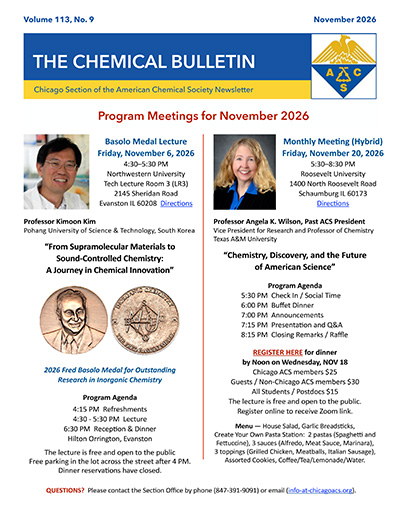
The November 2026 Chemical Bulletin 
PDF of the Latest Bulletin
https://chicagoacs.org/images/downloads/Chemical_Bulletin/2026_11_chembull.pdf
Next Meeting
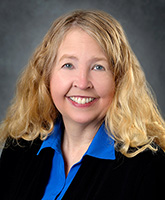
November Dinner/Hybrid Meeting
dr. Angela K. Wilson
Vice President for Research
University Research Chair, Texas A&M University
&
Past ACS President
"Chemistry, Discovery, and the Future of American Science"
Friday, November 20
5:30 - 8:30 PM
Roosevelt University
Schaumburg, IL
ABSTRACT
Chemistry is central to scientific discovery, technological innovation, and our ability to address society’s most pressing challenges. Yet the scientific enterprise is evolving rapidly, shaped by advances in artificial intelligence, changing research priorities, and shifts in federal science policy. As the United States pursues a new era of science, important questions arise about how fundamental research is supported, how discoveries are translated into practical applications, and how the next generation of scientists can be prepared to meet emerging challenges.
Shifts in federal priorities are reshaping the research enterprise and are raising important questions about the future of American science. What is the enduring value of fundamental research? How should growing expectations for practical outcomes be balanced with the need to sustain scientific creativity and long-term discovery? And how can the scientific community respond to national priorities while preserving the curiosity that drives new knowledge?
These questions invite us to consider how we, as chemical scientists, can help shape research priorities, communicate the value of fundamental science, mentor future generations, and influence the future direction of American science in this rapidly changing environment. Drawing on her own scientific journey, Angela Wilson will connect these broader questions to the experience of pursuing discovery across different areas of chemistry, reflecting on the opportunities, challenges, and responsibilities of scientists in shaping not only the future of not only our discipline, but also the future of American science.
Program:
• 5:30 PM Check In / Social Time
• 6:00 PM Buffet Dinner
• 7:00 PM Announcements
• 7:15 PM Presentation and Q&A
• 8:15 PM Closing Remarks / Raffle
Buffet Menu
• Create Your Own Pasta Station: 2 pastas (Spaghetti and Fettuccine), 3 sauces (Alfredo, Meat Sauce, Marinara), 3 toppings (Grilled Chicken, Meatballs, Italian Sausage)
• House Salad, Garlic Breadsticks
• Assorted Cookies
• Coffee/Tea/Lemonade/Water.
Event VENUE, COST
Roosevelt University
1400 North Roosevelt Road
Schaumburg IL 60173
Directions
https://www.roosevelt.edu/schaumburg
$25 (ACS Members) / $30 (Guests, Non-Chicago ACS Members)
$15 (Students / Postdocs)
The lecture is free and open to the public.
Register online to receive Zoom link
REGISTRATION
REGISTER NOW
Deadline To Register
12:00 noon, Wednesday, November 18
https://chicagoacs.starchapter.com/meet-reg1.php?id=247
Questions? Email us (info-at-chicagoacs.org) or contact us by phone (847-391-9091).
Meet the Speaker
Angela K. Wilson is an internationally recognized leader in theoretical and computational chemistry whose research program advances quantum chemical methods toward an understanding of molecular structure, spectroscopy, thermochemistry, and chemical reactivity. Her group develops quantum mechanical methods with an emphasis on transition metals and heavy elements, and quantum dynamics including a focus upon polaritons (hybrid light-matter particles). Wilson’s research spans environmental science and drug discovery, with substantial work on polyfluoroalkyl substances (PFAS). While at Michigan State, she founded and served as inaugural director of the Center for Quantum Computing, Science, and Engineering, founded the Midwest Quantum Collaboratory, and is a leader of QuSTEAM, an NSF-supported national initiative that is now an independent nonprofit organization providing training materials and support for faculty. She serves on the QuSTEAM Board of Directors and on the Board of Advisors of the quantum computing company EeroQ. As Vice President for Research and VPR Research Chair at Texas A&M University, Wilson leads a $1.4 billion annual research enterprise. Previously, she served as Director of the Division of Chemistry at NSF, where she oversaw the agency's chemistry research portfolio. Wilson is a Fellow of the American Chemical Society (ACS), the American Physical Society (APS), and the American Association for the Advancement of Science (AAAS). She serves on the Board of Directors of APS and is a National Associate of the U.S. National Academies. Among other honors, she received the ACS Garvan–Olin Medal in 2015. She served as President of the American Chemical Society in 2022.
Special Event
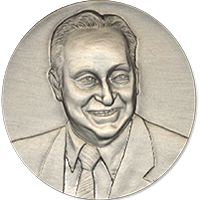
Basolo Medal Lecture
Friday, November 6
Prof. Kimoon Kim
Pohang university of Science and Technology
"From Supramolecular Materials
to Sound-Controlled Chemistry:
A Journey in Chemical Innovation"
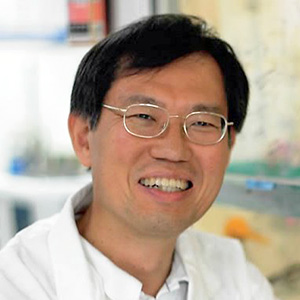
4:30 PM Lecture
Northwestern University
6:30 PM Reception
Hilton Orrington
Evanston, IL
ABSTRACT
Chemistry, at its heart, is a creative endeavor—the pursuit of new ways to control matter and energy. My journey began at Northwestern University, where discussions with Prof. Fred Basolo and mentors at the BIP (Basolo-Ibers-Pearson) Saturday morning meetings shaped my outlook on chemistry. At the Pohang University of Science & Technology (POSTECH), my group has advanced supramolecular chemistry through cucurbiturils (see structure below), porous frameworks, and self-assembled nanostructured polymers—each representing new strategies to build and organize matter. Most recently, we discovered that audible sound can be harnessed to orchestrate chemical reactions in space and time. Sound-induced liquid vibrations modulate gas dissolution and molecular organization, enabling dynamic chemical patterns and the regulation of complex processes in surprising ways. In this lecture, I will reflect on these experiences and share how supramolecular design and sound-based strategies together may open new horizons for chemistry and materials science.
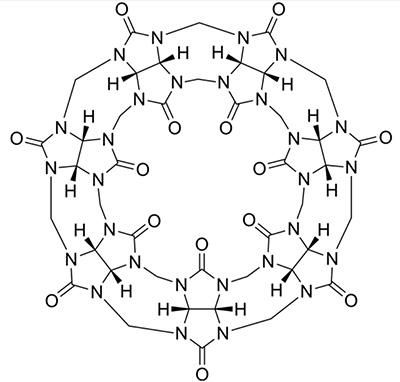
a curcurbituril
BASOLO Lecture:
Northwestern University (Tech LR3)
2145 Sheridan Road; Evanston, IL 60208
Directions
Campus map
Parking is free across the street at Noyes Lot after 4:00 PM
• 4:15 - 4:30 Refreshments
• 4:30 - 6:00 Presentation of the Basolo Medal, Lecture by Dr. Kim
RECEPTION AND DINNER
Hilton Orrington Hotel
1710 Orrington Ave, Evanston, IL 60201
• 6:30 - 9:00 Reception & Dinner
Dinner/Reception reservations have closed, but no registration is required to attend the lecture.
Questions? Email us (info-at-chicagoacs.org)
or contact us by phone (847-391-9091).
MEET THE SPEAKER:
Kimoon Kim is an internationally recognized authority in the field of supramolecular chemistry who has authored or co-authored over 335 papers. In particular, he has been working on a variety of functional materials based on cucurbiturils (pumpkin-shaped macrocyclic molecules) and metal-organic porous materials useful for catalysis, separation and gas storage. His 2000 Nature paper, which reported the synthesis of homochiral nanoporous crystalline materials using self-assembly and an application for a chiral catalyst, was selected as one of the 35 most notable papers in the field of chemistry published in Nature between 1950 to 2000—a list that included Watson and Crick’s DNA structure and Nicolaou’s total synthesis of Taxol. Kim was elected a member of the Korean Academy of Science and Technology (2000), and he has numerous honors including the Korea Science Prize (2001), the Hoam Foundation Prize (2006, Samsung), and the Izatt-Christensen Award (2012). He was selected by UNESCO as one of the world’s top 100 chemists during the International Year of Chemistry (2011). He has served as an advisory editorial board member of several journals, as chairman of the ACS Inorganic Chemistry Division (2009), and as vice-president (2010) of the Korean Chemical Society. Since 1997, he has headed the Center for Smart Supramolecules supported by Creative Research Initiatives and later by the Acceleration Research program sponsored by the Korean Ministry of Education, Science and Technology (MEST). Until recently he was in charge of the Division of Advanced Materials Science, launched in 2008 with support from the World Class University project of MEST. Kim was named director of the Center for Self-assembly and Complexity, Institute for Basic Science in 2012 by the Korean government.
“Cucurbituril pie, anyone?”
photo by Margaret Schott
•

Happy Thanksgiving to All
Image credit: pexels-jill-wellington-1638660-5358864
Letter from the Chair
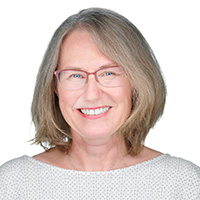
With Gratitude to ACS Members
As one of the largest scientific associations in the world, ACS celebrated 150 years with the theme “Chemistry is Everything.” The next to the last monthly theme of ACS, gratitude reminds and honors members of the past who provided current, energetic and enthusiastic members with a strong scaffold for members-to-come to build Chemistry in the Future. Serving as Chair of the ACS Chicago Section, I would like to express my gratitude to who tirelessly devote their time and efforts to ACS: those who actively research in the lab, who educate young chemists, who prepare programs for local and national meetings, who organize our awards ceremonies and social gatherings, who highlight Chicago chemistry particularly at the recent conference, who serve on the Board, and who work in the office. I appreciate everyone for everything you invest in chemistry. I am grateful for the opportunity to serve as Chair, to meet you all in action, and to share the common mission: Chemistry is Everything.
Happy Thanksgiving. Thank you for your trust, loyalty and support. ACS is successful because of you.
—AMY BALIJA
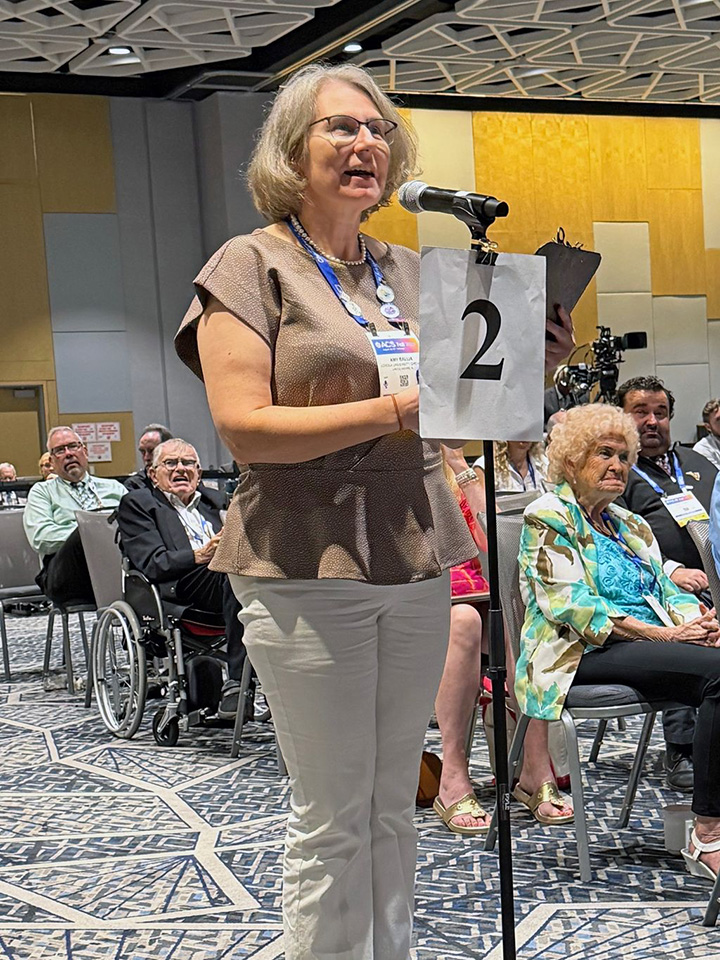
Amy Balija at the American Chemical Society Council Meeting (August 2026) proclaiming a resolution thanking 2026 ACS President Rigoberto Hernandez.
Election Information

The Chicago ACS Election Is Underway!
The annual election of officers, directors, councilors, and alternate councilors is scheduled to launch Sunday, November 1. The election ends 11:59 AM Sunday, November 15. You are welcome to review the candidate information any time on this web page:
https://chicagoacs.org/election2026_candidateinfo
We present here the slate of candidates produced by the Nominating Committee for the Chicago Section. The Chair-Elect platform statement and biography can be found in this issue of the Bulletin.
Eligible members will be notified by email with specific information about how to log in and cast their ballot. Emails will come directly from our online voting platform, AssociationVoting.com, not from the Section. The outcome of the election will be shared with section members on the Chicago Section website, chicagoacs.org. Those elected will take office in January 2027.
LOGGING IN AND VOTING:
Please CHECK YOUR EMAIL INBOX for a message from “announcement–at–associationvoting.com” with the subject line “Cast Your Vote in the 2026 Chicago ACS Election”. Please check both your Inbox and (because it was a mass emailing) your Junk mail. This email contains your election-only login information, which you must use to enter the voting platform.
Once you have logged in and can see the ballot, perform THREE STEPS to make your choices actually count:
(1) Make your selections. You are not required to vote in every race or make the maximum number of selections. The software prevents you from mistakenly over-voting (making too many selections in a race).
(2) Click the “Preview ballot” button at the bottom to review all your selections and make sure they correctly reflect your intentions.
(3) Click the “CAST BALLOT” button to actually cast your ballot. Your selections are not recorded as votes until you click “Cast Ballot”.
DIDN’T RECEIVE YOUR VOTER EMAIL?
Your email may have been blocked. To UNBLOCK/RESUBSCRIBE, navigate to this Resubscribe Request link:
https://tinyurl.com/resubscribe-av
IMPORTANT: In the field called “Election Name/Abbreviation”, type “chicagoacs”.
HELP: Contact the Section office at office-at-chicagoacs.org and elections-at-chicagoacs.org. Happy Voting!
Candidates
2026 Chair-Elect
Platform and Biography
ILANA LEMBERGER
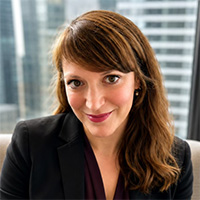
I am honored to be nominated for Chair-Elect of the ACS Chicago Local Section. With more than a decade of dedicated service, including leadership roles as Program Chair, Director, Alternate Councilor, and Women Chemists Committee Co-Chair, I am passionate about advancing our mission, strengthening member engagement, and inspiring the next generation of chemical professionals.
As the recipient of the 2026 ACS Chicago Section Emerging Star Award, I am grateful for the opportunity to serve our vibrant scientific community. Throughout my leadership tenure, I have championed innovative scientific programming, professional development, educational outreach, and meaningful connections between academia and industry.
As a result of my global pharmaceutical and life sciences experience, including my recent participation at CPHI Milan 2026, I bring an international perspective and extensive professional network to our section. I will leverage these connections to attract distinguished speakers, showcase emerging scientific innovations, and foster collaborations that expand opportunities for our members.
My priorities include strengthening industry-academic partnerships, expanding student and early-career engagement, promoting chemical literacy, and increasing ACS Chicago's visibility locally, nationally, and inter-nationally.
As Chair-Elect, I will lead with enthusiasm, collaboration, and a commitment to ensuring our members feel valued, connected, and empowered. Together, we can build on our section's proud legacy while shaping an innovative, inclusive, and inspiring future for chemistry in Chicago.
Biography
ACS member since: 2010.
Professional experience: Customer Success Manager, Pharma, Chromatography and Mass Spectrometry, Thermo Fisher Scientific 2020-2025; Research and Development Laboratory Manager, Old World Industries 2019-2020; Senior Research Scientist (Contractor), Becton Dickinson 2018; Chemist, Fresenius Kabi 2016-2017; Chemical Products Chemist, W. R. Grace and Company 2007-2016.
Education: MS Analytical Chemistry, Illinois Institute of Technology; BS Biological Science/Spanish, University of Illinois.
Chicago Section experience: Program Chair; Alternate Councilor; Director; Program Arrangements Committee; House Committee; Women Chemists Committee; Nominations Committee; Younger Chemists Committee.
National & Divisional ACS Service: Participated in Council Meetings; member of the Division of Analytical Chemistry; Business Development; Women Chemists Committee; Younger Chemists Committee.
Non-ACS Service: Iota Sigma Pi; Malta Conferences Foundation.
Awards: Chicago ACS Section 2026 Emerging Star Award.
https://www.linkedin.com/in/ilanalemberger
Younger Chemists Committee
Younger Chemists Committee event
Chemistry Career Panel
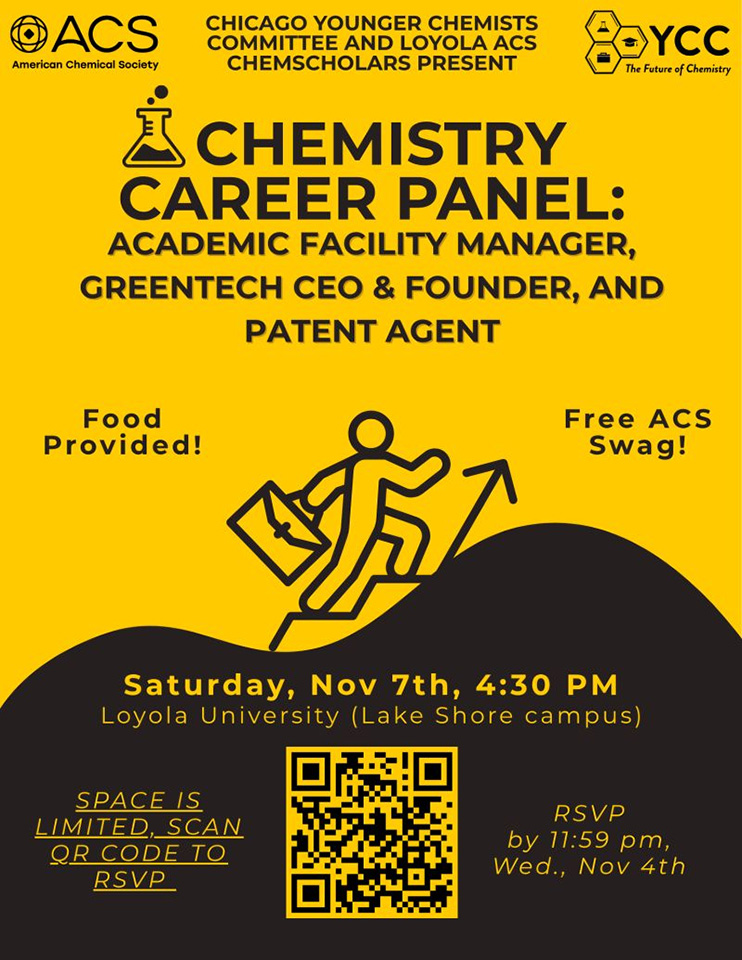
https://chicagoacs.org/announcements.php?id=213
Historical Feature
Chemistry From 100 Years Ago:
“Several hundred chemists convened last week in Philadelphia for the Golden Jubilee of the American Chemical Society (Time, Sept. 13, 1926) and it was along the lines of synthesis that much of their talk ran. … Prof. Paul Sabatier, faculty dean of Toulouse University, described the personality and performances of Marcellin Berthelot (1827-1907) under whom he had worked at the College de France. Berthelot it was who first prepared “organic” compounds (containing the inevitable constituent of living matter, carbon) from their constituent elements: hydrogen, oxygen, carbon. It seemed then as if Chemist Berthelot had made life from dead matter though nowadays the things he made, benzene, alcohol, etc., are regarded more calmly.”
The Golden Jubilee Fall 1926 ACS Meeting in Philadelphia.
“Irénée du Pont, vice chairman of the E. I. du Pont de Nemours & Co., in the course of his remarks on the dyestuff industry, strayed into the future to propose that chemists could and should discover catalytic chemicals that would counteract the muscle poisons which we now have to sleep off. Instead of going to bed for the night, one would have a shot in the arm or a pink pill, change his shirt and bid every one ‘Good Night’ with a cheery morning smile. Other chemicals—not to call them drugs—might be evolved for stimulating mental activity without robbing Peter to pay Paul, as do Cocaine, alcohol, etc. Thus, out of the test tube, a synthetic superman, ‘a short cut to the millennium.’ ” (Time Magazine, Sept. 13, 1926)
Recent Meeting
Education Night at Truman College
What an unforgettable American Chemical Society – Chicago Section Education Night!
A heartfelt thank you to everyone who joined the Chicago ACS Section at Harry S. Truman College on Friday, September 17 for an inspiring evening celebrating education, science, and the next generation of STEM leaders.
We were honored to welcome Jennifer Kopach, CEO of Science Olympiad, Inc. and the Science Olympiad USA Foundation, and Jolly Patro, Science Olympiad Alumni Research award winner, of the Northwestern University Department of Chemistry, for our fireside chat on the topic of “Inspiring the Next Gen in Chem”. Their insights reminded us how powerful mentorship, access, and encouragement can be in shaping a young person’s future.
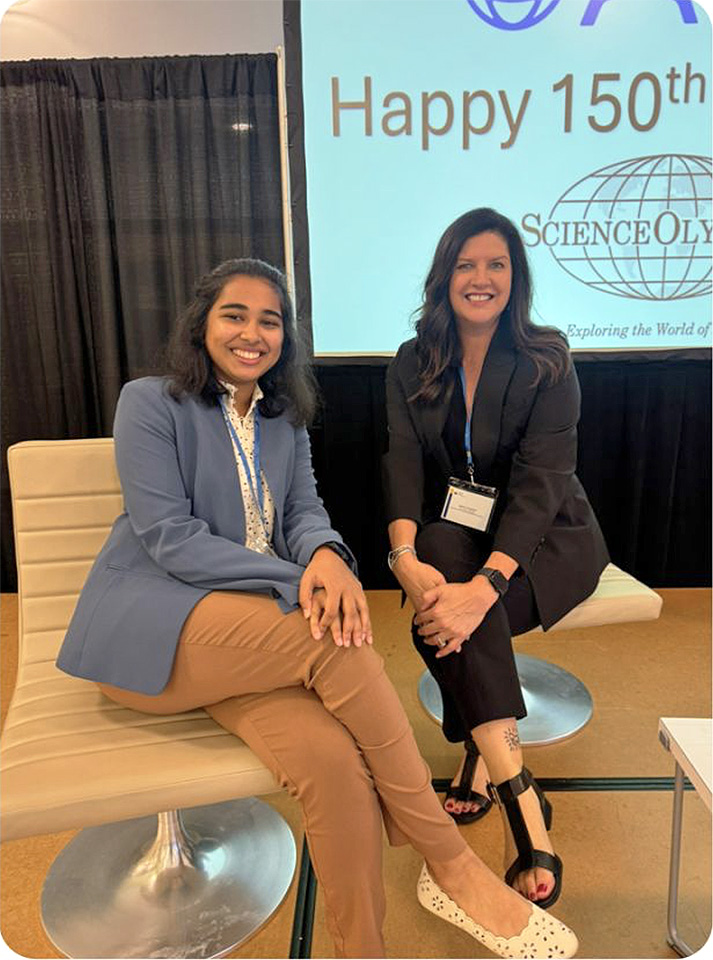
Presenter-panelists (left to right) Jolly Patro and Jenny Kopach.
Image credit: Ilana Lemberger
Thank you to our students, educators, ACS members, community partners, volunteers, and guests for bringing such wonderful energy and enthusiasm. Also, I am deeply grateful to my Chicago ACS colleagues and everyone behind the scenes whose dedication made the evening possible. Events like this succeed because of teamwork—and this team truly delivered!
As Program Chair, it was a privilege to help bring us together for an evening filled with meaningful conversations, new connections, and a shared commitment to advancing science education.
The College Education Committee hosted a poster session at Education Night. Six undergraduate students from four different universities presented posters, as did one Project SEED participant. The poster presented by Akin Fatoke of Truman College was judged by a panel of three judges to be the Best Poster. Mr. Fatoke was the recipient of a $50 Amazon Gift Card.
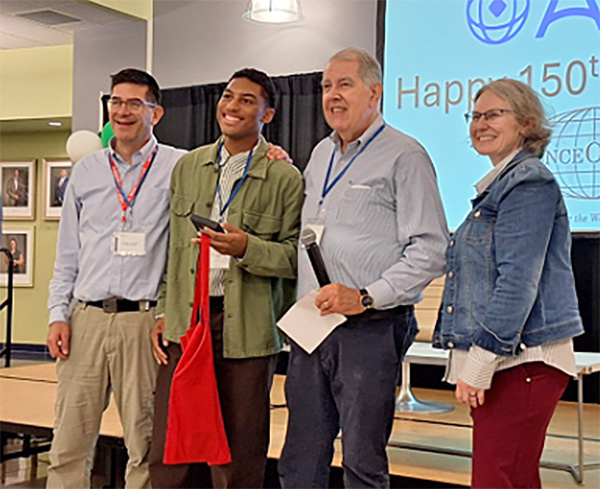
Prof. Charles Abrams (Truman College) with poster award winner Akin Fatoke (Truman College), Bob Chapman, and Amy Balija.
Winners of scholarships (see previous issue) were also recognized during the meeting. Ilana Lemberger was awarded a plaque honoring her achievement as Chicago Section Emerging Star for 2026. In addition, the Teacher Excellence Award plaque was given to WenHua Deng, who thanked the Chicago Section with a moving speech expressing her deep gratitude (see next page). Russ Kohnken coordinated the award selection team. All those receiving awards took home Chicago Section bags of “swag”.
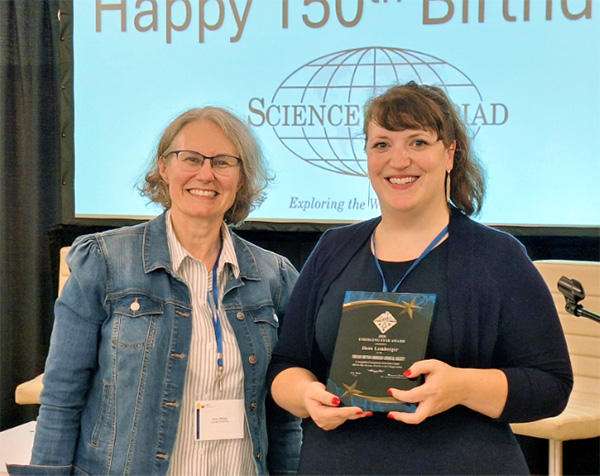
Chair Amy Balija with 2026 Emerging Star Awardee Ilana Lemberger.
Image credit: Milt Levenberg
Thank you for coming, supporting our mission, and helping us inspire the next generation of scientists. I hope you left feeling as energized and hopeful as I did that evening!
Congratulations again to all the student award winners!
—ILANA LEMBERGER with contributions from BOB CHAPMAN
•
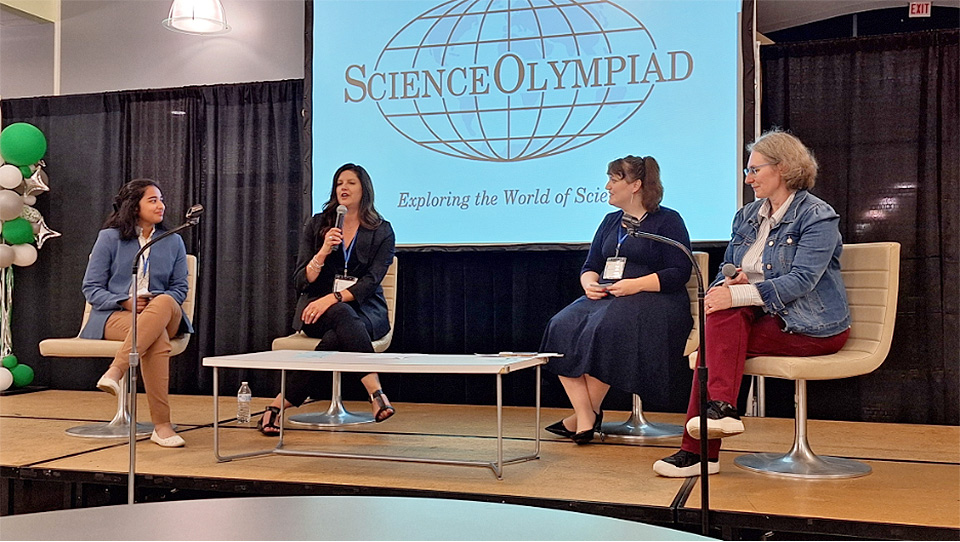
Panelists (from left) Jolly Patro, Jenny Kopach, Ilana Lemberger, and Amy Balija.
•
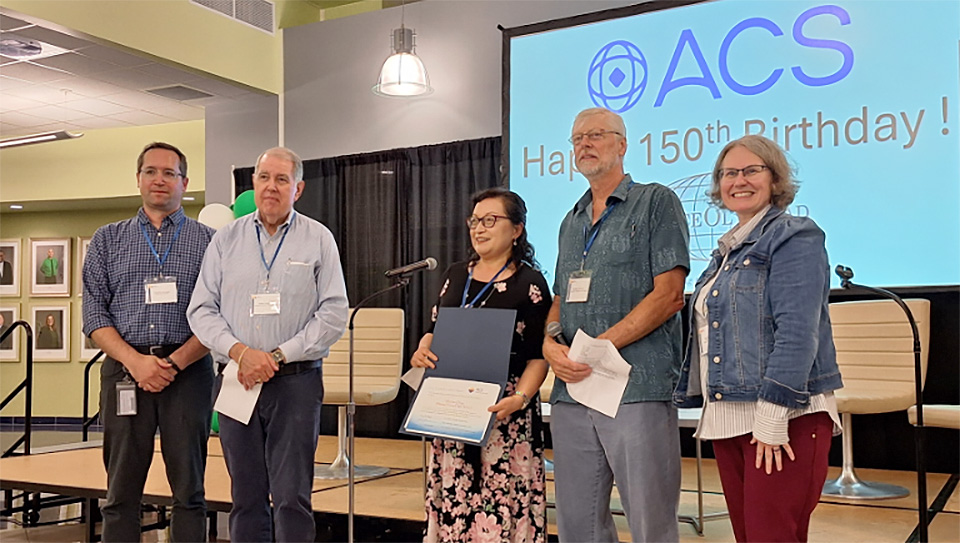
WenHua Deng receiving the Teacher Excellence Award, with (l. to r.) Matt Van Duzor, Bob Chapman, and Russ Kohnken.
•
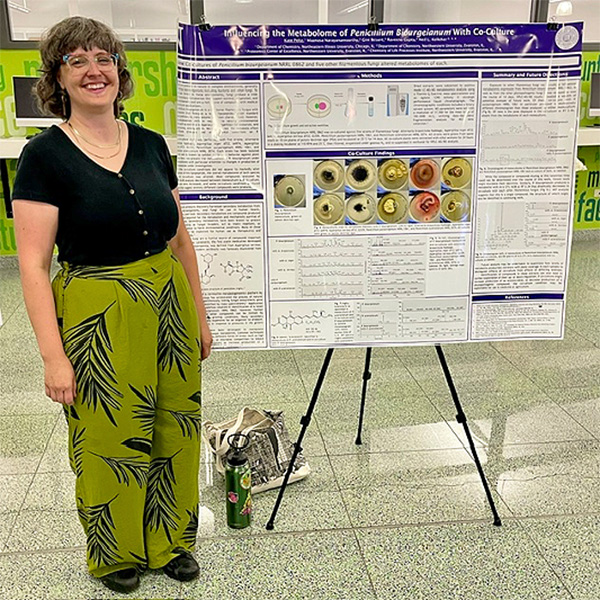
Poster presenters Kate Peltz of Northeastern Illinois University
•
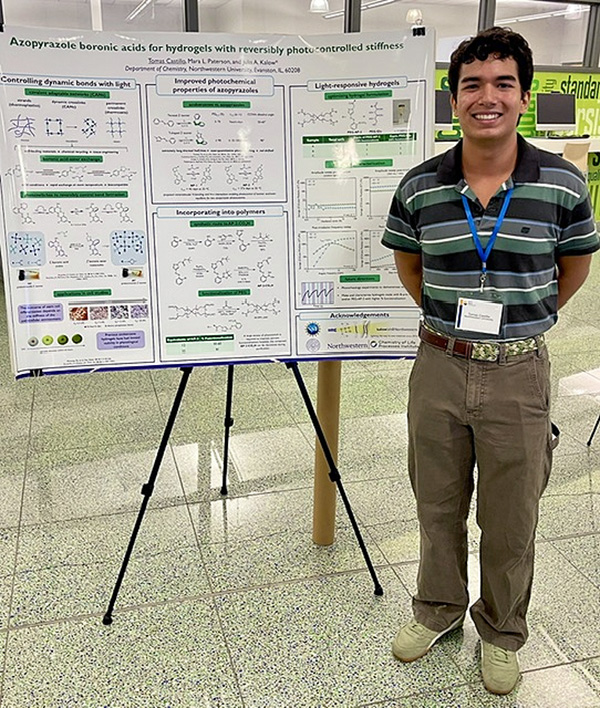
Poster presenter Tomas Castillo of Northwestern University
•
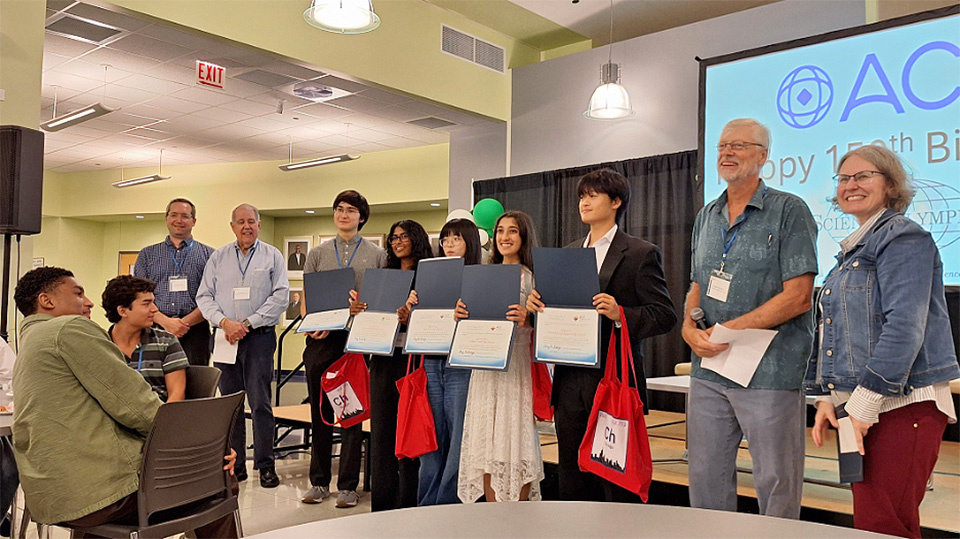
Scholarship and annual scholarship exam winners with Chicago Section officials.
•
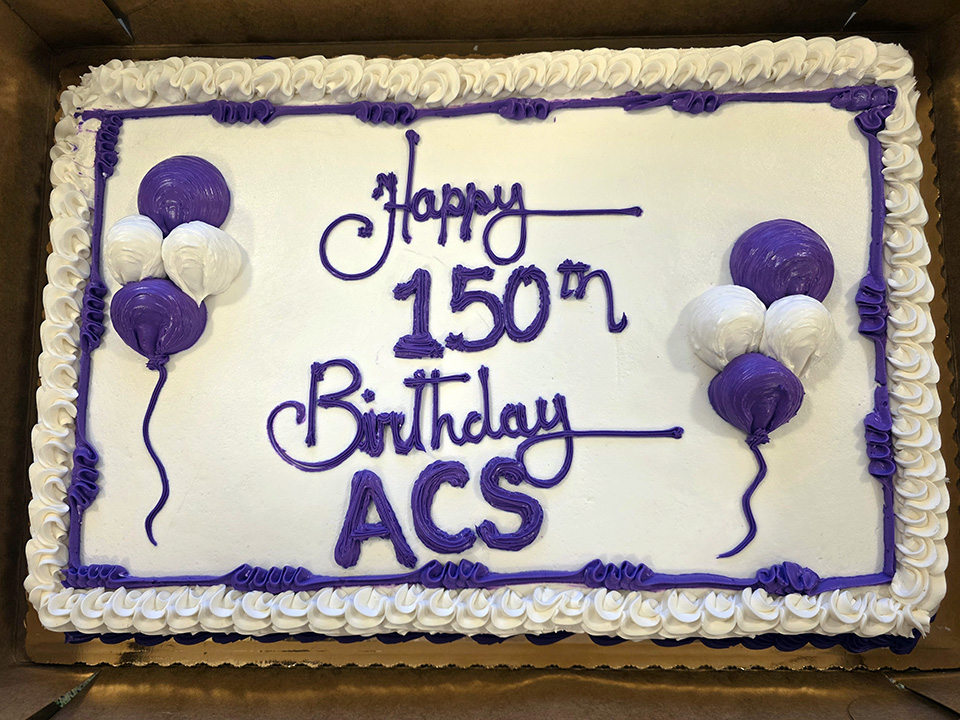
Continuing the sesquicentennial celebration!
Award Winner

Teacher Excellence Award
The Chicago ACS High School Education Committee has selected Ms. WenHua Deng of Chicago’s Whitney M. Young Magnet High School as the 2026 recipient of the Award for Excellence in High School Teaching of Chemistry. Ms. Deng has been teaching at Whitney Young for the past seven years and espouses a rigorous program of scientific inquiry while developing curiosity about the world in her students. Ms. Deng supports her students’ path to excellence with formative exercises, real-world experiences, and the nurturing of a caring mentor.
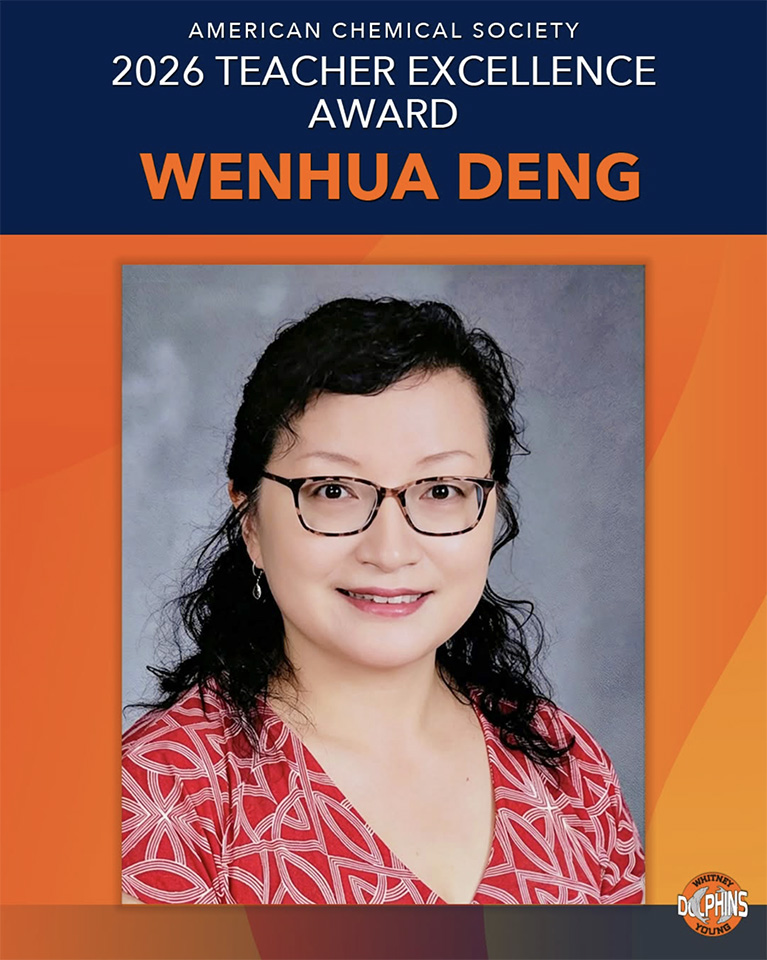
Image credit: Whitney Young High School
Over the past several years, students have continually improved in their performance in her Advanced Placement (AP) Chemistry classes and have participated in the U.S. National Chemistry Olympiad and International Chemistry Olympiad competitions. Ms. Deng supports STEM activities as the Team Sponsor of Whitney Young’s Chemistry Competition Team and as Sponsor of the Garden Club and the Asian American Students Club. It was our pleasure to recognize Ms. Deng at Education Night with a framed certificate and $1000 monetary award.
The ACS Chicago Section shared high praise for her impactful work, stating: "As always, there were a number of very strong candidates. We were impressed not only by WenHua's classroom strategies, teaching philosophy, and the growth in her students arising from her leadership, but also the passion exhibited by both former students and parents in support of WenHua.”
—RUSS KOHNKEN
Image credit: Whitney Young High School
From the Editor's Desk
As readers will notice from this issue—and from the Chicago Section social media postings and website—there is a lot going on! In addition to our monthly program meetings, members have been busy planning and hosting high-quality events for various chemist-cohorts, from youngsters to younger scientists. Recent programs have featured mentoring and networking for college-age students, and an inside look into the workings of the Science Olympiad.
Importantly, Please take a few moments to cast your votes at the easy-to-navigate online system we have been using for several years now. The fall election will determine the Section’s officials for 2027. Can we try for a higher turnout than the recent national ACS election, which was 10.8% of eligible voters?
Included in these pages is the second and final part of Dr. Chandra Man Karki’s piece on the RAMP Framework for laboratory safety. The article offers well-researched information and fresh insights into relevant—and potentially life-saving—practices.
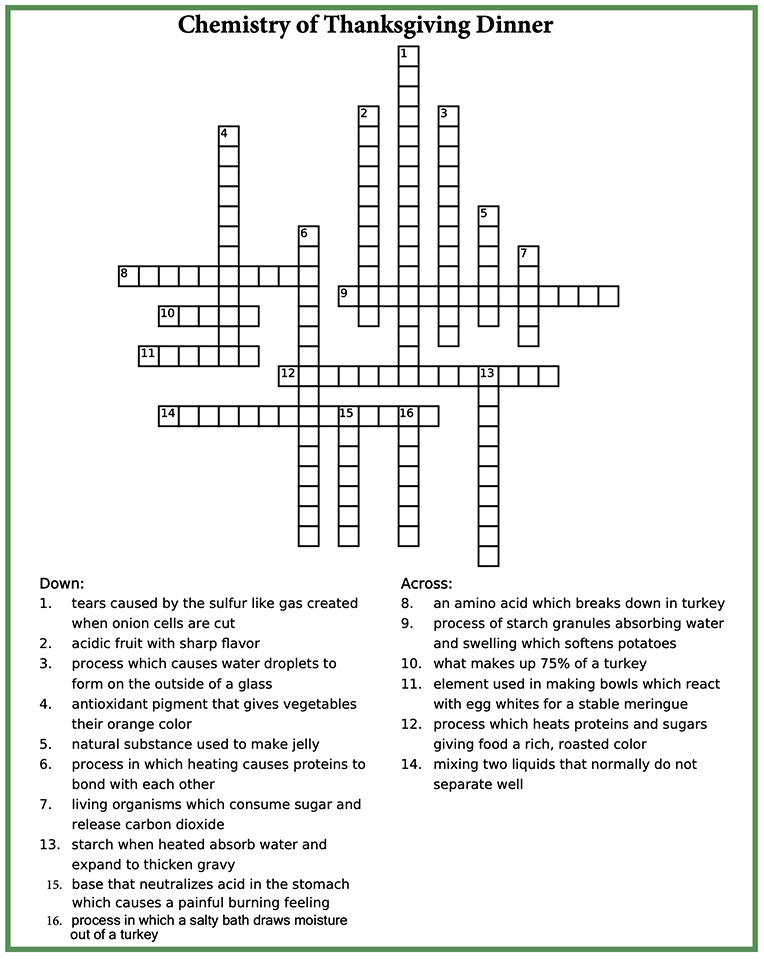
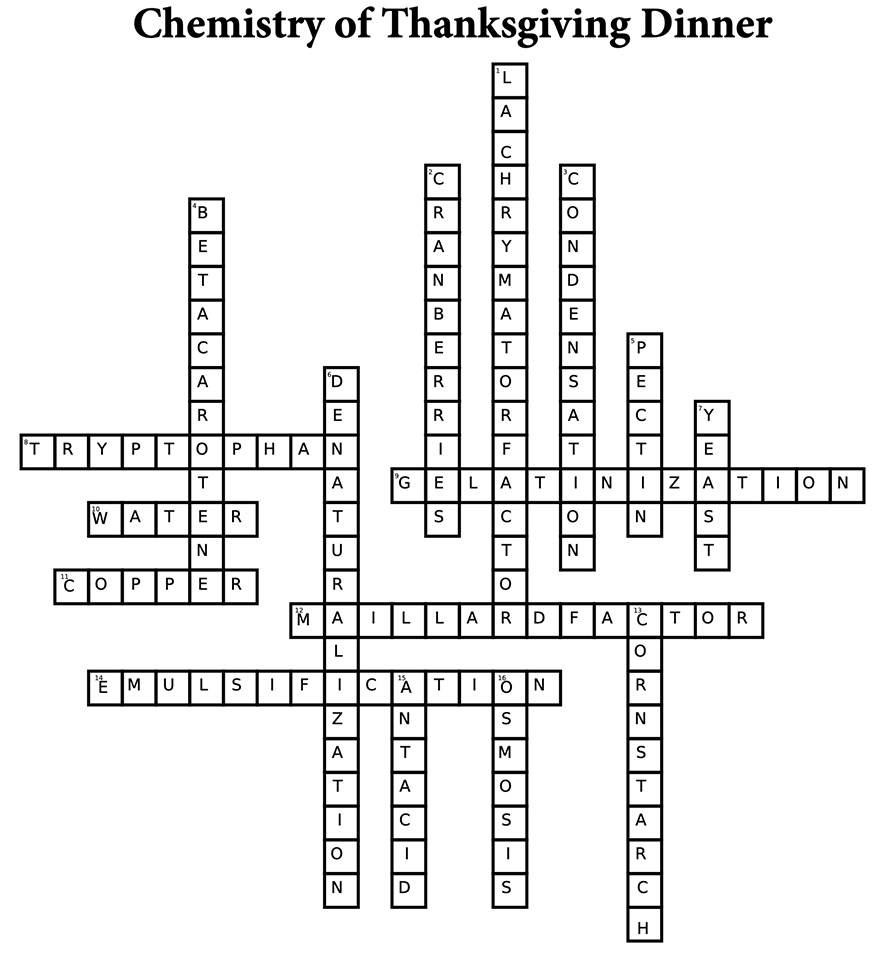
The bulletin’s “run” of puzzles and games continues with an original crossword written by Amy Balija, our endlessly creative Chair. Ever since the origin of this genre in 1913, crossword puzzles have appeared in chemistry and engineering journals and newsletters. Did you know that the original term applied was “word-cross”?
Finally, in this season of giving thanks, I am grateful to our energetic program planners, prolific event photographers, scholarship exam specialists, outing and outreach organizers, article authors, and election engineers—and the teams of volunteers making it all unfold in real time. If you wish to submit an article or topic idea, please contact me at editor-at-chicagoacs.org. To volunteer for your favorite facet of Section activities, please contact chair-at-chicagoacs.org. Thanks for reading.
— MARGARET SCHOTT, Editor
Safety First
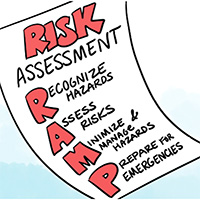
Applying RAMP in the Laboratory
Editor’s note: In the August/September 2026 Bulletin issue, University of Chicago safety scientist Chandra Man Karki described the principles of the RAMP safety framework, where RAMP refers to four preparatory steps used in planning laboratory experiments: Recognize hazards, Assess Risks, Minimize hazards, and Prepare for emergencies. Here, the RAMP framework is applied to the drying of THF over sodium.
SODIUM / THF EXAMPLE
The following example illustrates the use of sodium metal (Na, pictured) as a drying agent during the distillation of tetrahydrofuran (THF). Each step demonstrates how the RAMP framework1–3 is applied before potentially hazardous work begins.
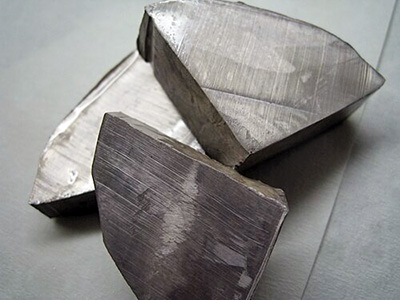
Chunks of sodium metal (Na)
Recognize hazards
The first step in the RAMP framework is to recognize all hazards before beginning any experiment. The primary resources for identifying chemical hazards are Safety Data Sheets (SDSs) and chemical container labels. While Globally Harmonized System (GHS) labels communicate hazards using standardized pictograms, signal words, hazard statements, and precautionary information, SDSs provide detailed information on hazards, safe handling, storage, incompatibilities, exposure controls, and emergency response.
A review of the SDSs for sodium (pictured) and THF reveals that Na metal reacts violently with water, producing heat and flammable hydrogen gas. Sodium metal is category 1 corrosive to skin. Tetrahydrofuran is highly flammable and may form explosive peroxides upon prolonged storage or exposure to air. While artificial intelligence (AI) can assist in locating and interpreting SDS information, hazard recognition remains the researcher's responsibility.
Safety Takeaway: Hazard recognition is the foundation of every safe experiment. Consult the SDS and chemical label before opening any container.
Assess Risks
After identifying hazards, the next step is to assess the risks. While a hazard is the potential to cause harm, risk considers the likelihood that harm will occur and the severity of the consequences under the planned experimental conditions. A risk matrix provides a systematic method for evaluating the likelihood and severity of each hazard and helps prioritize appropriate control measures. Risk assessment is not a one-time exercise; it should be revisited whenever there is a change in experimental conditions, reagent quantities, personnel, or equipment.
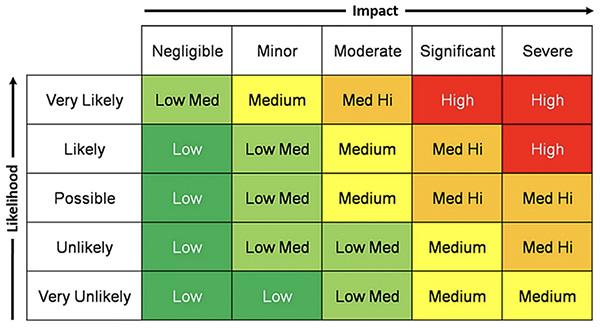
Risk assessment matrix illustrating the relationship between
hazard likelihood and consequence severity (impact).4
Risk assessment extends beyond recognizing that sodium is water-reactive and THF is flammable. Factors such as the quantity of sodium, solvent volume, peroxide testing results, experimental scale, equipment condition, available engineering controls, and researcher experience all influence the overall level of risk. When uncertainty exists, consultation with the principal investigator, experienced researchers, safety professionals, or reliable resources such as PubChem and CAMEO Chemicals can support the assessment.
Safety Takeaway: Hazards are inherent, but risk depends on how the work is planned and performed.
Minimize Risks
Once risks have been assessed, the next step is to minimize them by applying the hierarchy of controls. Controls should be implemented from highest to lowest effectiveness. Always comply with the institution's Chemical Hygiene Plan (CHP), laboratory safety policies, and applicable local, state, and federal regulations, including OSHA's Laboratory Standard (29 CFR 1910.1450).5
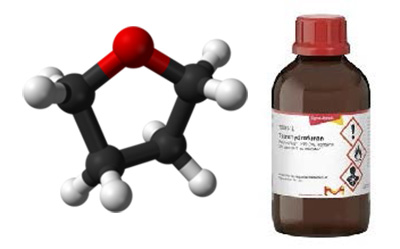
Risk reduction measures include using the minimum quantity of sodium necessary; conducting the distillation in a certified chemical fume hood under an inert atmosphere; confirming that THF tests negative for peroxides prior to distillation; following the laboratory standard operating procedure (SOP); and wearing appropriate PPE including chemical-splash goggles, a flame-resistant lab coat, and nitrile rubber gloves.
•
Safety Takeaway: The most effective control is to eliminate or reduce hazards at the source. PPE is the last line of defense, not the first.
Prepare for Emergencies
The tragic death of Sheharbano “Sheri” Sangji as the result of a laboratory fire at the University of California, Los Angeles, in 2008 serves as a reminder that emergency preparedness is an essential component of laboratory safety.8 The incident highlighted the importance of proper training, emergency planning, and ensuring that laboratory personnel know how to respond effectively during an emergency. This is why the "P" (Prepare for Emergencies) in the ACS RAMP framework is so important. A good rule of thumb is to always prepare for the worst-case scenario that could reasonably result from your work.
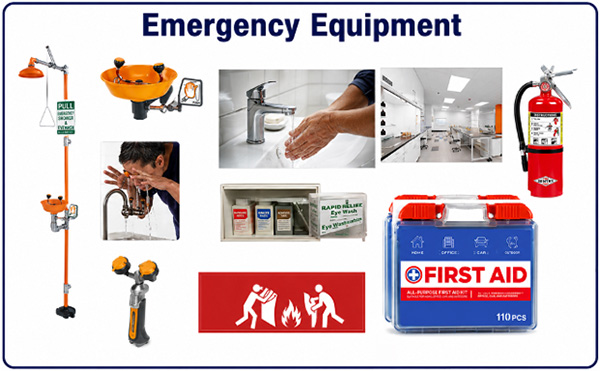
Required laboratory emergency equipment includes a safety shower, emergency eyewash station, fire extinguisher, first aid kit, and chemical spill response supplies.6,7
Safety Takeaway: Emergency preparedness begins before an emergency occurs. Know your exits, your equipment, and your emergency contacts before the first chemical is opened.
Summary
The best time to apply RAMP is before the first chemical is opened, before the first instrument is powered on, and before the first AI prompt is entered. AI is a powerful tool, but it cannot RAMP for you. By making RAMP the starting point of every project, researchers create a common language for discussing hazards, evaluating risks, and preparing for emergencies while strengthening communication, collaboration, and the lab’s safety culture.
—CHANDRA MAN KARKI
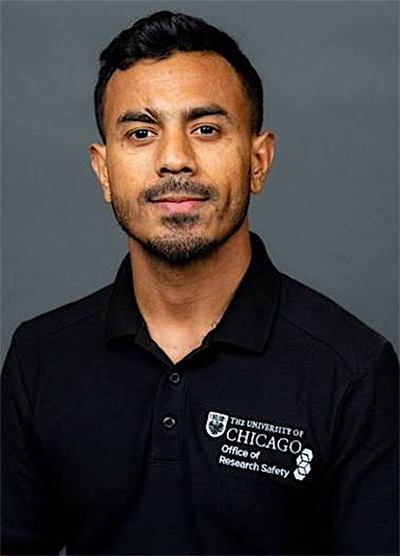
The author wishes to acknowledge the Office of Research Safety at The University of Chicago for their support and the resources provided in the preparation of this article. Dr. Selina Hess assisted with document preparation. The written content, technical interpretations, and conclusions were developed by the author using the listed references.
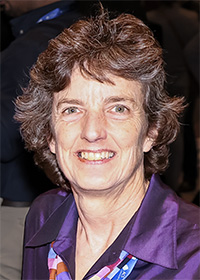
Profile photo credit: University of Chicago
References
1. Hill, R. H.; Finster, D. C. Laboratory Safety for Chemistry Students, 2nd ed.; John Wiley & Sons: Hoboken, NJ, 2016.
2. American Chemical Society Committee on Chemical Safety. Guidelines for Chemical Laboratory Safety in Academic Institutions; American Chemical Society: Washington, DC, 2016.
3. Mulcahy, M. B.; Bocwinski, R. L.; Gmurczyk, M.; Elston, H. J.; Heald, R.; Koehler, M.; Martinelango, P. K.; Wietstock, S. M. Chemical Safety Ecosystem of the American Chemical Society: A Primer. ACS Chem. Health Saf. 2026, 33, 1–7 (and references therein). https://doi.org/10.1021/acs.chas.5c00201
4. Acebes, F., González-Varona, J.M., López-Paredes, A. et al. Beyond probability-impact matrices in project risk management: A quantitative methodology for risk prioritisation. Humanit. Soc. Sci. Commun. 11, 670 (2024). https://doi.org/10.1057/s41599-024-03180-5
5. U.S. Occupational Safety and Health Administration. Hazard Communication Standard (HazCom 2012), 29 CFR Section 1910.1200; U.S. Department of Labor: Washington, DC. https://www.osha.gov/hazcom
6. American National Standards Institute/International Safety Equipment Association. Emergency Eyewash & Shower Equip-ment; ANSI/ISEA Z358.1-2014; ANSI: Washington, DC, 2014.
7. University of Chicago Office of Research Safety. Laboratory Safety Resources. Chemical Hygiene Plan, 2022 ed. https://d3qi0qp55mx5f5.cloudfront.net/researchsafety/docs/CHP_2022.pdf
8. Kemsley, J. 10 years after Sheri Sangji’s death are academic labs any safer? Chem. Eng. News 2018, 97, 1.
https://cen.acs.org/safety/lab-safety/10-years-Sheri-Sangjis-death/97/i1
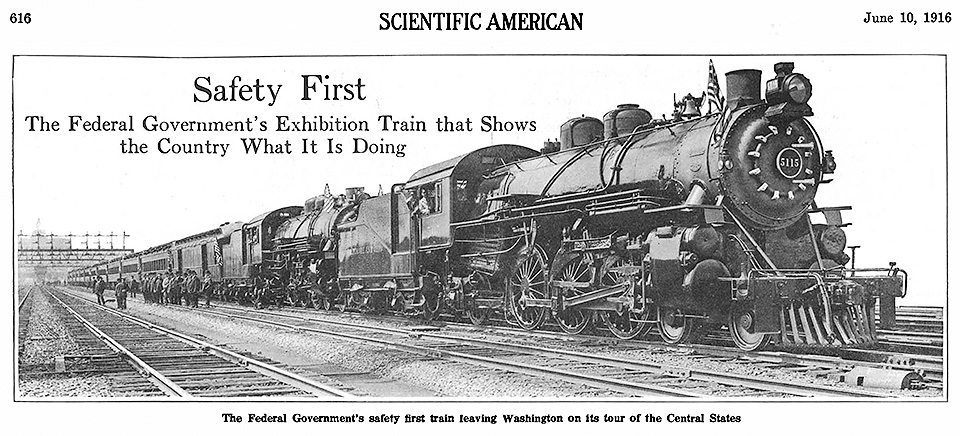
The 12-car, all-steel Safety First Train, furnished with safety exhibits, is shown departing Washington, D.C. on its tour of the Central United States. The train was “hauled over the entire B. & O. system” so that “every citizen who cares to do so may see just what his government is doing for him.”
(Scientific American, June 10, 1916)
ChemShorts for Kids
Melting Snow
I don’t’ think we’re quite ready for this yet, but I was thinking the other day about a question posed to me by a kindergartner who was in a science fair. They had noticed that the snow on the streets and sidewalks seemed to melt faster than the snow in the grass. What an excellent observation, I thought, and one worthy of investigating for ChemShorts.
Materials:
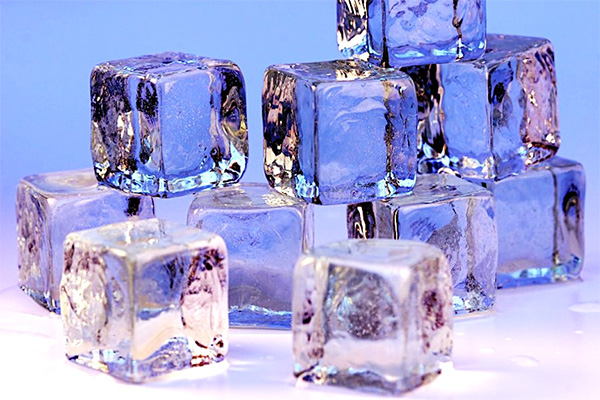
- Ice cubes
- Paper plate
- Aluminum or metal pan
- Glass or ceramic plate
- Plastic Plate
Experiment:
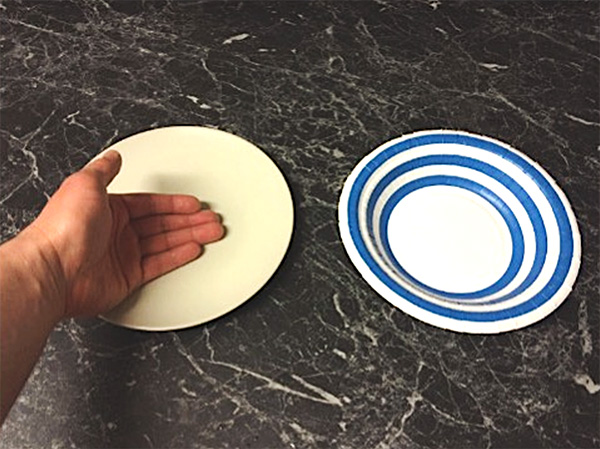
Gather the plates and the metal pan and let them all sit in the room for 10 minutes or so. They should all come to the same temperature. Touch each of the plates and notice if some of them feel colder while others feel warmer. If you place an ice cube on each plate, predict which one you expect will have the ice melt first, and last. Do the experiment. It may take 5–10 minutes to see appreciable melting. Did your prediction hold?
What’s Happening?
You probably noticed that the “coldest” plate (metal pan) had the ice cube that melted the most while the warmest plate melted the ice cube the least. The metal pan was coldest to the touch because it is a very good conductor of heat and pulled the heat from you easily, while the paper or plastic plate was probably the warmest and the ice cube melted the slowest. These substances are poor conductors of heat so they don’t pull the heat away from you. This is the reason that Styrofoam coolers are so good at keeping things cold—the food and drinks inside the container cannot pull heat from the container since it’s a poor conductor.
Extension:
What are some other objects that can be tested? The original observation was about snow on grass. How would you test this and compare it to cement? What materials would you use in designing a refrigerator? Check your refrigerator and see what the inside of it is made of.
Resources:
https://www.experimentarchive.com/experiments/warm-and-cold-plates/
To view all past “ChemShorts for Kids”, go to: https://chicagoacs.org/ChemShorts
—PAUL BRANDT
Upcoming Events

Chicago ACS Section Programs
https://chicagoacs.org/meetinginfo.php
|
Nov 6, 4:30 - 8:30 PM |
Basolo Medal lecture by Prof. Kimoon Kim (POSTECH, South Korea) will speak on: “From Supramolecular Materials to Sound-Controlled Chemistry: A Journey in Chemical Innovation”. Lecture is free and requires no reservations, but reservations for the reception and dinner have closed. |
|
Nov 7, 4:30 PM |
Younger Chemists will meet for a Career Panel at Loyola University Chicago, Lakeshore Campus. See flyer above for details and registration |
|
Nov 15, 11:59 AM |
Last opportunity to vote in the 2026 Chicago ACS election |
|
Nov 20, 5:30 - 8:30 PM |
Monthly program with speaker Angela K. Wilson, Past ACS President. Lecture is free; register here for dinner. See article above for details. |
|
Dec 11, 5:00 - 8:30 PM |
Holiday Party with speaker Joseph Jones (U.S. Drug Testing Laboratories) |
Please also refer to the Section’s website chicagoacs.org/meetinginfo.php and social media accounts
ACS Webinars
“Mapping the Future of
Polymer Innovation with AI:
What’s Hot, What’s Not, and What’s Next”
Nov 5 10–11 AM Central Time
Join CAS and the PetroChina Shanghai Advanced Materials Research Institute (SAMRI) as they illustrate how artificial intelligence and natural language processing, applied to nearly 1 million polymer publications from the CAS Content Collection™.
•
“Science Has a Voice. Is Yours Part of It?
An ACS Town Hall on Advocacy, Advisory, and Action”
ACS President Rigoberto Hernandez
Nov 10 Noon–1 PM Central Time
•
“The Accessibility Equation:
What ADA Title II Means for STEM Education”
Nov 12 1–2 PM Central Time
Join experts in disability law, digital accessibility, and STEM education as they discuss common challenges in implementation, emerging expectations, and practical approaches for creating more accessible learning experiences.
FRONT ROW LECTURE SERIES
SCRIPPS RESEARCH
“Controlling the where, when and how long of vaccine delivery”
Nov 18 6 - 7 PM, CT
With Dr. Darrell Irvine. Click here to register.
NIU STEAM Cafés
“Responding to Food Systems Challenges”
at Prairie State Winery, Genoa, IL
Nov 4 6:30 PM
•
“The Science of Play”
at South Moon BBQ, Hinkley, IL
Dec 2 6:30 PM
•
Details: https://niusteam.niu.edu/programs-events/
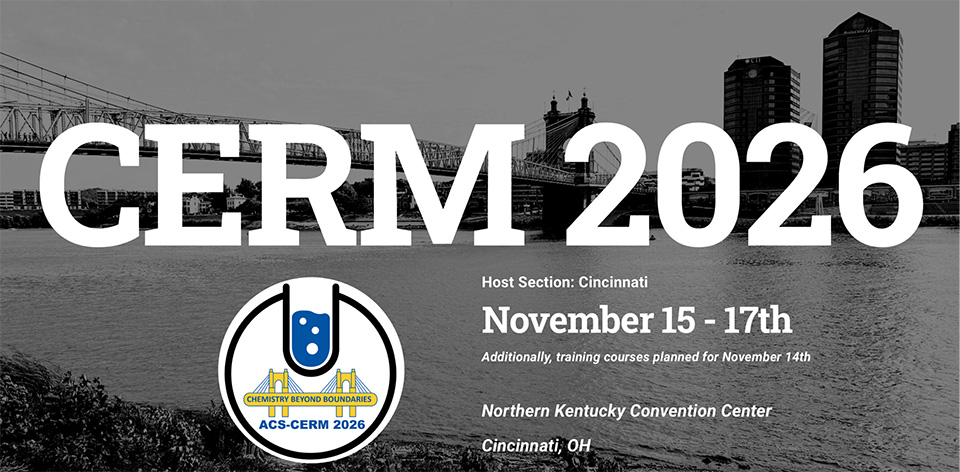
ACS REGIONAL MEETINGS – CERM
(Central Regional Meeting)
NOV 15–17
Register at: www.acscerm2026.org
Researchers, and students, and colleagues are invited to participate in a program featuring cutting-edge science, professional development opportunities, and networking events. Invited speakers include Omar K. Farha (Northwestern University), Jie Xu (University of Chicago), Mickey Rogers (AAAS Science & Technology and Policy Fellow), and Paul S. Weiss (UCLA), presenting on topics including sustainability, AI-driven chemistry, science communication, and nanoscience. Planned event include Career Workshop Day Facilitated by ACS and The Procter & Gamble Company (Saturday, Nov 14) / Women in Science Innovators Breakfast / Awards Banquet / From Writing to Visuals: Scientific Figure Design / Tour of the Oesper Collections in the History of Chemistry / Chemistry on Tap – Beer and Spirit Tasting, and The Science Behind Beer, Fermentation and Flavor
CHICAGO SECTION BOARD MEETINGS
Open to all Section members. For Zoom link, contact: office-at-chicagoacs.org
2026: Nov 12, Dec 3
•
Deadlines for Bulletin Submissions
Deadline for bulletin submissions is the 16th of each month. Content can include photos, reports, past event summaries, flyers and information for upcoming events, original articles, current chemistry, etc. Contact editor-at-chicagoacs.org. Thank you!
Issue Deadline
December 2026 November 16, 2026
January 2027 December 16, 2026
February 2027 January 16, 2027
Puzzle Solution
Board & Committee Members

2026 Chicago ACS Section Officials
|
Chair Chair-Elect Past Chair Vice Chair Secretary Treasurer |
Amy Balija Inessa Miller Anita Mehta Sunshine Silver Michael Koehler Russ Johnson |
|
|
Directors |
2025-2026 Daniela Andrei 2026-2027 Ken Fivizzani |
directors-at-chicagoacs.org |
|
Councilors |
2024-2026 Paul Brandt 2025-2027 Josh Kurutz 2026-2028 Amy Balija |
councilors-at-chicagoacs.org |
|
Alternate |
2024-2026 Avrom Litin 2025-2027 Katie Leach 2026-2028 Nicolas Gerst |
altcouncilors-at-chicagoacs.org |
* One vacancy to be filled by the Board
Masthead
Bulletin Information
November 2026, Vol. 113, No. 9
Published monthly (10 issues, Sept – Jun) by the Chicago Section of the American Chemical Society
https://chicagoacs.org
Editor: Margaret E. Schott
editor-at-chicagoacs.org
Digital Editor: Josh Kurutz
historian-at-chicagoacs.org
Proofreaders: Amy Balija, Nicolas Gerst
How to reach us
office-at-chicagoacs.org (847) 391-9091
ACS Chicago Section Office
Krasa 035B and C
5700 College Road
Lisle, IL 60532
Website: https://chicagoacs.org
Social links
Follow ChicagoACS on social media!
Bluesky (new!): https://bsky.app/profile/chicagoacs.bsky.social
Instagram: https://www.instagram.com/ChicagoACS/
Facebook: https://www.facebook.com/ChicagoACS
LinkedIn: https://www.linkedin.com/groups/1854603/


