In this issue
The August/September 2026 Chemical Bulletin - SPECIAL 
PDF of the Latest Bulletin
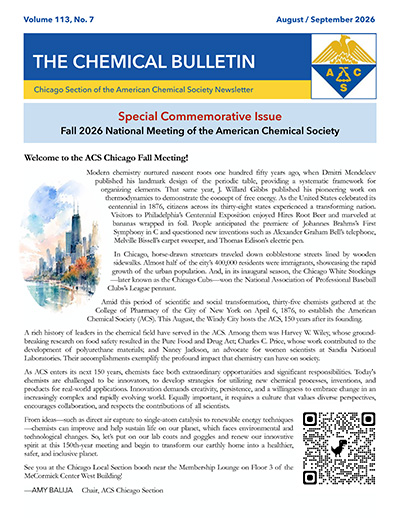
https://chicagoacs.org/images/downloads/Chemical_Bulletin/2026_0809_chembull.pdf
Letter from the Chair
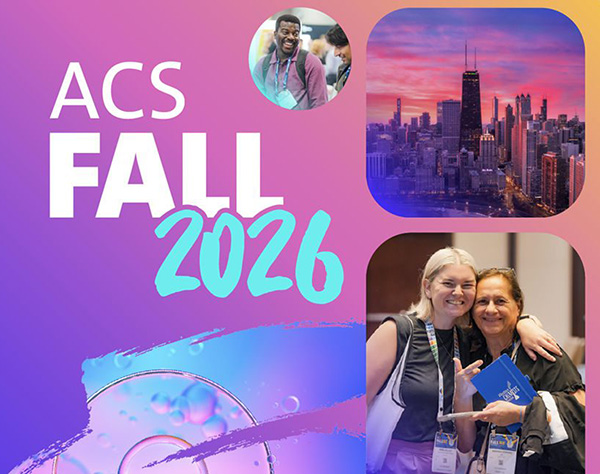
Welcome to the ACS
Chicago Fall Meeting!
Modern chemistry nurtured nascent roots one hundred fifty years ago, when Dmitri Mendeleev published his landmark design of the periodic table, providing a systematic framework for organizing elements. That same year, J. Willard Gibbs published his pioneering work on thermodynamics to demonstrate the concept of free energy. As the United States celebrated its centennial in 1876, citizens across its thirty-eight states experienced a transforming nation. Visitors to Philadelphia’s Centennial Exposition enjoyed Hires Root Beer and marveled at bananas wrapped in foil. People anticipated the premiere of Johannes Brahms’s First Symphony in C and questioned new inventions such as Alexander Graham Bell’s telephone, Melville Bissell’s carpet sweeper, and Thomas Edison’s electric pen.
In Chicago, horse-drawn streetcars traveled down cobblestone streets lined by wooden sidewalks. Almost half of the city’s 400,000 residents were immigrants, showcasing the rapid growth of the urban population. And, in its inaugural season, the Chicago White Stockings—later known as the Chicago Cubs—won the National Association of Professional Baseball Clubs’s League pennant.

Amid this period of scientific and social transformation, thirty-five chemists gathered at the College of Pharmacy of the City of New York on April 6, 1876, to establish the American Chemical Society (ACS). This August, the Windy City hosts the ACS, 150 years after its founding.
A rich history of leaders in the chemical field have served in the ACS. Among them was Harvey W. Wiley, whose ground-breaking research on food safety resulted in the Pure Food and Drug Act; Charles C. Price, whose work contributed to the development of polyurethane materials; and Nancy Jackson, an advocate for women scientists at Sandia National Laboratories. Their accomplishments exemplify the profound impact that chemistry can have on society.
As ACS enters its next 150 years, chemists face both extraordinary opportunities and significant responsibilities. Today's chemists are challenged to be innovators, to develop strategies for utilizing new chemical processes, inventions, and products for real-world applications. Innovation demands creativity, persistence, and a willingness to embrace change in an increasingly complex and rapidly evolving world. Equally important, it requires a culture that values diverse perspectives, encourages collaboration, and respects the contributions of all scientists.
From ideas—such as direct air capture to single-atom catalysis to renewable energy techniques—chemists can improve and help sustain life on our planet, which faces environmental and technological changes. So, let’s put on our lab coats and goggles and renew our innovative spirit at this 150th-year meeting and begin to transform our earthly home into a healthier, safer, and inclusive planet.
See you at the Chicago Local Section booth near the Membership Lounge on Floor 3 of the McCormick Center West Building!
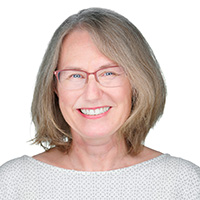
—Amy Balija
Chair, Chicago Section ACS
From the Editor's Desk
Celebrating Chicagoans
The tagline for the year-long ACS150 celebration is “chemistry is everything”. Curiously, this idea found expression over a century ago in The Chicago Chemical Bulletin, as it was called at the time. An editorial in the March 1916 issue states that “chemistry has been at the bottom of everything for a long time, the ignorance of our public men and journalists notwithstanding”! Here, the writer’s sincere hope is that chemistry will not prove to be a fad—in other words, the focus of media attention for short a time only.
In keeping with the spirit of the ACS Fall National Meeting in Chicago (August 23–27), this issue takes a look back in time to celebrate the origins of the national society and the Chicago Section, as well as a look to the future by highlighting the successes of younger chemists. Russ Johnson has written a fascinating article about the evolution of industrial chemistry in the greater Chicago area. Irene Cesa has contributed two historical pieces, one on the World’s Columbian Exposition of 1893 and its connection with Chicago chemists, and the other on the key role of ACS Local Sections in forming the national society as we know it today.
A contribution from Russ Kohnken lists the winners of the annual scholarship exam and of named scholarships. Two recent Project SEED students describe their experiences of participating in summer research at local labs. And thanks to the creativity of educator Paul Brandt, school-age children can benefit from constructing a vintage pinhole camera in the current installment of ChemShorts for Kids. I am pleased to welcome a new contributor to the bulletin, Chandra Man Karki, who is a Chemical Safety Officer at The University of Chicago’s Office of Research Safety. His article on the ACS RAMP framework provides important and timely input on safe research practices, including an evaluation of the appropriate role of artificial intelligence (AI) when planning potentially hazardous laboratory work.
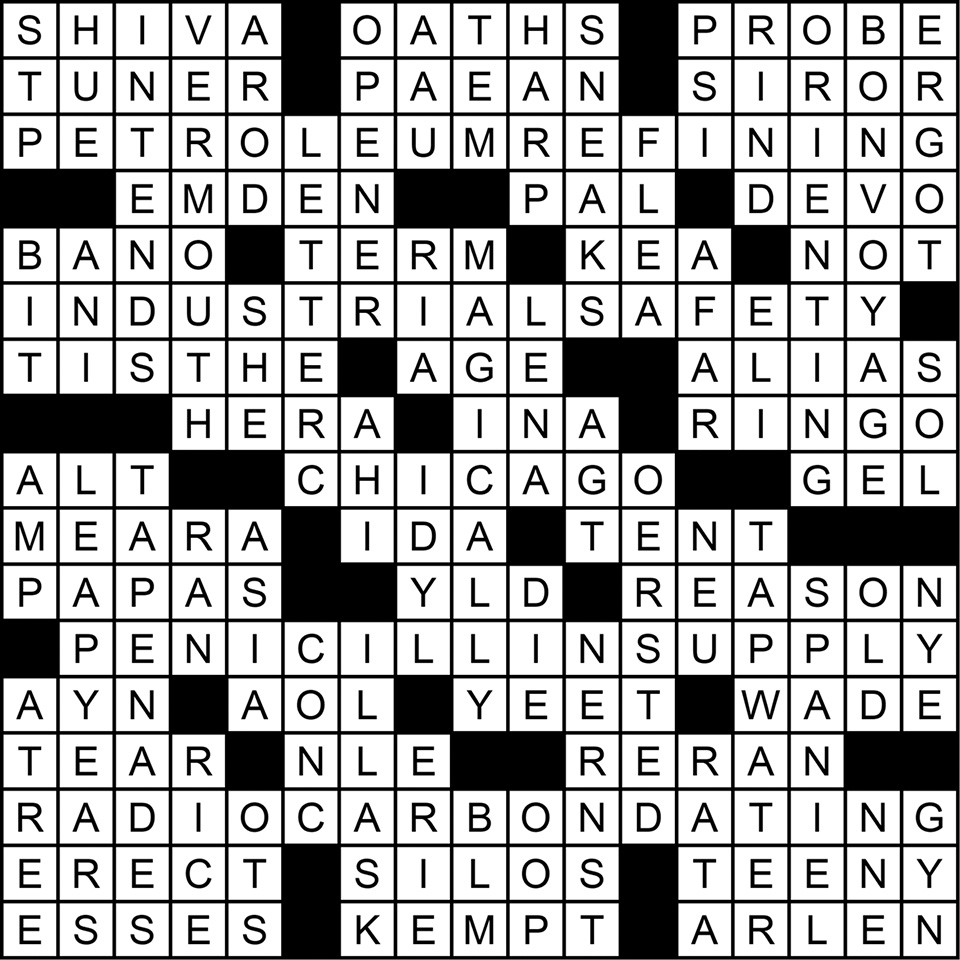
Finally, this issue offers a selection of puzzles for fun and learning for kids of all ages. Irene Cesa and Mark Cesa have created an original crossword puzzle titled “Chemistry in the City”, and Amy Balija has whipped up a Chicago-themed Wordsearch and an elemental ChemDoku puzzle. Let us know how you enjoy these brain challenges!
Josh Kurutz serves as the bulletin’s digital editor. In addition to publishing the PDF version, he arranges and illustrates the contents in a readable format for those who prefer an email-feed style of presentation. If you enjoy this special celebratory issue, why not pass it along to a friend or colleague?
— MARGARET E. SCHOTT
Special Event
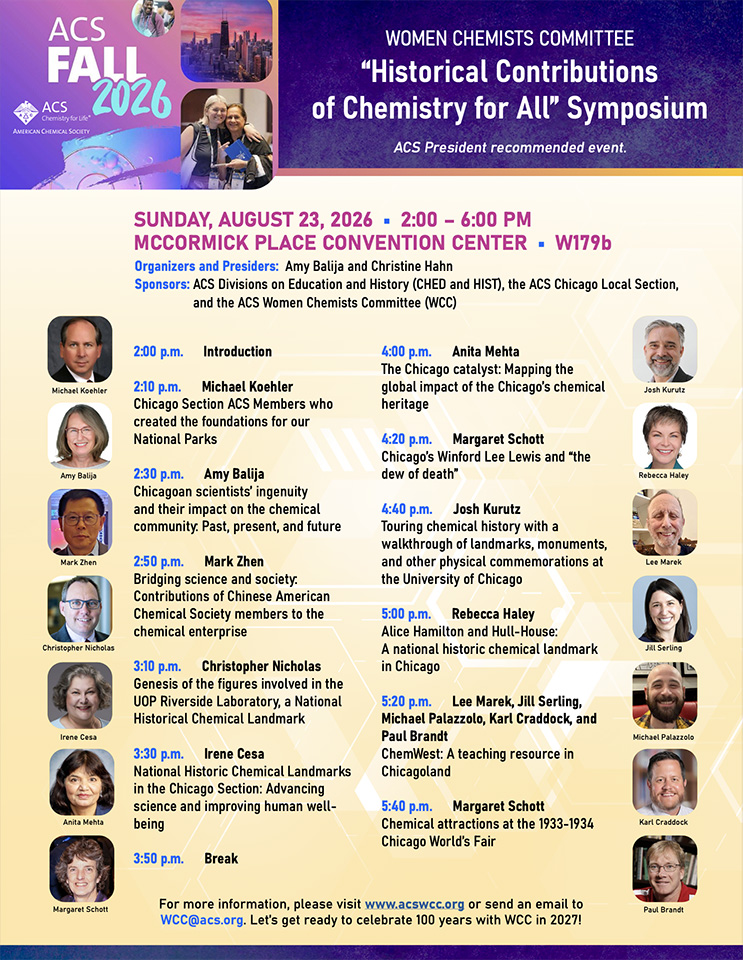
SYMPOSIUM AT NATIONAL MEETING:
“Historical Contributions of Chemistry for All”
Sponsored by WCC, CHED, HIST
an ACS President recommended event
SUNDAY, AUGUST 23, 2026
2:00 – 6:00 PM
MCCORMICK PLACE CONVENTION CENTER
W179b
Next Meeting
Education Night - HYBRID
Thursday, September 17
5:30 -8:30 PM
Truman College; Chicago, IL
"Inspiring the Next Gen in Chem:
A Fireside Chat
Science Olympiad
CEO Jenny Kopach and Friends"
ABSTRACT
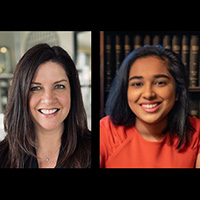
The format of the meeting is “Q & A”, with the Chicago Section’s Amy Balija and Ilana Lemberger posing questions for Jennifer Kopach and Jolly Patro to answer. Information about the Science Olympiad will be shared during this “fireside chat” exchange. Afterwards the floor will be open for all participants to ask questions.
PROGRAM
5:30 – 6:00 PM Check-In/Social Hour/Student Posters
6:00 – 7:15 PM Buffet-style Dinner
7:15 – 7:30 PM Announcements/Scholarship Awards/
Teacher Excellence Award/Emerging Star Award
7:30 – 8:30 PM Fireside Chat, Q&A, Closing Remarks
In-Person Dinner Venue, MENU, and cost
Harry S Truman College, 1145 W Wilson Ave, Chicago, IL 60640
Google map location: https://maps.app.goo.gl/9i1tEkxKrBbDWXqy5
Parking & Transit info: https://www.ccc.edu/truman/menu/getting-there/
This event is open to the public.
MENU
• Chicken Parmesan – Breaded Chicken topped with mozzarella and house-made tomato sauce;
• Pasta Primavera – Parmesan-Lemon Pasta with grilled zucchini agrodolce and fresh basil;
• Chopped Salad – Crisp seasonal Greens with assorted vegetables
• Assorted Cookies
• Coffee, Assorted Beverages.
DINNER COST: $35 / person (lecture-only is free)
REGISTRATION
DEADLINE 12:00 NOON, WEDNESDAY, SEPT. 9th
Questions? Email us (info-at-chicagoacs.org) or
contact us by phone (847-391-9091).
SPEAKERS
Jennifer Kopach
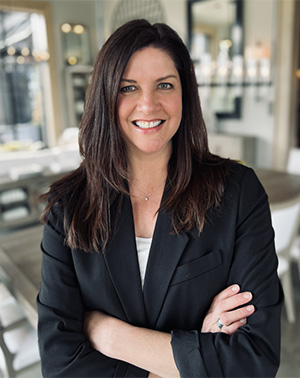
Jennifer Kopach serves as CEO of the Science Olympiad, the nation’s largest K-12 team STEM competition, and as President and CEO of the Science Olympiad USA Foundation. Now in its 41st year, the Science Olympiad is a well-functioning non-profit with 50 state chapters and 57 alumni chapters across the U.S. Kopach oversees operations and manages partnerships with leading businesses, government agencies, scientific associations, and higher education institutions with the aim of improving the STEM experience for students, families and teachers. The Foundation is dedicated to carrying out the charitable, educational and scientific purposes of Science Olympiad, Inc. In one initiative, the Foundation awards $25,000 early-career Science Olympiad Alumni Research (SOAR) Grants. Kopach has also devoted effort to creating workforce development programs, securing grants for high-need communities, and providing career-pathway opportunities. She has written about bridging STEM skills and gender gaps for Fortune 500 companies, spoken about the power of effective mentoring programs at the Million Women Mentors Summit in Washington, D.C., and helped organize six White House Science Fairs (Obama administration). She also developed the Science Olympiad Global Ambassador Team program with the Japan Science and Technology Agency. Since 2009 this partnership has brought top Japanese students to the National Tournament each year.
Jolly Patro
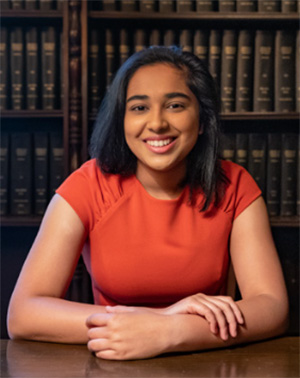
Jolly Patro is a Science Olympiad Alumni Research (SOAR) Grant awardee and a Chemistry Graduate Student at Northwestern University. As a Science Olympiad Heart of Gold winner and National Tournament Co-Director, she continues her love of community service through the NSF-funded Center for the Chemistry of Molecularly Optimized Networks (MONET), by providing hands-on activities to students on Chicago’s southwest side. She credits the Science Olympiad with giving students like herself a “platform to learn how to research topics and teach themselves foundational and practical topics in STEM.” Her graduate research addresses the plastics pollution crisis through two emerging fields: polymer mechanochemistry and covalent adaptable networks.
Scholarship Winners

70th Annual Scholarship Exam in Chemistry
The Chicago Section is pleased to announce the winners of the 2026 Scholarship Exam in Chemistry. The exam was administered on Saturday, May 16, 2026 at Benedictine University and at Glenbrook South and Whitney Young Magnet High Schools. A total of 46 students from 10 schools took the 2026 ACS Scholarship exam. Each chemistry teacher could nominate two students to take the exam. Congratulations to the winners and their teachers!
Awards will be given to students at the ACS Education Night meeting at Truman College on September 17th from 5:30 – 8:30 PM. Award winners and their teachers will be contacted by the Chicago ACS office. Teachers of a prize-winning student(s) will receive a one-year membership in American Association of Chemistry Teachers (AACT). All teachers and students are invited and encouraged to attend the ACS Education Night meeting, and teachers in attendance will receive CPDU credits. Teachers do not have to be ACS members to attend. Register online at https://chicagoacs.org/.
A special thank you to Dr. Tim Marin, Chemistry Professor at Benedictine University; Despina Mandarino, Glenbrook South HS; and Karen Trine, Whitney Young HS for their hosting and proctoring of the exam and Dr. Paul Brandt for authoring and grading the exam. Additional thanks go to those who helped administer the process including Lindsay Consdorf, Sherri Rukes, and Tata Venkata.
| Prize and Award | Winner | Teacher & School |
|
FIRST, |
Gabriel Wang |
Kevin Nihill |
|
SECOND, |
Theodore Deters |
John Gridley |
|
THIRD, |
Nia Minumula |
Brandon Tucker |
|
FOURTH, |
Brea Yang |
John Gridley |
|
FIFTH, |
Baruni Soni |
Michael Comerford |
|
MARIE LISHKA*, |
Nia Minumula |
Brandon Tucker |
|
MARSHALL S. SMOLER**, |
Dylan Fan |
WenHua Deng |
|
BERNARD E. SCHAAR***, |
Gabriel Wang |
Kevin Nihill |
*To the highest scoring female in the examination. This award honors Marie Lishka, who was an active Chicago Section member for many years. Additional funding for the Lishka award was provided in memory of Stan Drigot.
**To the highest-scoring Chicago Public High School Student. His sister, Rachel, established this award in 1972 in memory of Marshall S. Smoler. Mr. Smoler was for many years a chemistry teacher in the Chicago public schools.
*** To the highest scoring Chicago High School student. Mr. Bernard Schaar’s widow established this award in memory of Mr. Bernard Schaar, long active in Chicago Section, American Chemical Society and the Chicago Chemist’s Club
HONORABLE MENTIONS BASED ON EXAM SCORES
(listed in alphabetical order)
Ryan Alvarez, Lane Tech College Prep HS
Funds for the scholarship exam awards come from the ACS Chicago Section endowment and investment funds contributed by individuals and the chemical industry. The section is grateful for financial contributions from Stan Drigot, Dr. Henry M. Walton, Rachel Smoler, and the Chicago Chemists’ Club.
—RUSS KOHNKEN
ACS Component Groups
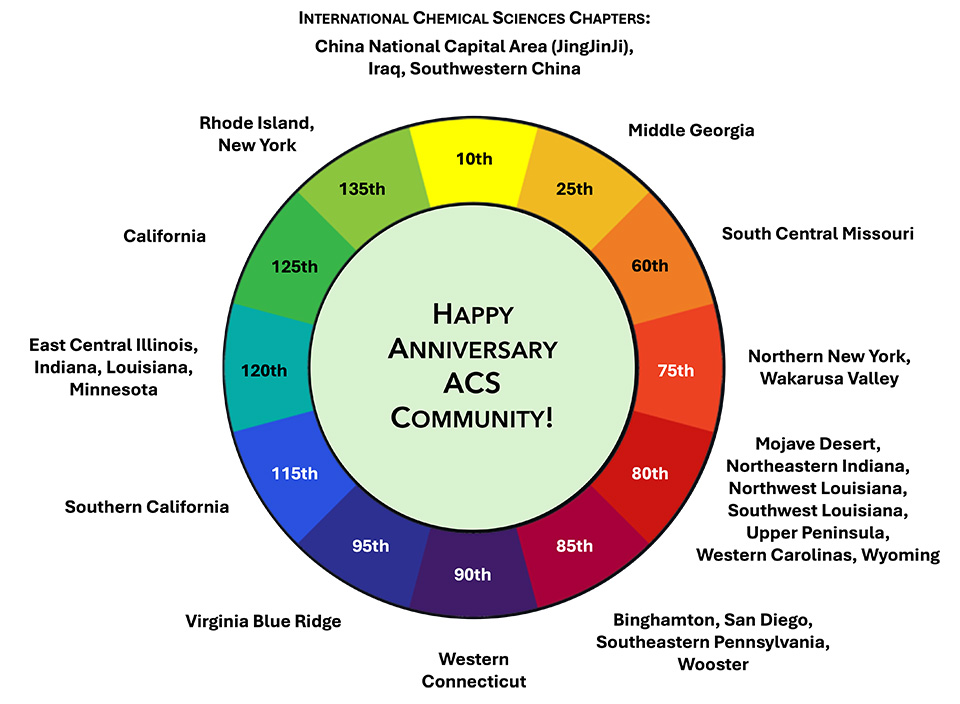
Celebrating Local Section
Milestones and More
•
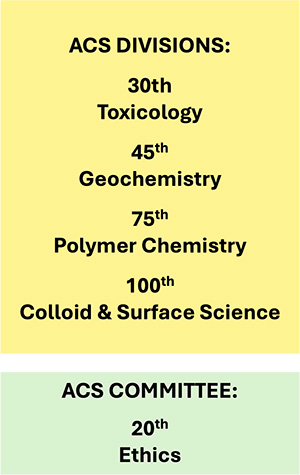
Data sources: ACS Town Hall 2026.pdf, ACS international chapters
ChemLuminary Awards
ChemLuminaries to be Announced
Winners of the ChemLuminary Awards will be announced on Sunday, August 23 during the ACS Fall National Meeting. These awards are judged on the basis of Local Sections’ reporting of 2025 events and initiatives. The Chicago Section has been selected as a finalist for each of the following ChemLuminaries:
Chemists with Disabilities Inclusion Award
Outstanding Continuing Communications Program
Outstanding Local Section Younger Chemists Committee
Most Outstanding Local Section Women Chemists Committee
Fostering Interactions between Local Sections and Student Chapters
Outstanding or Creative Local Section Younger Chemists Committee Event
For more about ACS' Chemluminary Awards, see:
https://www.acs.org/funding/awards/chemluminary.html
ACS History

The American Chemical Society
Is a National Organization
Because of Local Sections
The American Chemical Society (ACS) was founded in New York City in 1876. The organization was incorporated and chartered under the laws of New York State for “the encouragement and advancement of chemistry in all its branches” and “to promote scientific interests and inquiry.” [1] In accordance with this charter, ACS Bylaws stipulated that it be governed by a Board of Directors with 13 members, “of whom a majority shall be … residents in the State of New York.” From its founding up until 1889, however, all ACS Directors had, in fact, been New York residents, leading to a feeling among some members that ACS was a local rather than a national organization. [1]
In 1889, to counter this impression and to head off a possible rival—namely, the Chemical Society of Washington—from forming a splinter “Continental Chemical Society,” Professor C. E. Munroe of Rhode Island, who had been a founding member of ACS, proposed a series of constitutional reforms. The revised constitution was formally adopted by the ACS membership in 1890, providing for 1) the establishment of ACS Local Sections throughout the country, 2) general meetings of the Society to be held outside of New York, and 3) election of an Advisory Council, a 12-member governance body with at least nine members from outside the New York metropolitan area. [2] Thus, any possible rift was healed before it could be widened.
On January 21, 1891, the ACS Board of Directors formally recognized the Rhode Island Section of the American Chemical Society as the first Local Section. It was followed soon after by the New York Section (1891), the Cincinnati Section (1892), the Chemical Society of Washington (1893), the Lehigh Valley Section (1894), and the Chicago Section (1895)*. Currently, 195 ACS local sections represent and serve more than 200,000 chemistry professionals in all 50 states and Puerto Rico. [3]
At its founding in 1895, the ACS Chicago Section consisted of 34 members. [4] Frank Julian, an analytical chemist with the Illinois Steel Co., and later Chief Chemist of the Great Northern Railway, served as the first Section’s first chair (1895–1896). [5] Today, the 4000-plus members of the Chicago Local Section are delighted to join with the national society in welcoming chemists from across the nation—and the world—to the Fall 2026 ACS National Meeting.
—IRENE CESA
* From The Chemical Bulletin (Dec 1926, adapted): During a recent meeting, the chartering of the Chicago Section in ’95 was related. However, much of the story of the early days was lost with the minutes which were carried away by an early secretary.
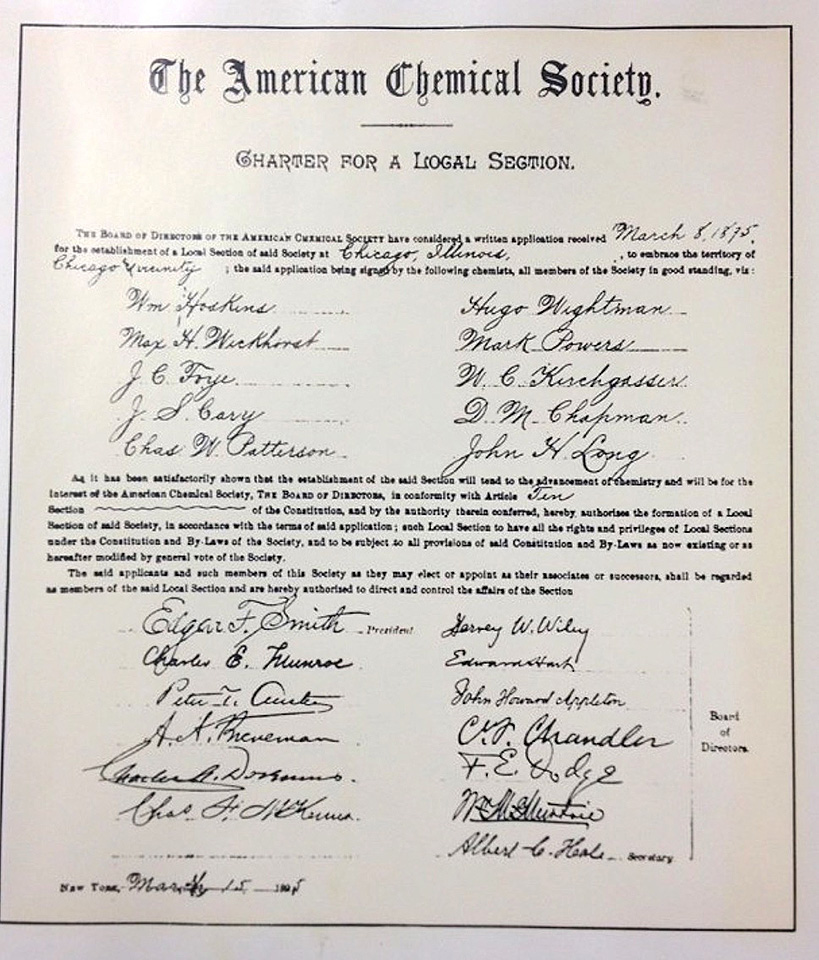
Charter of the Chicago Section of the American Chemical Society, signed in 1895.
https://chicagoacs.org/images/gallery/Historical_Images/ChicagoACS_Charter_photo.jpg
References
1. Browne, C.A. and Weeks, M.E. A History of the American Chemical Society: Seventy-five eventful years; American Chemical Society, 1952; p 24.
2. Ibid., pp 30–34.
3. https://www.acs.org/local-sections/local-section-websites.html (accessed August 1, 2026).
4. Mission and History of the Chicago Section. https://chicagoacs.org/HIstory_of_the_Chicago_Section (accessed August 1, 2026).
5. Engineering News and American Railway Journal, Supplement, October 29, 1896.
https://upload.wikimedia.org/wikipedia/commons/0/07/Engineering_News_and_American_Railway_Journal_1896-10-29-_Vol_36_Supplement_%28IA_sim_enr_1896-10-29_36_supplement%29.pdf (accessed August 1, 2026).
Willard Gibbs Award History
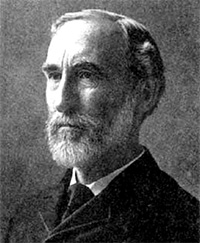
115 Years of Gibbs Medal Awards
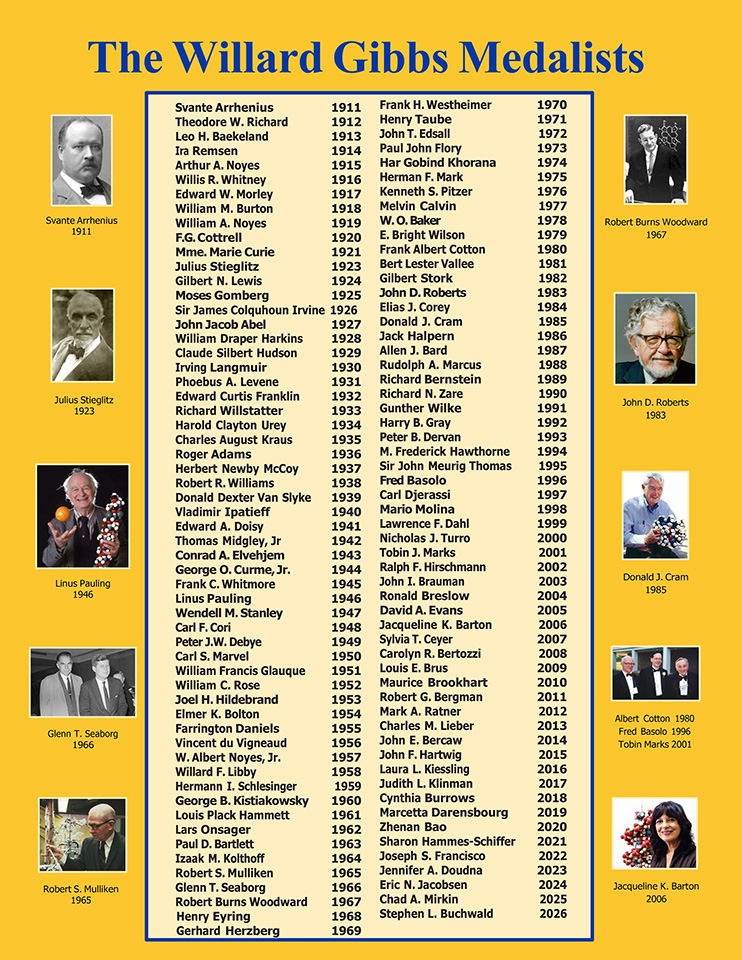
Each year the Chicago Section of the ACS awards one of the most prestigious honors in chemistry, the Willard Gibbs Award, founded by William A. Converse. Rather than recount the award’s history, we offer a selection of quotes—lighthearted and otherwise—which might have remained buried in past issues of The Chemical Bulletin. We hope you enjoy these dusted-off gems. The names of Gibbs medalists from its inception to the present are listed on the following page. For detailed information about history of the award and many of the medalists, see the Willard Gibbs Award Wikipedia page maintained by Josh Kurutz, Chicago Section historian. Readers are also referred to an article from Chemical & Engineering News titled “100 Years of Gibbs Medals”.
On a more serious note
• “Our story must begin, of course, with Josiah Willard Gibbs (1839–1903), Yale physicist and mathematician, whose expressions of the laws governing heterogeneous equilibria were very quickly hailed by European chemists and acknowledged by them as the work of genius. In America, Gibbs remained virtually unknown, and so late as almost 1937, Yale University’s only publicly displayed token of admiration of one of her highest luminaries was a bas relief in the old Sloane Laboratory, and this bas relief was the gift of the German chemist, Walter Nernst. That the opinion of American chemists has long since caught up with that of our European colleagues is obvious.” [May 1954]
• “The list of medal holders took on an international aspect with the first presentation, which was made to Svante Arrhenius on May 12, 1911. The first American Chemist to receive the award was Theodore Richards in 1912. … The medal, though young in years, has a prestige comparable to many of the famous European awards. Indeed, so highly is the honor prized that no refusals have been met during the twenty years it has been in effect.” [March 1931]
• “The time has come when the Nobel Prize Jury has recognized the fact that the roster of Willard Gibbs medalists is an incomparable list from which to choose. We congratulate Dr. Langmuir on his newest honor which he so justly merits.” [October 1932]
On a more lighthearted note
• “On the day of the award ceremony, [1913 medalist] Baekeland received help from Hylton Swan, a General Bakelite sales engineer, who arranged a display of various Bakelite artifacts and ‘all chemical formulae were hung on the wall.’ At the end of his presentation Baekeland stated that he ‘was just as glad as [the audience] that my lecture was over and that I felt like a schoolboy who was just thru with his prize oration.’ His uneasiness stemmed … in no small measure from the content of his talk. Unlike his earlier lectures, its focus was on the ‘purely theoretical' side of the Bakelite process. In view of the daunting challenges in this area, he therefore found himself dangerously close to what he called “the nebulous realm of gratuitous assumption and hypothesis.”*
• “Dr. Klein has promised to refrain from smoking at the [Gibbs] party. ‘The Old Guard’ will not attempt to put on a cabaret show, and ample means have been provided to maintain order and decorum.” [May 1917]
• “The occasion of awarding the medal is particularly stimulating and inspiring to the people who assemble to give signal honor to an eminent investigator and contributor. As the medal is deposited in the hands of the medalist, the humdrum of beaker-pushing is forgotten.” [June 1933]
• “The banquet committee … believes the meetings have been placed on too elegant a plane by encouraging formal dress. The very nature of the meeting insures its dignity. It [the committee] discourages formal dress this year!” [March 1942]
• “The 43rd recipient of the Gibbs award [Elmer K. Bolton] is a man whose name is perhaps less well-known than those of some of his brain children. It could hardly be better known, since two of those brain-children are named Nylon and Neoprene.” [May 1954]
—MARGARET SCHOTT
* Mercelis, J. Beyond Baekeland; MIT Press: Cambridge, MA, 2020; p. 198.
Historical Feature
The Columbian Exposition of 1893
and the History of the
American Chemical Society
The World’s Columbian Exposition of 1893 was a turning point in the history of Chicago, establishing the city’s reputation as a center of technology, innovation, and culture. James F. Muirhead, a writer from Scotland, remarked after visiting the fair that it was “perhaps the most flawless and fairy-like creation, on a large scale, of man’s invention.” [1] The event also served as an inflection point in the history of the American Chemical Society (ACS), which took a leading role in planning and organizing the World Congress of Chemistry during the exposition.
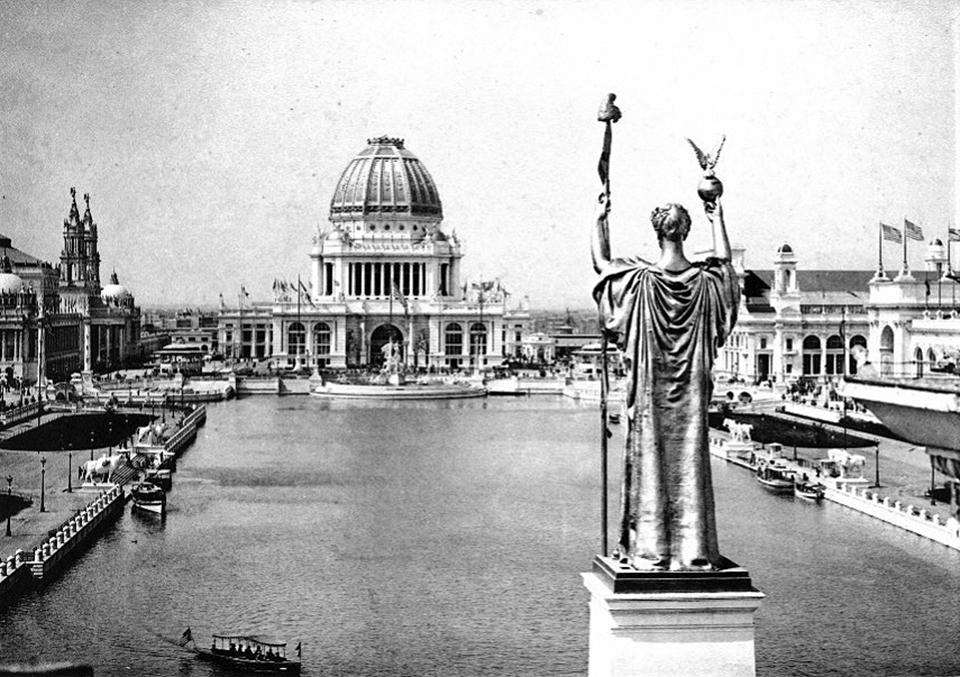
“The White City” at the World’s Columbian Exposition. Image shows the Grand Basin and the Court of Honor. https://smarthistory.org/white-city-and-fairgrounds/
Welcoming almost 200,000 visitors to the opening of the World’s Columbian Exposition in Chicago on May 1, 1893, President Grover Cleveland praised the monumental enterprise as a symbol of American progress and international unity. [2] Over the course of the next six months, 28 million attendees from 46 countries visited the “White City” and its more than 200 grand, elegant, Neoclassical-style white pavilions. History, culture, technology, and manufacturing were showcased across nearly 700 acres of both new and redesigned city parkland stretching from Jackson Park in the south to Grant Park downtown.
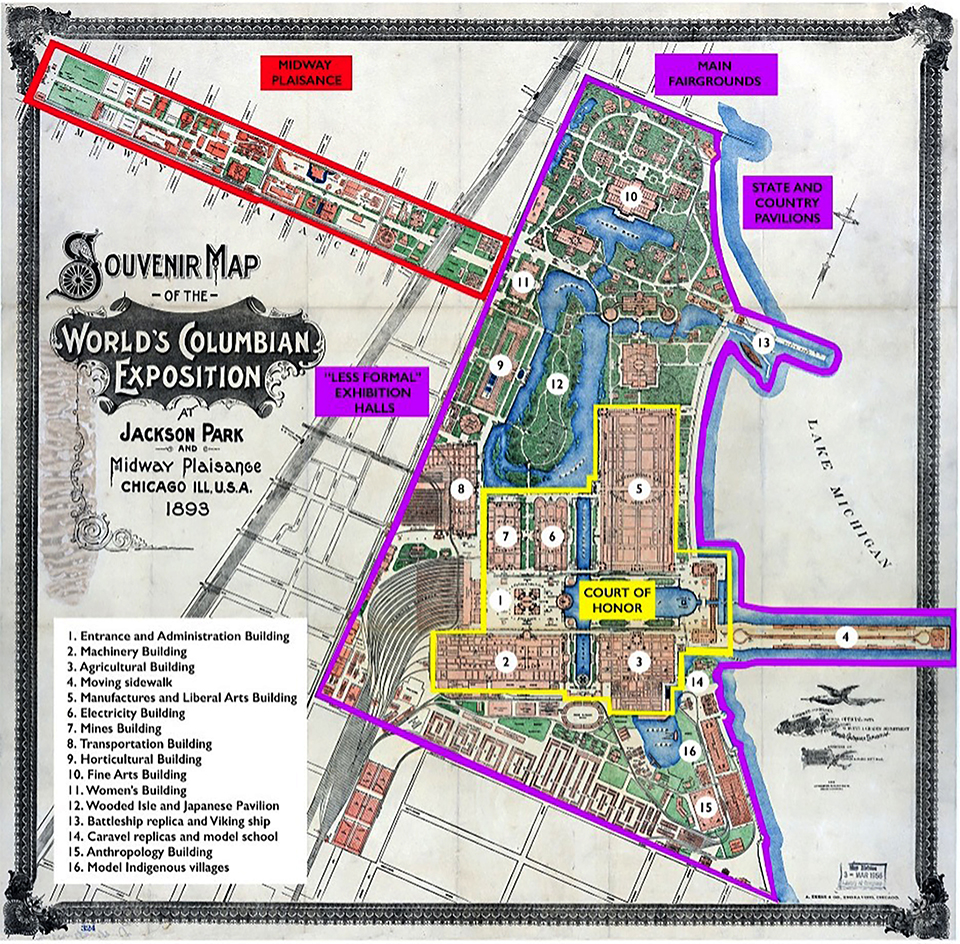
Souvenir Map of the World’s Columbian Exposition. https://smarthistory.org/white-city-and-fairgrounds/
In addition to exhibits and entertainment venues, the exposition featured a series of “World Congress” meetings representing over 200 fields of human endeavor, including art, music, religion, education, science, and medicine. [3] The building that would become the Art Institute of Chicago was designed and constructed for the purpose of hosting these meetings, and individual congresses were scheduled throughout the duration of the exposition. Organized under the auspices of the World’s Congress Auxiliary, public lectures were given by prominent national and international scholars, scientists, and leaders in each field.
The American Chemical Society, which had been founded only 17 years earlier, oversaw responsibility for organizing and hosting the Congress on Chemistry during the week of August 21–26, 1893. This undertaking was instrumental in helping the nascent society achieve greater national representation as well as international credibility and prestige. [4] ACS membership more than doubled during this time, from approximately 400 members in 1892 to 800 in 1894 and more than1000 by 1895. Two factors contributed to the rapid growth in ACS membership: nonmembers from across the U.S. were recruited to join the organizing committee for the Congress, and the excitement of the exposition attracted hundreds of chemists to attend the conference and join the society.
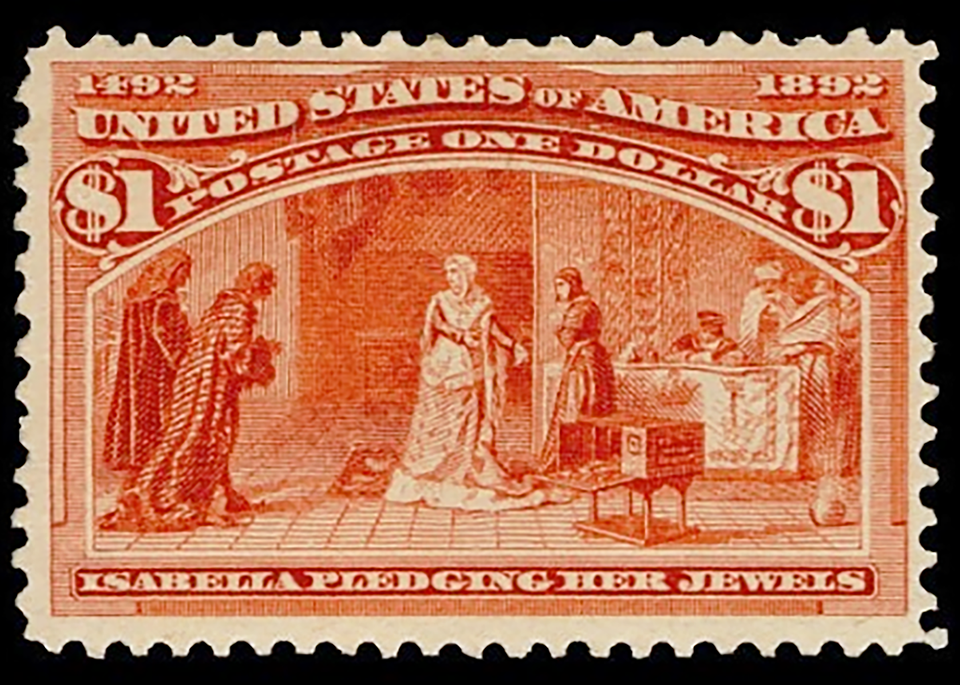
One of a series of 16 stamps issued to commemorate the World’s Columbian Exposition. https://postalmuseum.si.edu/object/npm_1980.2493.1637 The stamp legend reads "Isabella Pledging Her Jewels," referring to the financing of Columbus's expedition by Queen Isabella and the Spanish nobility.
The World Chemistry Congress was similarly successful in increasing the international reach and recognition of the American Chemical Society. Under the visionary leadership of Dr. Harvey Wiley, ACS President in 1893 and 1894, the committee planning the congress recruited 190 foreign chemists to participate on the advisory council for the meeting. [6] Calling for a “wider and deeper fraternity of chemists,” Dr. Wiley proposed that the 1893 Congress serve as a paradigm for establishment of an international triennial congress on chemistry to be held in different countries. [7] Indeed, the 1893 Chicago conference has been cited as a catalyst in the creation of the International Congresses on Applied Chemistry, eight of which were subsequently held between 1894–1912. The task of organizing these international gatherings was taken over by the International Union of Pure and Applied Chemistry (IUPAC) after its founding in 1919. [8]
The final program for the 1893 Chemistry Congress listed 76 presentations, 28 of which were made by chemists from abroad, the majority (21) from Germany, France, Great Britain, and Switzerland. Edward Morley, William A. Noyes, Wilhelm Ostwald, and Bernhard Tollens are among now-familiar names from the history of chemistry who participated in the Congress. [9]
Interesting topics of discussion at the 1893 Chemistry Congress included developments in polarimetric methods for the analysis of organic compounds; the synthesis and properties of dyes; standards for the amount of protein in milk; extraction and electrolytic purification of copper from ores; determination of the atomic weight of oxygen; theories of chemical reactivity based on the concept of chemical energy; and the important relationship between research and teaching necessary to ensure that chemistry is taught as a “constantly advancing, vital, living science.” These topics and ensuing discussions, along with most talks presented at the conference, were summarized in written papers that appeared in Volumes 15 and 16 of the Journal of the American Chemical Society (JACS) in 1893 and 1894, respectively. [10]
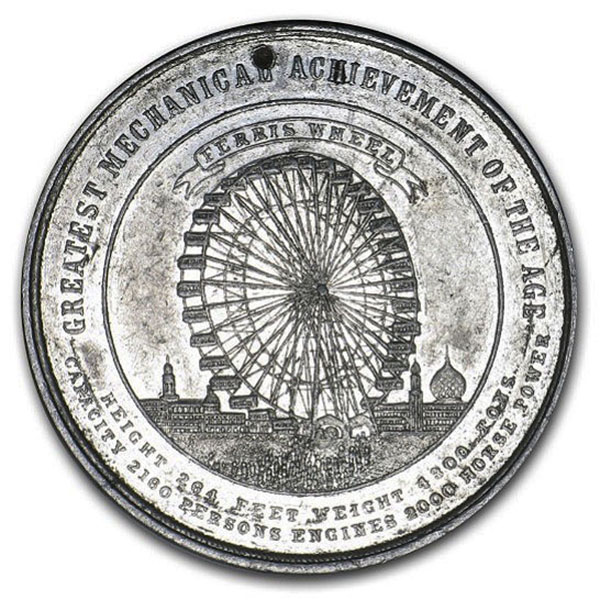
“The Greatest Mechanical Achievement of the Age,” private-issue commemorative coin from the World’s Columbian Exposition. https://www.apmex.com/product/88780/1893-columbian-exposition-medal-giant-ferris-wheel-hk-170-xf
The iconic symbol of the 1893 Columbian Exposition was the world’s first Ferris Wheel. It was designed by American engineer George Washington Gale Ferris, Jr. in response to a nationwide competition for an “awe-inspiring marvel” that would demonstrate American technological proficiency. [11] Rising 264 feet above the ground, the giant steel wheel offered a panoramic view of the “City Beautiful” envisioned by Daniel Burnham, the chief architect of the fair. [12] That vision would continue to guide and transform Chicago over the next century. The vision of America conceptualized in the World’s Congress Auxiliary—namely, to promote understanding, intelligence, and industry—would also guide the ACS over the next century to “improve people’s lives through the transforming power of chemistry.” [13]
—IRENE CESA
References
1. World’s Columbian Exposition of 1893, https://www.architecture.org/online-resources/architecture-encyclopedia/worlds-columbian-exposition-of-1893 (accessed July 21, 2026).
2. Address at the Opening of the World’s Columbian Exposition, https://www.presidency.ucsb.edu/documents/address-the-opening-the-worlds-columbian-exposition-chicago-worlds-fair (accessed July 21, 2026).
3. World’s Congress Auxiliary, https://www.chipublib.org/fa-worlds-congress-auxiliary-pre-publications-programs-and-circulars-collection/ (accessed July 21, 2026).
4. Browne, C.A. and Weeks, M.E. A History of the American Chemical Society: Seventy-five Eventful Years; American Chemical Society, 1952.
5. Bohning, J.J. The 1893 World’s Congress of Chemists. Bull. Hist. Chem. 1989, 3, 16–21. https://acshist.scs.illinois.edu/awards/OPA%20Papers/1989-Bohning.pdf (accessed July 21, 2026).
6. Cottle, S. and Notman, N. A look back at 15 of ACS’s most consequential presidents. Chem. Eng. News 2026, 104, 24–32. https://cen.acs.org/acs-news/look-back-15-ACSs-consequential/104/web/2026/01 (accessed July 2026).
7. The American Chemical Society at the World’s Fair. Ind. Eng. Chem., News Ed. 1933, 11, 185–186. https://pubs.acs.org/doi/abs/10.1021/cen-v011n012.p185 (accessed July 21, 2026).
8. Burns, D.T. and Deelstra, H. The origins and impact of the International Congresses of Applied Chemistry, 1894–1912. Microchim. Acta 2011, 172, 277–283.
9. Warder, R.B. Proceedings of the Congress on Chemistry Held in Chicago, Illinois. J. Am. Chem. Soc. 1893, 15, 305–312.
10. Volume 15 of the Journal of the American Chemical Society can be accessed in its entirety on the HathiTrust site found at https://babel.hathitrust.org/cgi/pt?id=njp.32101044115440&seq=256 (accessed July 21, 2026).
11. “Make no small plans:” The Ferris Wheel, https://www.library.illinois.edu/idhh-highlights/index.php/2020/10/16/make-no-small-plans-the-ferris-wheel/ (accessed July 21, 2026).
12. City Beautiful Movement, https://www.britannica.com/topic/City-Beautiful-movement (accessed July 21, 2026).
13. 150 Years of championing a world built on science, https://www.acs.org/about.html (accessed July 21, 2026).
Historical Feature - Industrial
Industrial Chemistry in the Windy City
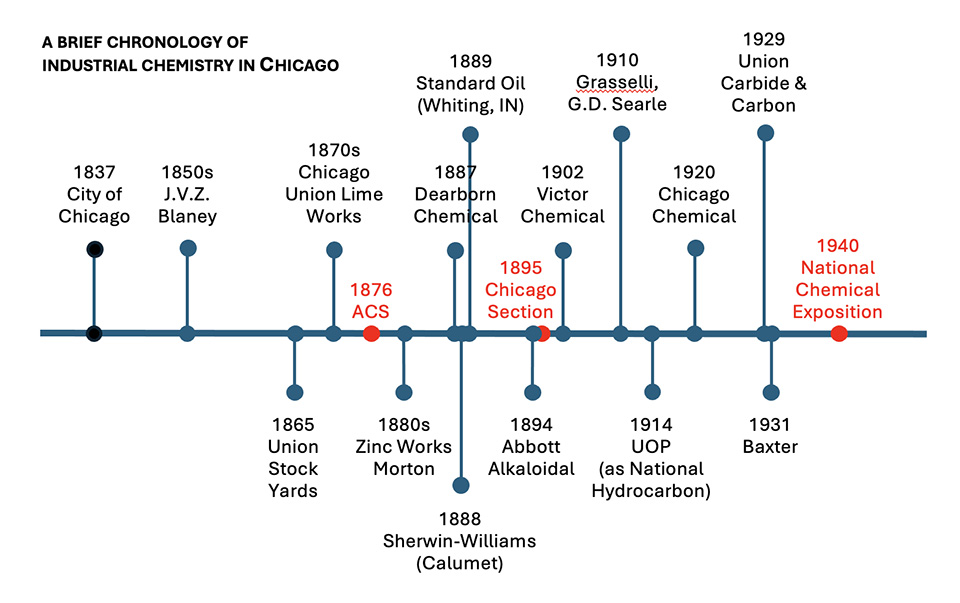
Officially incorporated in 1837, the city of Chicago was destined to play a key role in the history of chemistry’s power to improve the world. It is a story not only of scientific discovery, but one of turning ideas into useful materials and products. For added context, the American Chemical Society (ACS) was chartered in 1876, followed by the formation of the ACS Chicago Local Section in 1895.
Chicago’s location was ideal for the growth of industry in the expanding United States. The city has a relatively flat terrain and sits at the southern tip of Lake Michigan, a geographic nexus for transcontinental travel—by roads and rail lines, ships and barges. Lakeside ports provide access to the other Great Lakes, the Atlantic Ocean by way of the St. Lawrence Seaway, and the Mississippi River and its tributaries. Chicago was a natural destination, for example, for bringing coal, limestone, and iron ore together to make steel. Likewise, it made for an ideal location for the convergence of livestock, agriculture, and materials.
Basic chemicals. In the early days, soap, lime, and acid dominated the Chicago industrial chemicals equation. By the 1850s, James Van Zandt Blaney was operating a chemical factory that produced a wide range of medicinal preparations, industrial solvents, and specialty compounds for use in agriculture and manufacturing.
The Union Stock Yards, established in 1865 by consolidation of the city's various livestock-processing operations, produced enormous quantities of soap, glue, fertilizer, and chemical intermediates. Soap-making was among the earliest chemical industries to take root in Chicago, precisely because it required little more than the rendered lard and tallow that the local packinghouses produced in vast quantities.
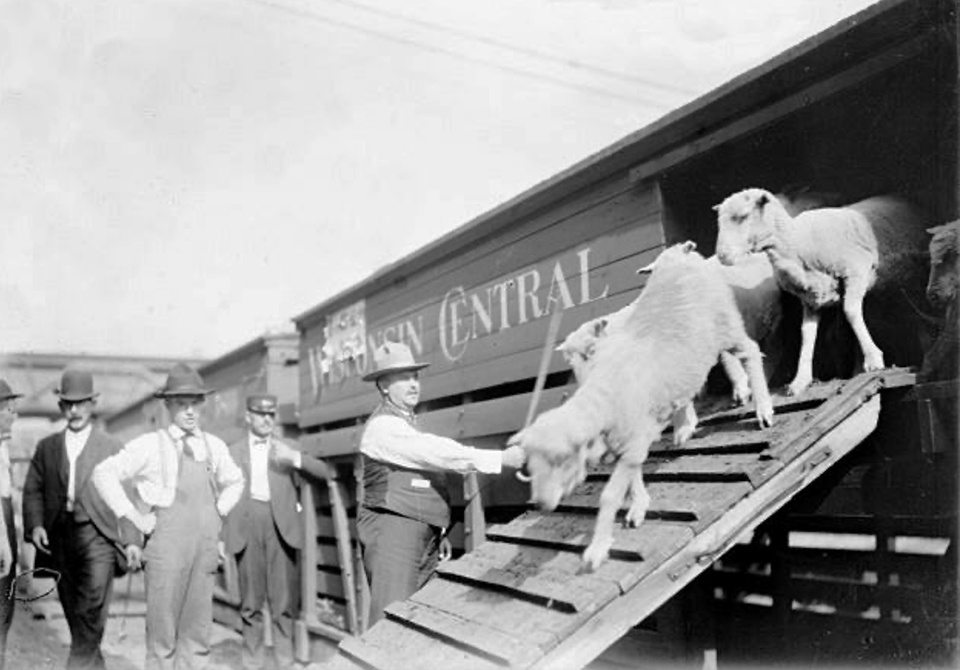
Unloading sheep from a Wisconsin Central stock car in Chicago, 1904. (Public domain)
The insatiable appetite of the construction industry for lime and cement provided another early anchor for Chicago's chemical economy. By the 1870s, the Chicago Union Lime Works supplied not only the city's construction sector but also the chemical bleaching and textile industries.
By the 1880s, the Matthiessen & Hegeler Zinc Works was producing sulfuric acid as a byproduct of its zinc-smelting operations in LaSalle, Illinois. This acid was essential for the manufacture of fertilizers, dyes, explosives, and scores of other compounds.
LaSalle was also the birthplace, just prior to World War I, of Carus Corporation, which manufactured potassium permanganate. The company was founded by Dr. Edward Hegeler Carus.
One of the most instructive examples of Chicago's industrial chemical entrepreneurship is the Dearborn Chemical Company. Founded by William H. Edgar around 1887 as the Dearborn Drug and Chemical Works, the company specialized in water-treatment compounds for industrial boilers and railroad steam locomotives. These chemicals reduced boiler-tube scale and mineral deposits, which were causing catastrophic equipment failures and enormous fuel waste. Dearborn's scientists developed formulations based on phosphates, chelating agents, and other compounds to keep boilers clean and operating efficiently. By the 1940’s, Dearborn had diversified from boilers to industrial cooling systems. Several mergers led eventually to BetzDearborn, a major water-treatment conglomerate, in 1996. For many years, Dearborn supported the prestigious ACS Willard Gibbs award, administered by the Chicago Local Section since 1910 (first award was in 1911).
Beginning around 1910, the Grasselli Chemical East Chicago Company was producing acetic acid and many other industrial chemicals. The 500-person company anchored an industrial zone along Lake Michigan’s shore that would grow to be among the most chemically intensive stretches in North America. Acid precursors and industrial solvents from the manufacturing plants fed the region's metal-finishing, textile, and rubber industries. Grasselli was acquired by E. I. du Pont de Nemours and Company in 1928.
The history of the Morton Salt Company, incorporated in 1910, dates back to its founding by Alonzo Richmond in 1848. The company became a major specialty chemicals manufacturer, evolving from the commodity distribution of non-caking sodium chloride into photographic chemicals, adhesives, and synthetic dyes.
Another business with ties to Chicago was Union Carbide & Carbon Corporation. Headquartered in New York, the firm operated major industrial-gas production facilities in the Chicago area, supplying acetylene, oxygen, and other gases to the metropolitan manufacturing complex.
Also around 1910, Victor Chemical Works in Chicago Heights was producing chemical ingredients for the food industry, including baking powder and monocalcium phosphate. Victor grew steadily and later became part of the Stauffer Chemical Company. A constellation of smaller specialty chemical firms occupied industrial parks and canal-side lots throughout the area. One of these was the Sherwin-Williams Company, which maintained dye operations in the region.
The Chicago Chemical Company was founded in 1920 by Herbert A. Kern and Frederick Salathe. It occupied a niche similar to that of Dearborn, producing water-treatment products for industrial customers. A merger in 1927 resulted in the National Aluminate Corporation, later called Nalco.
Petroleum – energy and chemicals. The Standard Oil Company of Indiana brought the Chicago area into the petroleum era when its large new refinery in Whiting, Indiana opened in 1890. Soon after, introduction of the Dubbs thermal cracking process made the Chicago area a veritable petroleum R&D hub. The Dubbs patent owner, Universal Oil Products (now UOP), became a world-class leader in catalyst and process research. Today, UOP’s catalysts and processes continue to impact the world’s refineries by improving product yields and limiting environmental impact. UOP was a key provider of the catalytic converter technology that enables automobiles to achieve better mileage while greatly reducing emissions. After undergoing several transitions, UOP became part of Honeywell.
The ACS connection: In 1931 the six major oil companies purchased UOP and then in 1944 divested UOP securities to the Petroleum Research Fund (PRF), with the profits going to the ACS. The original PRF Trust is now the ACS PRF, which provides seed money for fundamental research.
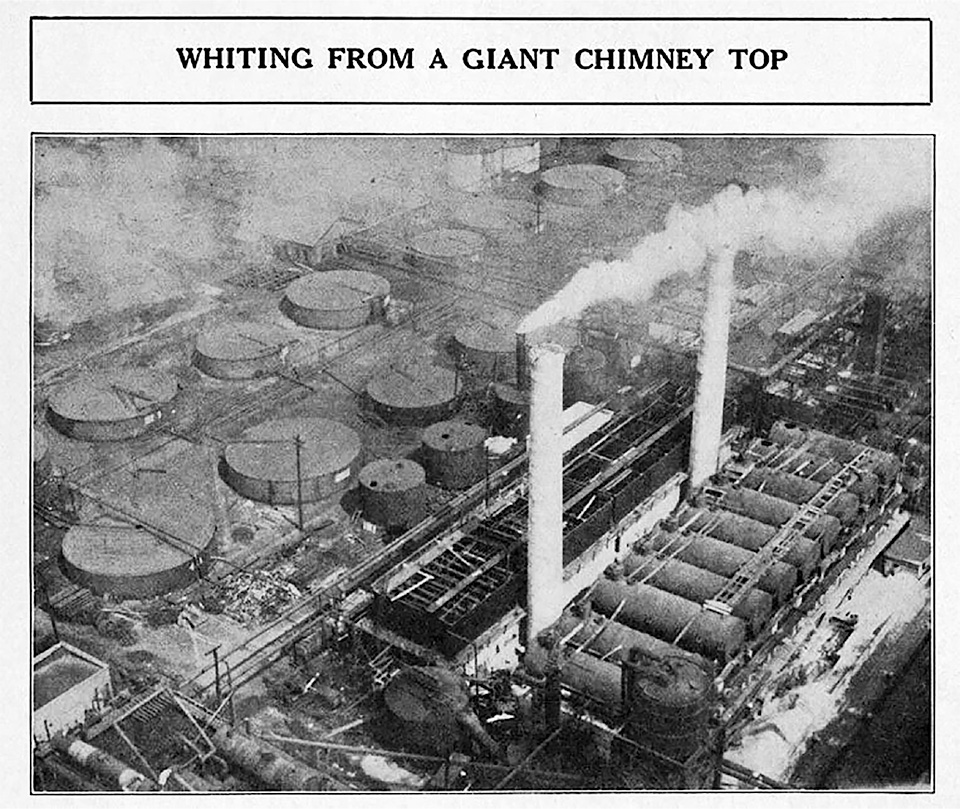
Refining operations at the Standard Oil Company in Whiting, Indiana. At bottom right is a battery of continuous stills. (Stanolind Record, Sept 1920, Vol. 1, No. 12.)
Pharmaceuticals. The oldest and ultimately the largest of Chicago's pharmaceutical enterprises was Abbott Laboratories. The company had its start when Dr. Wallace C. Abbott, a practicing physician, became dissatisfied with the pharmaceutical products available to physicians at the time. Imprecise compounding often led to inconsistent composition and thus variable doses of the active medicinal agent. This situation was both scientifically objectionable and clinically dangerous.
In 1888, working initially in the back of his People’s Drug Store, Abbott began producing what he called "dosimetric granules” with the aim of improving uniformity and standardizing procedures. Thanks to his efforts, physicians could have increased assurance that a given amount of a pharmaceutical would lead to a more predictable therapeutic outcome.
In 1894, the business was christened the Abbott Alkaloidal Company. Fifteen years later it was renamed Abbott Laboratories, and a manufacturing plant was constructed in 1920 in North Chicago. The company produced anesthetics, antibiotics, hydration solutions, infant formulas, antiretrovirals, and many other products related to human health.
After decades of growth, Abbott Laboratories split in 2011 into two healthcare companies: AbbVie, a world leader in pharmaceuticals, and Abbott, a diversified medical products company.
The Don Baxter Intravenous Products Corporation was founded in 1931 by Drs. Ralph Falk and Don Baxter in Glenview, Illinois. Their innovation was to manufacture prepared intravenous solutions in standardized, sterile, and sealed containers that could be distributed to hospitals throughout the country.
This product line offered the advantages of higher efficiency, lower cost, and improved patient safety. Baxter also developed the first commercial kidney dialysis system. Today the medical technology company is called Baxter International, with headquarters in Deerfield.
Another major 20th-century pharmaceutical institution was G. D. Searle & Company, which had its start in Omaha, Nebraska in1888. Founder Gideon Daniel Searle relocated the company to Chicago in 1910, and its Skokie headquarters was established in 1941. Enovid was the brand name under which the Searle contraceptive norethynodrel was marketed; it was approved in 1960 by the Food and Drug Administration for use in birth control. Searle subsequently developed Lomotil, an anti-diarrheal medication; aspartame, the artificial sweetener marketed as NutraSweet and Equal; and Celebrex, the first selective COX-2 inhibitor approved for the treatment of arthritis pain.
Following the Monsanto Company’s acquisition of Searle in the 1980s, control of the pharmaceutical operations was passed to Pharmacia & Upjohn in 2001. The Skokie plant was closed in 2003 when Pfizer purchased Pharmacia.
Conclusion. From its 19th-century beginnings as a small prairie town, Chicago has grown into an expansive metropolitan area with the industrial prowess to demonstrate the transforming power of chemistry for the benefit of Earth and its people. Over many decades—and thanks to the ingenuity of skilled chemists, engineers, and business experts—Chicago-area chemical enterprises have evolved from producing basic chemicals to manufacturing highly complex, finely designed products that support our modern world.
Time and space prevent the crafting of a much longer narrative: this article describes only the “tip of the iceberg”. Today, chemical technology resources located in the greater Chicago area leverage world-class universities, industrial giants, and national laboratories—all having a role in advancing the region’s industrial landscape and training the next generation of scientists.
—RUSSELL JOHNSON with contributions from Margaret Schott
For further reading:
Encyclopedia of Chicago: http://www.encyclopedia.chicagohistory.org is a rich source of information about the history of the Chicago Area. Search for topics such as “chemicals” or specific company names.
Abbott: https://www.company-histories.com/Abbott-Laboratories-Company-History.html; also Abbott - A Promise for Life e-booklet.
Baxter: https://www.company-histories.com/Baxter-International-Inc-Company-History.html
Matthiessen and Hegeler Zinc Company: Wikipedia entry; see also other specific company entries.
Searle: https://www.company-histories.com/G-D-Searle-Co-Company-History.html
Standard Oil: Whiting-Robertsdale Historical Society website: “Standard Oil’s Whiting Refinery 100 Years Ago”.
UOP: Ideas for Rent: The UOP Story; UOP: Des Plaines, 1994. (Available on Amazon).
The National Chemical Exposition
“The National Chemical Exposition was inaugurated in 1940 by the Chicago Section of the American Chemical Society as a biennial showcase. It merged industrial technology with scientific meetings, peaking in 1946 at the Chicago Coliseum with over 40,000 visits, and evolved into today’s massive biannual exposition and national meetings.” (Chem. Eng. News 1950, 28, 2770.) The 1946 expo took place about a mile from today’s McCormick Place, the site of the “ACS150” Fall National Meeting.
ACS Resources
A New Brand Identity for ACS
Introducing an evolved global brand identity for ACS: The icon begins with our heritage, featuring a diamond in the middle. The diamond represents the ACS insignia, then brings in the interconnected atoms, which are then enclosed by a circle to represent belonging in our global community. Together, the icon conveys a world built on science, alongside the ACS letters shaped with modern curves. The historic insignia is retained for select ceremonial purposes and official legacy documents.
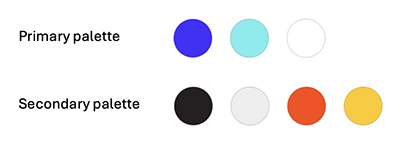
Introducing a new color palette for ACS: The bold palette is inspired by a wide array of pigments that range from familiar to exotic. The names of our colors each come from a compound, ion, or element with a distinctive hue. The color palette draws inspiration from emission spectra, linking its visual shades to specific CAS Registry Numbers as a creative tribute to chemical elements and unique scientific ties. For more information go to: https://www.youtube.com/watch?v=kb8e0twe2Xo.
Project SEED
Students Reflect on Project SEED Experiences
Project SEED—originally “Summer Experiences for the Economically Disadvantaged”—has flourished since its founding in 1968. Now, more than 50 years later, the program has grown and diversified its services of providing hands-on summer research experiences (8 – 10 weeks) and virtual summer camps to more than 11,000 students in 40 U.S. states and territories. Each year, research opportunities for 350+ students are supported; Project SEED students work with qualified mentors in both academia and industry.
Junainah Ali
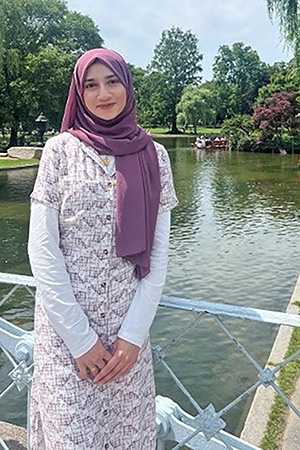
I had the wonderful opportunity to be part of the American Chemical Society's Project SEED program during the summer of 2024. Before Project SEED, I knew I wanted to pursue medicine, but I had never experienced what research looks like outside of a classroom. Through the program, I was able to conduct research at Loyola University Chicago under Professor Christophe Renault's mentorship, and with my SEED partner Jedial Chintha.
Our project focused on developing an electrochemical method to detect microplastics in Lake Michigan using ultramicroelectrodes. Traditional methods of detecting microplastics are often time-consuming and are unable to detect particles at the nanoscale, so our goal was to explore an alternative approach using electrochemistry. During my internship, I fabricated and characterized 18 gold and platinum ultramicroelectrodes, learned electrochemical techniques including cyclic voltammetry and chronoamperometry, prepared solutions, tested water samples collected from Lake Michigan, and analyzed experimental data. Working on a project where I was able to go to Lake Michigan and obtain the samples myself before conducting the experiments showed me the real environmental application this project held, while also illustrating how chemistry can be used to address important public health challenges.
The experience completely changed my view of research. Before Project SEED, I was under the impression that research is something only graduate students and people with immense experience can do; now I understand that all you need is a question and the right mentorship alongside you. Seeing how laboratory discoveries can contribute to solving real-world health and environmental problems has created a love for research and reinforced my desire to pursue a career that combines scientific discovery with clinical medicine.
Today, I am a rising sophomore at Purdue University majoring in Biomedical Health Sciences on the pre-med track, and I expect to graduate in May 2029. I chose Purdue because of its strong science curriculum, undergraduate research programs, and supportive environment for students.
Since starting college, I have continued building on the foundation Project SEED gave me. I am currently learning new staining techniques to use in my research, which focuses on Alzheimer's disease and its connection to metals within the human brain. Additionally, I am an active leader on the College of Health and Human Sciences Student Council while I continue preparing for a career as a physician. The confidence I gained from conducting independent research as a high school student made it much easier to approach professors, seek research experiences, and feel comfortable in the laboratory setting.
Looking back, Project SEED was one of the most influential experiences of my academic journey. It gave me the technical skills, confidence, and mentorship to succeed in college and reaffirmed my passion for improving lives through both research and medicine.
•
Shirley Liu Zhuang
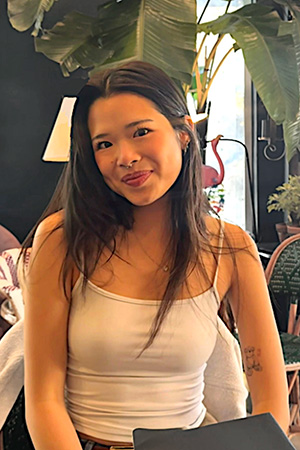
I had the privilege to intern at Chicago Discovery Solutions LLC (Plainfield, Illinois), under the mentorship of Dr. Anita Mehta, during Project SEED Summer 2023. I learned foundational organic chemistry techniques as I researched alternative methods to reduce solvent waste in synthesis. This experience was incredibly formative, and it cemented my desire to pursue academic scientific research. Project SEED not only allowed me the opportunity to contribute to scientific research but also the chance to present my work at ACS conferences and meetings.
I am currently pursuing my bachelor’s degree in biochemistry at Columbia University in New York, where I am also a Questbridge Scholar. In addition, I have been working as an undergraduate researcher in the laboratory of Dr. Ruben Gonzalez.
My current research is focused on elucidating the molecular mechanisms of translation initiation at the single-molecule level. I have had the privilege of having my research funded for two summers by both the Columbia Summer Funding Program and the Amgen Scholar program.
Following my undergraduate education, I plan to attend graduate school and obtain my Ph.D. in the biological sciences. My ultimate goal is to remain in academia and to run a research group dedicated to advancing the understanding of complex biological systems and applications in therapeutics. Project SEED gave me the opportunity to pursue research as a first-generation low-income student, and I aim to embody those same goals as I continue in my scientific career.
Younger Chemists Committee

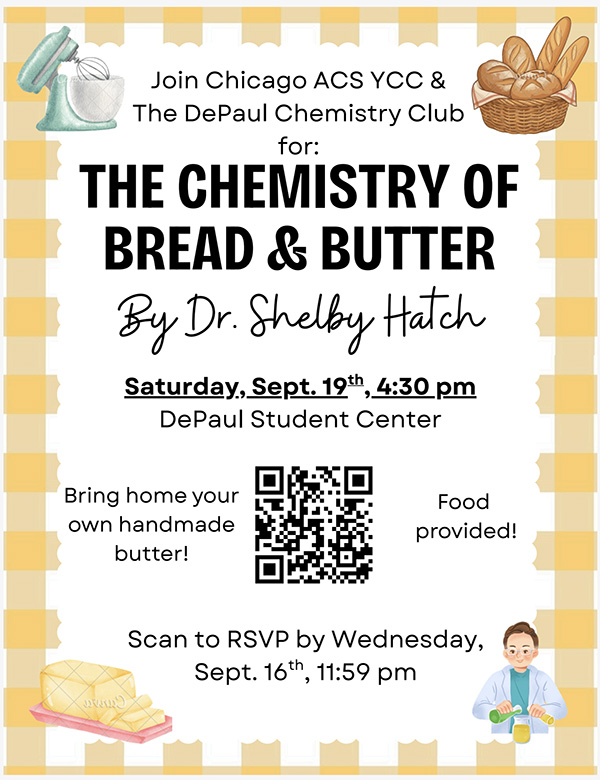
YCC Event with the DePaul Chemistry Club
Chemistry of Bread and Butter
by Dr. Shelby Hatch
Saturday, Sept. 19, 4:30 PM
DePaul Student Center
Bring home your own handmade butter! Food provided!
RSVP by Wednesday, Sept. 16 11:59 PM
https://tinyurl.com/chi-ycc-breadbutter
Safety Feature
Don’t Just Ask AI:
RAMP Up For Safety First
For more than six decades, the American Chemical Society (ACS) has been a leader in advancing chemical safety. Since establishing the Committee on Chemical Safety (CCS) in 1963, ACS has promoted laboratory safety through education, guidance, and accident prevention. Building on this commitment, Robert H. Hill and David C. Finster introduced the RAMP framework in their textbook Laboratory Safety for Chemistry Students, providing a practical approach to Recognize hazards, Assess risks, Minimize risks, and Prepare for emergencies.1 ACS later adopted the RAMP framework as the foundation of its modern chemical safety education and laboratory safety guidance.2
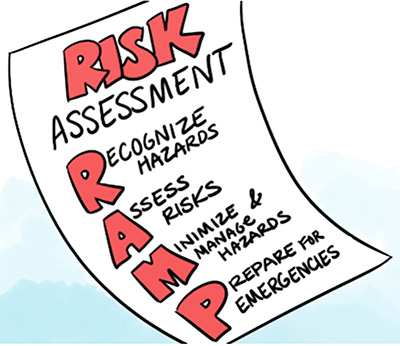
When Should You RAMP? Before You Ask AI
Artificial intelligence (AI) has quickly become a valuable research assistant. Chemists now use AI to summarize literature, analyze data, troubleshoot reactions, write code, and organize scientific information. These capabilities can improve efficiency and accelerate discovery. However, while AI can support scientific decision-making; it should never replace a researcher's responsibility for safety.
Before handling a hazardous chemical, using laboratory equipment, or beginning any work involving hazardous materials, researchers should first apply the RAMP framework. RAMP is a proactive process that must be completed before work begins, not during an experiment or after an incident occurs.
AI can help locate Safety Data Sheets (SDSs), compare chemical properties, generate planning questions, and provide a structure for risk assessment. Final safety decisions, however, must rely on verified technical resources, institutional procedures, and professional judgment. Always refer to institutional subject matter experts for confirmation, validation, and additional guidance.3
•
Glossary
ANSI/ISEA – International Safety Equipment Association/American National Standards Institute
CFR – Code of Federal Regulations
CHP – Chemical Hygiene Plan
GHS – Globally Harmonized System of the United Nations for classification and labelling of chemicals
HazCom – Hazard Communication
HCS – Hazard Communication Standard
NFPA – National Fire Protection Association
NIOSH – National Institute for Occupational Safety & Health
OSHA – Occupational Safety & Health Administration
PPE – Personal protective equipment
SDS - Safety Data Sheet
SOP - Standard Operating Procedure
•
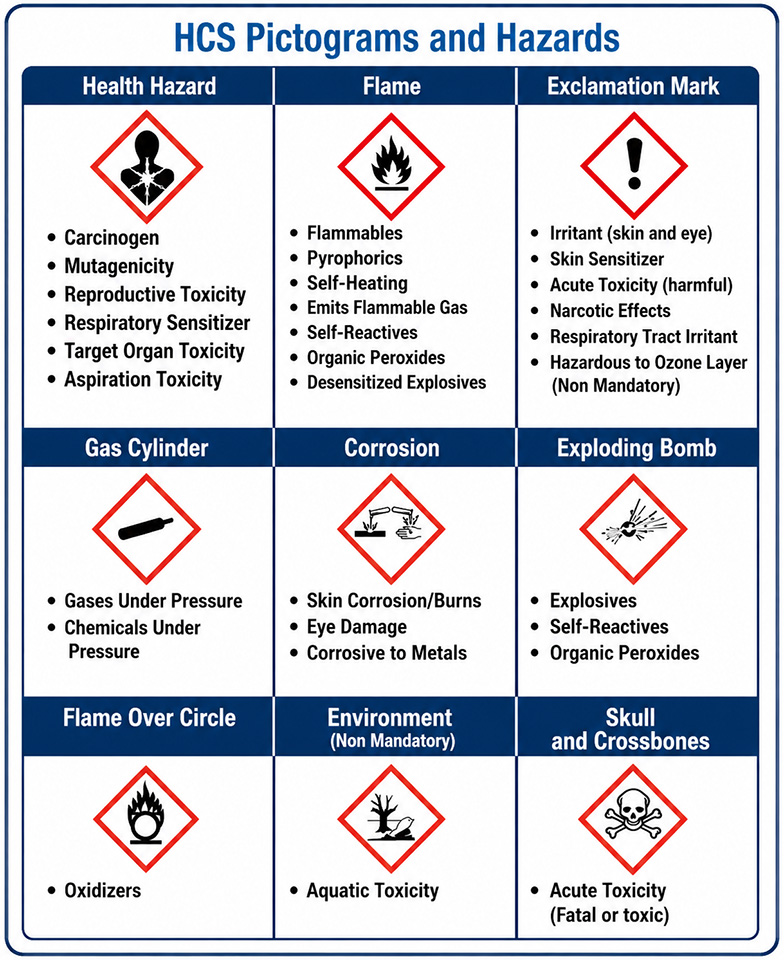
Figure 1. Hazard Communication Standard (HCS) pictograms and associated hazard classes. OSHA’s HazCom 2012 standard aligns the U.S. HCS with the United Nations’ Globally Harmonized System (Source: Occupational Safety and Health Administration.)4
•
Recognize Hazards
The first step in the RAMP framework is to recognize all hazards before beginning any experiment. The primary resources for identifying chemical hazards are Safety Data Sheets (SDSs) and chemical container labels. GHS labels communicate hazards using standardized pictograms, signal words, hazard statements, and precautionary information (Figure 2). SDSs provide detailed information on hazards, safe handling, storage, incompatibilities, exposure controls, and emergency response.4
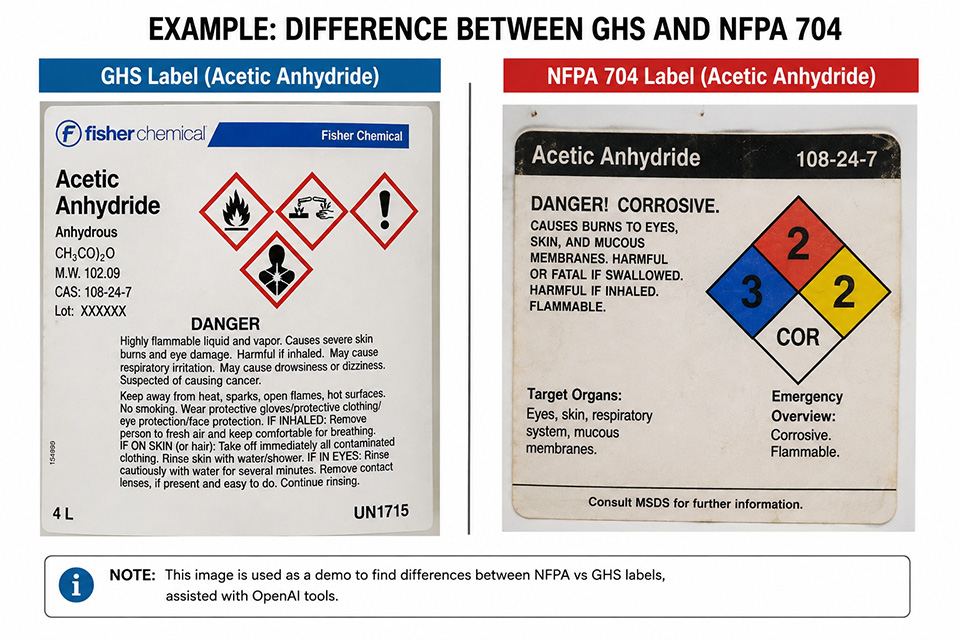
Figure 2. Using the example of acetic anhydride, this image demonstrates the differences between two labeling systems, each of which serves a specific purpose.
Researchers should also recognize the differences between GHS and NFPA 704 labeling systems5 (Figure 2). GHS labels are primarily used in indoor workplaces and laboratories to communicate chemical hazards to workers, whereas NFPA 704 signage is commonly displayed on buildings, storage areas, and other locations to provide emergency responders with readily understood hazard information during fires, spills, and other emergencies. Importantly, the numerical scales work in opposite directions: lower GHS hazard category numbers generally indicate greater hazard severity, while higher NFPA 704 numbers indicate greater hazard severity.⁴ Researchers should understand both systems because they may encounter both in research facilities.
Assess Risks
After identifying hazards, the next step is to assess the risks. While a hazard is the potential to cause harm, risk considers the likelihood that harm will occur and the severity of the consequences under the planned experimental conditions. A risk matrix provides a systematic method for evaluating the likelihood and severity of each hazard and helps prioritize appropriate control measures. Risk assessment is not a one-time exercise; it should be revisited whenever there is a change in experimental conditions, reagent quantities, personnel, or equipment.
Minimize Risks
Once risks have been assessed, the next step is to minimize them by applying the hierarchy of controls. Controls should be implemented from highest to lowest effectiveness. Always comply with the institution's Chemical Hygiene Plan (CHP), laboratory safety policies, and applicable local, state, and federal regulations, including OSHA's Laboratory Standard (29 CFR 1910.1450).2, 7
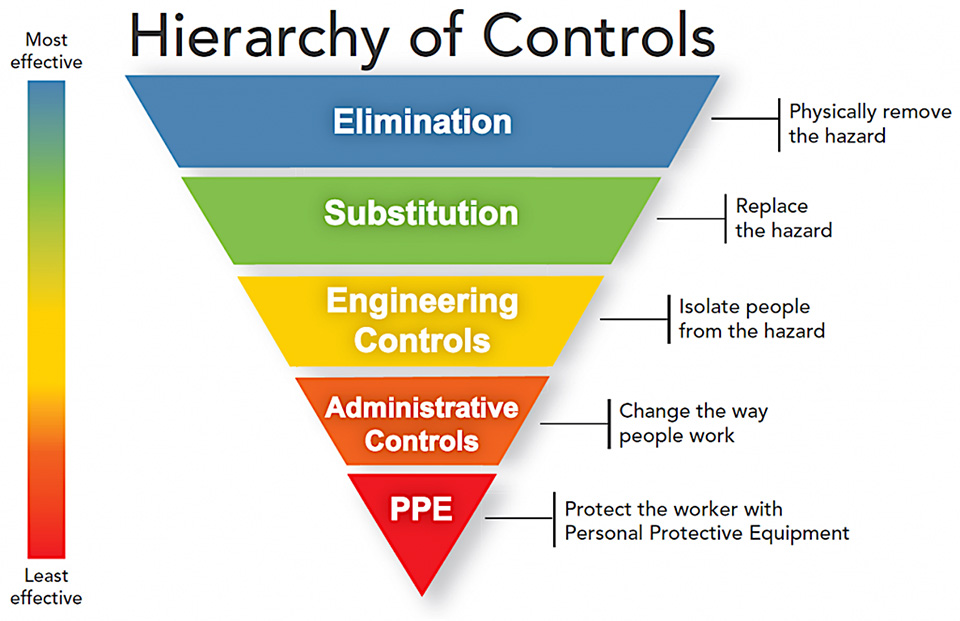
Figure 3. Hierarchy of controls pyramid ranked from most effective (Elimination) to least effective (PPE). Adapted from the National Institute for Occupational Safety and Health (NIOSH), Centers for Disease Control and Prevention (CDC).8
Prepare for Emergencies
Even after hazards have been recognized, risks assessed, and controls implemented, unexpected events may still occur. Emergency preparedness must begin before hazardous work starts. All laboratory personnel must be familiar with emergency equipment, institutional procedures, and emergency contacts before working with hazardous materials.
Emergency Equipment. Before beginning hazardous work, verify that the following emergency equipment is present, accessible, unlocked, and in proper working condition:
- Emergency eyewash station (compliant with ANSI/ISEA Z358.1-2014): must be reachable within 10 seconds (approximately 55 feet) from the work area. Flush weekly and document.6
- Safety shower (compliant with ANSI/ISEA Z358.1-2014): must be reachable within 10 seconds from the work area.6
- Fire extinguisher rated for laboratory hazards: Class ABC for general use; Class D for reactive metal fires (e.g., sodium, potassium, magnesium).
- First aid kit: must be stocked, accessible, and not expired.
- Chemical spill kit: must have appropriate absorbents, neutralizing agents, and PPE for the reagents in use.
- Emergency shutoffs for gas, vacuum, and electrical panels: locations must be known by all personnel before work begins.
Know Your Emergency Contacts. All laboratory personnel must know their institutional emergency contacts before beginning hazardous work, as well as the building emergency action plan, the locations of all emergency exits, and the procedure for reporting incidents to the principal investigator and to institutional safety officers.
Summary
The best time to apply RAMP is before the first chemical is opened, before the first instrument is powered on, and before the first AI prompt is entered. AI is a powerful tool, but it cannot RAMP for you. By making RAMP the starting point of every project, researchers create a common language for discussing hazards, evaluating risks, and preparing for emergencies while strengthening communication, collaboration, and the lab’s safety culture.1,3
—CHANDRA MAN KARKI
The author wishes to acknowledge the Office of Research Safety at The University of Chicago for their support and the resources provided in the preparation of this article. Dr. Selina Hess assisted with document preparation. The written content, technical interpretations, and conclusions were developed by the author using the listed references.
EDITOR’S NOTE: Look for a second installment on this topic in an upcoming issue.
References
1. Hill, R. H.; Finster, D. C. Laboratory Safety for Chemistry Students, 2nd ed.; John Wiley & Sons: Hoboken, NJ, 2016.
2. American Chemical Society Committee on Chemical Safety. Guidelines for Chemical Laboratory Safety in Academic Institutions; American Chemical Society: Washington, DC, 2016.
3. Mulcahy, M. B.; Bocwinski, R. L.; Gmurczyk, M.; Elston, H. J.; Heald, R.; Koehler, M.; Martinelango, P. K.; Wietstock, S. M. Chemical Safety Ecosystem of the American Chemical Society: A Primer. ACS Chem. Health Saf. 2026, 33, 1–7. https://doi.org/10.1021/acs.chas.5c00201
4. U.S. Occupational Safety and Health Administration. Hazard Communication Standard (HazCom 2012), 29 CFR Section 1910.1200; U.S. Department of Labor: Washington, DC. https://www.osha.gov/hazcom (accessed August 4, 2026).
5. For a comparison of NFPA 704 and OSHA HazCom 2021 see OSHA’s Quick Card at: https://www.osha.gov/sites/default/files/publications/OSHA3678.pdf (accessed August 4, 2026).
6. American National Standards Institute/International Safety Equipment Association. Emergency Eyewash and Shower Equipment; ANSI/ISEA Z358.1-2014; ANSI: Washington, DC, 2014.
7. University of Chicago Office of Research Safety. Laboratory Safety Resources. https://researchsafety.uchicago.edu; Chemical Hygiene Plan, 2022 ed. https://d3qi0qp55mx5f5.cloudfront.net/researchsafety/docs/CHP_2022.pdf (accessed August 4, 2026).
8. National Institute for Occupational Safety and Health (NIOSH). Hierarchy of Controls; Centers for Disease Control and Prevention: Atlanta, GA. https://www.cdc.gov/niosh/topics/hierarchy/default.html (accessed August 4, 2026).
ChemShorts for Kids
Pinhole Camera Obscura
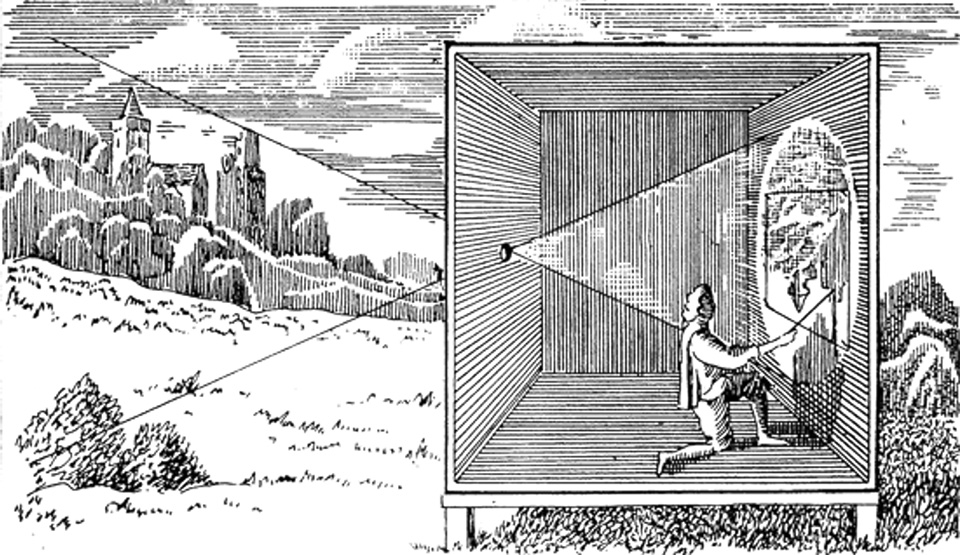
Although this activity doesn’t have a lot of chemistry, there is some great historical science! Photography is based on this experiment but has been improved by using lenses and mirrors to make the image sharper and right side up. It uses lots of chemistry to make the picture permanent.
Materials:
• Cardboard (cereal or tissue box thickness)
Experiment:
You will be making a box in a box. Cut out a cardboard shape like that seen at left below. The dashed lines are where you will fold the cardboard. Tape the edges together to make an open-ended box with one end sealed. Make a second doubly-open box (remove the square at the top) that is slightly smaller (5 mm smaller on each fold – if your original box is 20 cm wide, make the second box 18 cm wide).
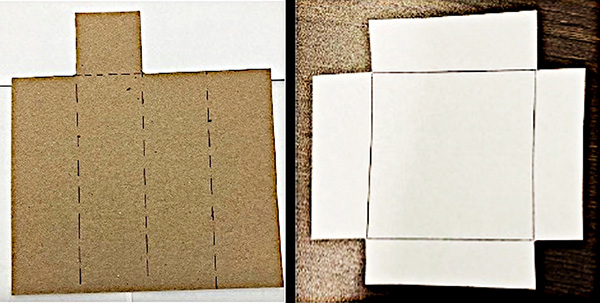
On the second box, cover one end with the white paper, cut out like the picture above and taped over the end. Use duct tape to cover over any edge that lets light into the tubes. Lightly coat the white paper with some oil which will make it translucent. Use the thumbtack to poke a small hole in the cardboard end of the tube. Insert the white paper end into the larger tube and point the pinhole toward the sky with clouds and see what is transposed onto the white paper. Let in as little external light as possible.
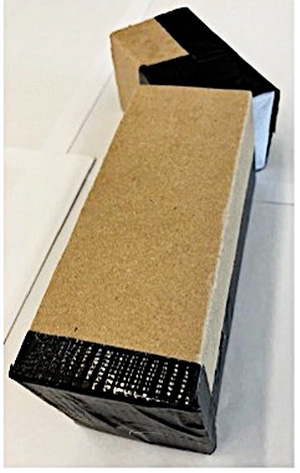
When you move the smaller tube closer to the pinhole, the object you’re viewing gets clearer and smaller. Move it further away and it gets bigger and blurrier.
What’s Happening?
As light passes through the pinhole, it projects an inverted image due to light traveling in straight lines, as seen in the top image. The smaller the hole, the sharper the image, but it will be darker and harder to see.
Extension:
You can purchase and install photographic paper to make the image appear permanently. This would allow you to do time-lapse photography. A real camera uses a lens to focus the object and a mirror to make the object appear upright.
Resources:
https://ataridogdaze.com/science/camera-obscura/
To view all past “ChemShorts for Kids”, go to: https://chicagoacs.org/ChemShorts
— PAUL BRANDT
Puzzle

Chicago-Themed Word Search
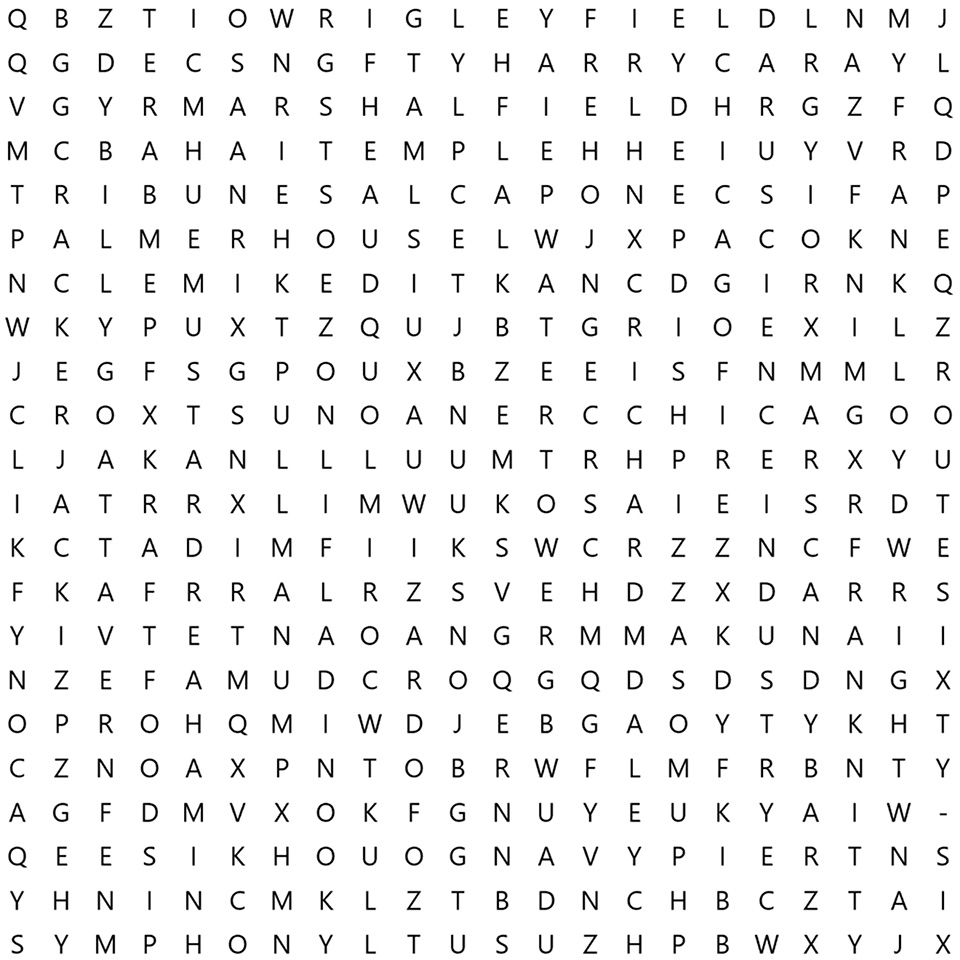
AL CAPONE
BAHAI TEMPLE
BEAN
BILLY GOAT TAVERN
CHICAGO
CHICAGO FIRE
CRACKER JACK
DEEP DISH PIZZA
FERMI LAB
FRANK LLOYD WRIGHT
FRANK NITTY
HARRY CARAY
HOT DOG
KRAFT FOODS
MARS CANDY BAR
MARSHAL FIELD
MIKE DITKA
MIRO
MUSTARD
NAVY PIER
PALMER HOUSE
PETRILLO
PICASSO
PULLMAN
RICHARD M DALEY
ROUTE SIXTY-SIX
SCIENCE INDUSTRY
SHED AQUARIUM
SYMPHONY
TRIBUNE
WATER TOWER
WIZARD OF OZ
WRIGLEY FIELD
Chemistry in the City
by Irene Cesa and Mark Cesa
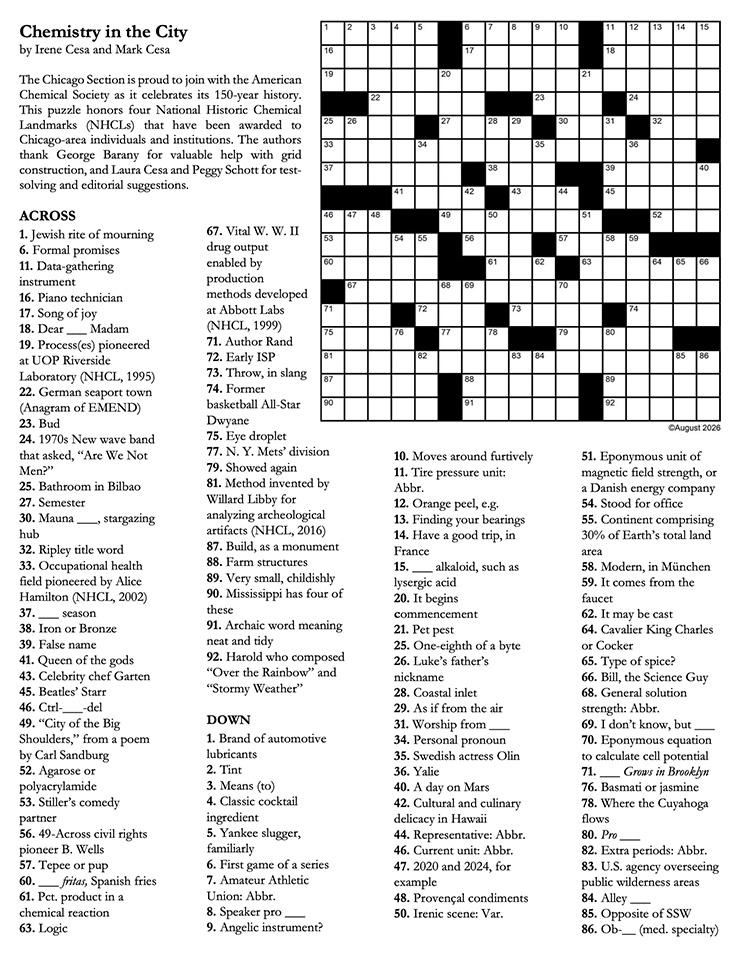
To work on the crossword online, navigate to:
https://puzzleme.amuselabs.com/pmm/crossword?id=5fad5e6a&set=8d853f1e1a73e5967ad315c7554437007ef1c79abaff4185031edc9fd4200912
See end of this Bulletin for puzzle solution.
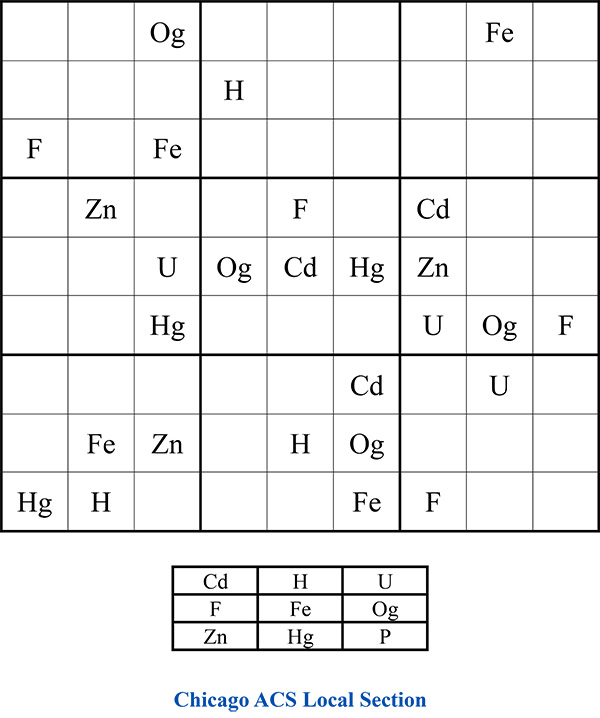
CHEMDOKU
Upcoming Events

Chicago ACS Section Programs
https://chicagoacs.org/meetinginfo.php
|
Aug 23 - 27, 2026 |
|
|
Sept 17 |
Monthly program – Education Night “Fireside Chat” with Science Olympiad CEO Jennifer Kopach and Olympiad Heart of Gold awardee Jolly Patro, at Harry S. Truman College, Chicago |
|
Sept 19, 4:30PM |
Younger Chemists “The Chemistry of Bread and Butter” with Dr. Shelby Hatch. RSVP (QR) by 16th. |
|
Oct 18–24 |
National Chemistry Week. Theme: Chemistry Under Construction |
|
Nov 6, 4:30 PM |
Basolo Medal lecture by Prof. Kimoon Kim (POSTECH, South Korea) at Northwestern University, with reception and dinner to follow |
|
Nov 20, location TBD |
Monthly program with speaker Angela K. Wilson, Past ACS President |
|
Dec 11 |
Holiday Party with speaker Joseph Jones (U.S. Drug Testing Laboratories) |
Please also refer to the Section’s website chicagoacs.org/meetinginfo.php and social media accounts
FALL ACS NATIONAL MEETING IN CHICAGO
AUGUST 23–27, 2026
The Tactile Periodic Table Project
Monday, August 24 and Tuesday, August 25
at the Member Lounge,
McCormick Place Convention Center
At the fall 2026 ACS Meeting in Chicago, the Committee on Chemists with Disabilities (CWD) will lead an activity involving the assembly of two Braille periodic tables. Visitors will add Braille to carved wooden boards to make inclusive periodic tables. Stop by to meet the CWD team and be part of this activity!
•
Stoddart Memorial Symposium
Tuesday, August 25 and Wednesday, August 26
A four-part symposium will take place during the Fall ACS National Meeting. Half-day sessions are being hosted by four different ACS Divisions — Inorganic (DIC), Organic (ORGN), Polymer Chemistry (POLY), and Polymer Science, Materials & Engineering (PMSE). Check the meeting program for details. Nobel laureate Sir Fraser Stoddart (1942–2024) was a member of the Chicago Section starting in 2008. His research group became known for the synthesis of molecular Borromean Rings, depicted above.
2026 IIN Rosemary Schnell Symposium
Thursday, October 15, 2026 | 8:30 a.m. to 5:30 p.m.
Hilton Orrington | Evanston, Illinois
See how researchers are using nanocatalysts, light, RNA, and bioelectronics to advance imaging, energy, medicine and materials. Explore the speaker lineup and lecture topics, then add the symposium to your calendar so you are ready when registration opens. Hosted by Northwestern University Professor of Chemistry and IIN Director Chad Mirkin.
•
SOUTH SIDE SCIENCE FESTIVAL
“Where Science is for Everyone”
Saturday, October 3, 2026
The fifth annual South Side Science Festival will take place at the University of Chicago in Hyde Park with over 100 hands-on activities. Check the website for details closer to the date
CHICAGO SECTION BOARD MEETINGS
Open to all Section members. For Zoom link, contact: office-at-chicagoacs.org
2026: Sep 10, October 8, Nov 12, Dec 3
•
Deadlines for Bulletin Submissions
Deadline for bulletin submissions is the 16th of each month. Content can include photos, reports, past event summaries, flyers and information for upcoming events, original articles, current chemistry, etc. Contact editor-at-chicagoacs.org. Thank you!
Issue Deadline
October 2026 September 16, 2026
November 2026 October 16, 2026
December 2026 November 16, 2026
Crossword Puzzle Solution
Board & Committee Members

2026 Chicago ACS Section Officials
|
Chair Chair-Elect Past Chair Vice Chair Secretary Treasurer |
Amy Balija Inessa Miller Anita Mehta Sunshine Silver Michael Koehler Russ Johnson |
|
|
Directors |
2025-2026 Daniela Andrei 2026-2027 Ken Fivizzani |
directors-at-chicagoacs.org |
|
Councilors |
2024-2026 Paul Brandt 2025-2027 Josh Kurutz 2026-2028 Amy Balija |
councilors-at-chicagoacs.org |
|
Alternate |
2024-2026 Avrom Litin 2025-2027 Katie Leach 2026-2028 Nicolas Gerst |
altcouncilors-at-chicagoacs.org |
* One vacancy to be filled by the Board
Masthead
Bulletin Information
August/September 2026, Vol. 113, No. 7
Published monthly (10 issues, Sept – Jun) by the Chicago Section of the American Chemical Society
https://chicagoacs.org
Editor: Margaret E. Schott
editor-at-chicagoacs.org
Digital Editor: Josh Kurutz
historian-at-chicagoacs.org
Proofreaders: Daniela Andrei, Amy Balija, Nicolas Gerst
How to reach us
office-at-chicagoacs.org (847) 391-9091
ACS Chicago Section Office
Krasa 035B and C
5700 College Road
Lisle, IL 60532
Website: https://chicagoacs.org
Social links
Follow ChicagoACS on social media!
Bluesky (new!): https://bsky.app/profile/chicagoacs.bsky.social
Instagram: https://www.instagram.com/ChicagoACS/
Facebook: https://www.facebook.com/ChicagoACS
LinkedIn: https://www.linkedin.com/groups/1854603/


