In this issue
The June 2022 Chemical Bulletin 
PDF of the Latest Bulletin
https://chicagoacs.org/images/downloads/Chemical_Bulletin/2022_06_chembull.pdf
Next Meeting

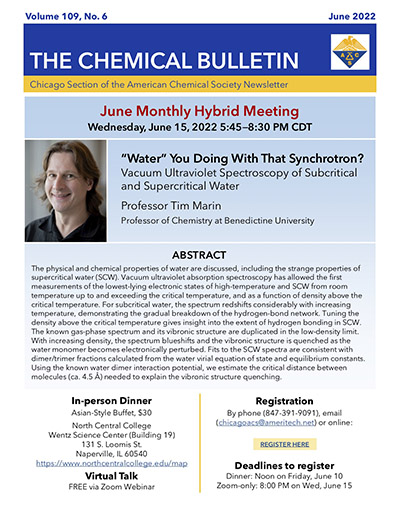
June Monthly HYBRID meeting With Awards
5:45 - 8:30 PM CDT, Wednesday, June 15
Prof. Tim Marin
Professor of Chemistry
Benedictine University
“Water” You Doing With That
Synchrotron?
Vacuum Ultraviolet Spectroscopy
of Subcritical and Supercritical
Water
ABSTRACT:
The physical and chemical properties of water are discussed, including the strange properties of supercritical water (SCW). Vacuum ultraviolet absorption spectroscopy has allowed the first measurements of the lowest-lying electronic states of high-temperature and SCW from room temperature up to and exceeding the critical temperature, and as a function of density above the critical temperature. For subcritical water, the spectrum redshifts considerably with increasing temperature, demonstrating the gradual breakdown of the hydrogen-bond network. Tuning the density above the critical temperature gives insight into the extent of hydrogen bonding in SCW. The known gas-phase spectrum and its vibronic structure are duplicated in the low-density limit. With increasing density, the spectrum blueshifts and the vibronic structure is quenched as the water monomer becomes electronically perturbed. Fits to the SCW spectra are consistent with dimer/trimer fractions calculated from the water virial equation of state and equilibrium constants. Using the known water dimer interaction potential, we estimate the critical distance between molecules (ca. 4.5 Å) needed to explain the vibronic structure quenching.
HYBRID DINNER MEETING
Dinner and In-person Lecture
Asian-Style Buffet, $30
North Central College
Wentz Science Center (Building 19)
131 S. Loomis St.
Naperville, IL 60540
https://www.northcentralcollege.edu/map
Virtual Lecture
FREE via Zoom Webinar
PROGRAM
Recognition of 50-, 60-, and 70-year Members
REGISTRATION
Deadline for In-Person ($30) registration: NOON, FRIDAY, JUNE 10
Deadline for Zoom-only (FREE) Registration: 8:00 PM on WED, JUNE 15
or email ([email protected]).
Meet The Speaker
Tim Marin is a Professor in the Department of Physical Sciences at Benedictine University in Lisle, IL, where he has taught chemistry and physics for nearly 20 years. He earned his Ph.D. at Northwestern University and did postdoctoral research at Argonne National Laboratory and the Notre Dame Radiation Laboratory. Prof. Marin has maintained research collaborations and visiting faculty appointments with those institutions as well as with the Synchrotron Radiation Center at the University of Wisconsin-Madison. His research program as a spectroscopist at the boundary of physics and chemistry has led to more than 50 publications on topics ranging from ultrafast photophysics to radiation-induced fast kinetics, radical chemistry, and vacuum ultraviolet spectroscopy. Since 2010, Tim Marin has served on various committees and in various roles for the ACS Chicago Section, including as Director, Budget Director, Councilor, and Section Chair. He is a strong supporter of the liberal arts tradition in Catholic higher ed and enjoys exploring the “great questions” at the interface of science, theology, and philosophy. Prof. Marin is Vice President and founder of the Chicago area chapter of the Society of Catholic Scientists. Tim Marin is also a semi-professional musician, serving as musical director, arranger, and bassist for the Nite Hawks jazz combo, the Tim Marin Orchestra, and the Chi-Town Showstoppers R&B/soul band.
From the Editor's Desk
Celebrate You!
As we look forward to June and the start of summer, we are also excited to come together again in person or virtually to celebrate the achievements of our members and volunteers. The June program meeting will highlight the section's 50-, 60-, and 70-year members as well as the Distinguished Service Award and Emerging Star Award winners. The Chicago Section is fortunate to have such devoted members and volunteers. Please join us!
Our normal hiatus from section meetings and publishing the Bulletin during July and August will be different this year as Chicago prepares to host the Fall ACS National Meeting in August. To honor the occasion we will be publishing a special August/September issue. Planning is already underway but there is still time to contribute content or advertise your institution. This special issue will reach a larger audience since it will be on display at the ACS meeting.
We would like to include a list featuring members’ favorite sites in Chicago. Do you have a favorite restaurant, place you like to visit, park, outdoor art installation, or walking path? We are looking for short, enticing recommendations with a personal flavor. The due date to submit articles and information for the joint August/September issue will be August 1st. Please contact the editors at [email protected] if you would like to contribute!
We thank our contributors who make this newsletter special: Paul Brandt, Mark Cesa, Helen Dickinson, Ken Fivizzani, Fran Kravitz, Josh Kurutz, Milt Levenberg, Tim Marin, Sherri Rukes, and Andrea Twiss-Brooks.
- AMBER ARZADON and IRENE CESA
Letter from the Chair

Recognizing and Rewarding
Our Volunteers
At the Willard Gibbs Medal event on May 20 celebrating Prof. Joseph S. Francisco, he spoke about his fundamental research in the field of atmospheric chemistry, particularly the role of greenhouse gases emitted by humankind in climate change. This knowledge leads to new ways for minimizing their impact on global warming in the future. Prof. Francisco is a worthy recipient of the Gibbs Medal, which “publicly recognizes eminent chemists who, through years of application and devotion, have brought to the world developments that enable everyone to live more comfortably and to understand this world better.”
Awards are among the most effective mechanisms for recognizing and rewarding volunteers for excellence in service to their organizations, and the ACS nationally and the Chicago Section specifically have established awards to recognize members for contributions that have a positive impact in our organizations, communities, and society.
ACS National Awards for individuals and groups of scientists encourage the advancement of chemistry, support research in chemical science and industry, and promote the careers of chemists. The ChemLuminary Awards recognize ACS Local Sections, Technical Divisions, Regional Meetings, and International Chemical Sciences Chapters for their work in promoting chemistry. The Chicago Section has been recognized often with ChemLuminary Awards. Most recently, in 2021, the Chicago Section received ChemLuminary awards for Outstanding Performance by a Local Section - Very Large Size Category and for Outstanding American Association of Chemistry Teachers (AACT) Support.
The ACS Fellows Program recognizes individual members of ACS for outstanding achievements in and contributions to science, the profession and the Society. Numerous members of the Chicago Section have been recognized as ACS Fellows.
In addition to the Gibbs Medal, the section offers several awards to its members for their service to the section and the chemistry profession. The Distinguished Service Award (DSA) is presented each year to a member or members who deserve(s) special recognition for a long period of distinguished service to the Chicago Section; you can read about this year’s DSA winner, Irene Cesa, on page 4 in this issue of The Chemical Bulletin. The Emerging Star Award recognizes younger members or members with less than 10 years of service with the Chicago Section who have provided exceptional service to the Section over, above and separate from any other achievements in the profession or the National ACS. This year’s Emerging Star awardee is Jana Markley - read about her in the May 2022 Chemical Bulletin. The Award for Excellence in High School Teaching of Chemistry has been established to recognize, encourage, and stimulate outstanding teachers of high school chemistry or a chemical science in the Chicago Section. Finally but importantly, section leaders are always looking for talented and enthusiastic volunteers to take on roles in committees and to serve in elected positions.
Thank goodness for volunteers! We encourage you to volunteer to take part in the work of ACS and our local section to serve our members, the profession, and the community.
- MARK CESA
2023-2024 Fulbright
U.S. Scholar Program Competition
The Fulbright U.S. Scholar Program is now accepting applications for U.S. citizens to research, teach, and conduct projects in over 130 countries. Hone your skills, participate in educational exchange, and make connections with the global community. The deadline to apply for the 2023-2024 academic year is September 15.
For more information visit https://cies.org/.
Distinguished Service Award

Irene Cesa Receives the 2022
Distinguished Service Award
We are proud to announce that the recipient of the 2022 Chicago Section American Chemical Society’s Distinguished Service Award is Dr. Irene Cesa. The Distinguished Service Award was established in 1974 at the suggestion of Louis L. Lerner, then Editor of The Chemical Bulletin. This annual award recognizes members who have provided exceptional service to the Chicago Section over, above, and separate from any other achievements of the recipient, either in the profession or for the National ACS.
Irene has been an ACS member since 1977 and has actively served the Chicago Section since 2005. She retired as the Director of Technical Services at Flinn Scientific in Batavia, IL. Irene is an excellent writer and a superb editor. In 2021, she became Co-Editor-in-Chief of The Chemical Bulletin, our section newsletter. Irene has been the Environmental and Lab Safety Committee Chair from 2017 to the present. She initiated a Safety Minute program, where she discusses a safety or environmental topic at the beginning of each Board Meeting. The topic is often repeated at our monthly program meetings. A more formal writeup of the Safety Minute has been published in our Chemical Bulletin since 2019. Her scientific contributions go beyond her ACS activities. She was the editor of the Flinn Scientific Catalog/Reference Manual. This manual listed 13,000 products and over 200 pages of reference materials, including chemical storage patterns, disposal procedures, and over 300 instruction panels on proper use of laboratory equipment. She also helped develop a Teaching Chemistry Video Series and the Flinn ChemTopic Lab Manual series.
Irene’s other contributions to the section include her position as Co-Chair of the Community Affairs Committee (2007 - 2014). Related to this committee, Irene took an active role in the organization and presentation of our National Chemistry Week event from 2005 to 2013. She has been a Director of the Chicago Section in 2021, 2012 - 2014, and 2007 - 2010.
A well-known high school teacher wrote of Irene: “Irene is a very creative, highly dedicated, motivated, enthusiastic, engaging chemist with many excellent ideas. Irene is a teacher’s teacher and passionate to share her knowledge.” We would like to thank Irene for her significant service to our members and the Chicagoland community. Please join us at the June monthly meeting as we honor Dr. Irene Cesa with the 2022 Distinguished Service Award.
- Ken Fivizzani
PAST DISTINGUISHED SERVICE AWARDEES
1974 Victor Conquest, Roy C. Newton , Otto Eisenschiml, Arthur W. Schaar
1975 Hoylande Young Failey, Byron Riegel, Ward Evans, Carl S. Miner
1976 David Klein, E. H. Volwiler, M. H. Arveson, P. N. Leech
1977 William A. Converse, Benjamin B. Freud, Robert J. Reinarts, Helen Selin
1978 Walter S. Guthmann, Charles DeWitt Hurd
1979 Richard Maltoon, Herbert E. Robinson
1980 Herman S. Bloch, Julius D. Stieglitz
1981 Vivian B. Biske, Edward G. Rietz
1982 Bernard S. Friedman, Paul Van Cleef
1983 Clifford W. Crosby, J. Fred Wilkes
1984 J ames J. Doheny
1985 Roy H. Bible
1986 Carl E. Moore
1987 Elaine R. Anderson
1988 Nellie M. Payne
1989 Louis J. Sacco
1990 Thomas J. Kucera
1991 James P. Shoffner
1992 Margaret Lally Huston
1993 Herbert S. Golinkin
1994 Stephen Sichak, Sr.
1995 Marie Ann Liskha, Adele Rozek
1996 Gayle E. O’Neill
1997 Fran Karen Kravitz
1998 Marilyn Kouba
1999 Charles E. Cannon, Jay S. Curtice
2000 Ellis K. Fields
2001 Stanley W. Drigot
2002 Cherlynlavaughn Bradley
2003 Lawrence E. Thielen
2004 Lawrence U. Berman
2005 Seymour Patinkin
2006 L. Jewel Nichols
2007 Barbara Moriarty, Louis Lerner
2008 Margaret Stowell Levenberg
2009 Susan M. Shih
2010 Russell Johnson
2011 David Crumrine
2012 Sanford “Sandy” Angelos
2013 Milt Levenberg
2014 Frank Jarzembowski
2015 Richard Cornell
2016 Ken Fivizzani
2017 Avrom Litin
2018 Amber Arzadon
2019 Josh Kurutz
2020 Michael Koehler
2021 Paul Brandt
Special Recognition

Congratulations to our
50-, 60-, and 70-year Members!
Each June the Chicago Section has the honor of recognizing members of the section who have belonged to the ACS for 50, 60 or 70 years. We in the ACS, and particularly in our section, are grateful to these individuals for their dedication to the chemical profession and for their contributions to chemistry, their colleagues, and the public. All of our 50-, 60-, and 70-year members are invited to attend the June program meeting so that we may congratulate them in person. We hope to see you there!
Each member will receive a certificate, a special lapel pin, and a permanent member card from the ACS National office in grateful appreciation for their many years of service to the Society.
- MARK CESA
50 Years of Service
Kevin Babiak
Kenneth Brezinsky
Helen Dickinson
Michael Greenberg
David Griffin
Russell Hart
David Horstman
William Huffman
Robert Jacobus
David Jarvis
Margaret Jonah
Harold Kung
Wayne Kurcz
James McAlpine
Frank Molinaro
Richard Pauls
Ravi Raja
Bruce Rosen
Frank Rotella
Lily So
James Fraser Stoddart
Stephen Stroupe
Jan Teetsov
Randall Winans
Edward Yonan
Fatima Basha
John Patterson
60 Years of Service
Theodore Bohigian, Jr.
Donald Cronauer
Robert Cunico
Nicholas Gallopoulos
Roger Hunz, Sr.
John Maher
Joe Michael
Chiu Ng
Peter Petro, Jr.
Barnett Pitzele
Hans Pohlmann
Paul Poskozim
Richard Shubart
Arthur Struss
Richard Weier
Joseph Wieczorek
70 Years of Service
D. Albert
Albert Allred
Joseph Arrigo
Patrick Bonsignore
Roger Ginger
Fred Gunzel, Jr.
George Kurtz
William Reily
Alfred Tenny
Outreach
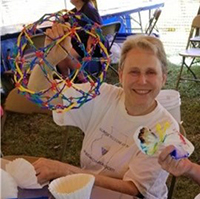
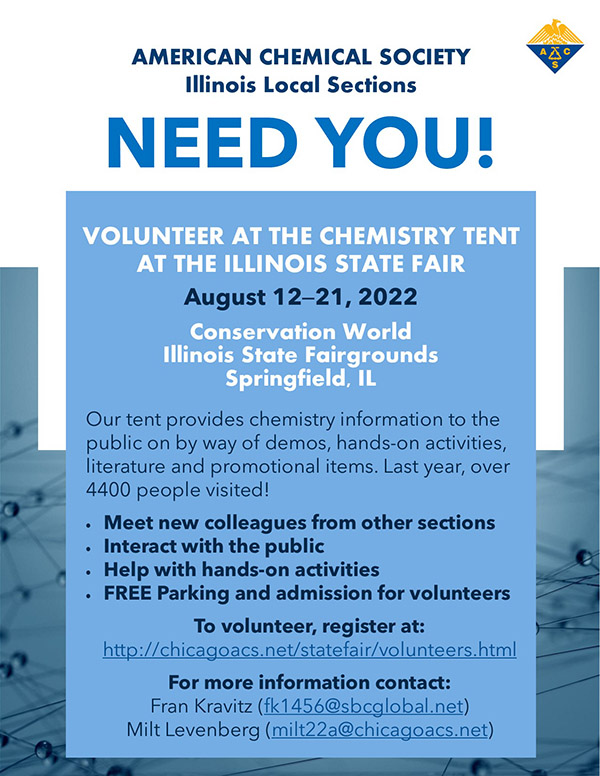
Volunteer at the
Illinois State Fair
Science Tent
The 2022 Illinois State Fair is just around the corner, and WE NEED YOU! Illinois Local Sections of the ACS will have a Chemistry Tent in Conservation World at the Illinois State Fair. This will be our 18th year for this community outreach project. The Illinois State Fair is scheduled from August 12 to August 21.
Our tent provides information to the public on chemistry by way of demos, hands-on activities, literature, and promotional items. Last year, we had over 4,400 people come through our tent. We can't do it without you! We are looking for volunteers to help us at this year’s fair. This is a very rewarding activity and a chance to meet new colleagues from other sections while reaching out to the public.
We need demonstrators, individuals willing to help with hands-on activities, and versatile volunteers. Come for a shift or for the day, or stay for several days! Parking and admission to the fair is FREE for volunteers who participate. There are reasonably priced hotels, motels, and campgrounds nearby for accommodations during the fair.
If you are interested in obtaining more information about this fun, rewarding, and challenging opportunity, please contact the Co-Chairs of the Illinois Sections of the ACS State Fair Project: Fran Kravitz ([email protected]) or Milt Levenberg ([email protected]). You can also register online at http://chicagoacs.net/statefair/volunteers.html.
Thank you in advance for helping us make this program a continued success!
- FRAN KRAVITZ and MILT LEVENBERG
Recent Meeting
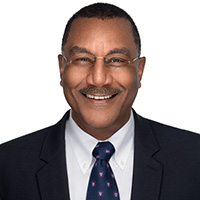
2022 Willard Gibbs Award
Celebration
The ACS Chicago Section was honored to gather both in person and virtually on Friday, May 20, 2022, to host the 111th Gibbs Medal Award celebration. A reception and dinner at the Meridian Banquet Center in Rolling Meadows, IL, was followed by the award ceremony and an inspirational address by the awardee, Professor Joseph S. Francisco of the University of Pennsylvania. The ceremony and address were livestreamed via Zoom to individuals from the Chicago Section and beyond.
Mark Cesa, Chair of the ACS Chicago Section, led off the evening’s festivities with a history of the Willard Gibbs Award, which was founded in 1910 by William A. Converse, then Chairman of the Chicago Section (1909 - 1910). The award is named in honor of the eminent physicist Professor Josiah Willard Gibbs (1839 - 1903) of Yale University, who in 1863 earned the first American doctorate in engineering. Chad Mirkin, Professor of Chemistry at Northwestern University, introduced the awardee and presented a brief biography of his scientific and leadership accomplishments. Tobin Marks, fellow Professor of Chemistry at Northwestern University and the 2001 Willard Gibbs Medalist, then read the award citation and presented the medal to Professor Francisco
In his award presentation, “From Melting Nylon to Global Warming,” Prof. Francisco drew a parallel between events that first animated his scientific curiosity as a child growing up in Louisiana and the work that has defined his scientific achievements. He has devoted his research career to understanding the mechanisms responsible for gas-phase reactions in the atmosphere that are responsible for acid rain, climate change, and global warming. His groundbreaking discoveries in computational and theoretical atmospheric chemistry include the role of photolysis and interfacial water in the gas-phase reactions of SO2 with water and the formation of HOSO as a component of acid rain. Currently, as part of investigations aimed at potential geoengineering solutions to climate change, Dr. Francisco is studying photochemical reactions of SO2 in the stratosphere.
Dr. Francisco concluded his presentation with a moving tribute to his childhood teachers and mentors who first believed in him and inspired and motivated him to pursue a scientific career. The awardee paid this tribute forward by spending time with the students in attendance to answer their questions and encourage them to pursue their own scientific dreams.
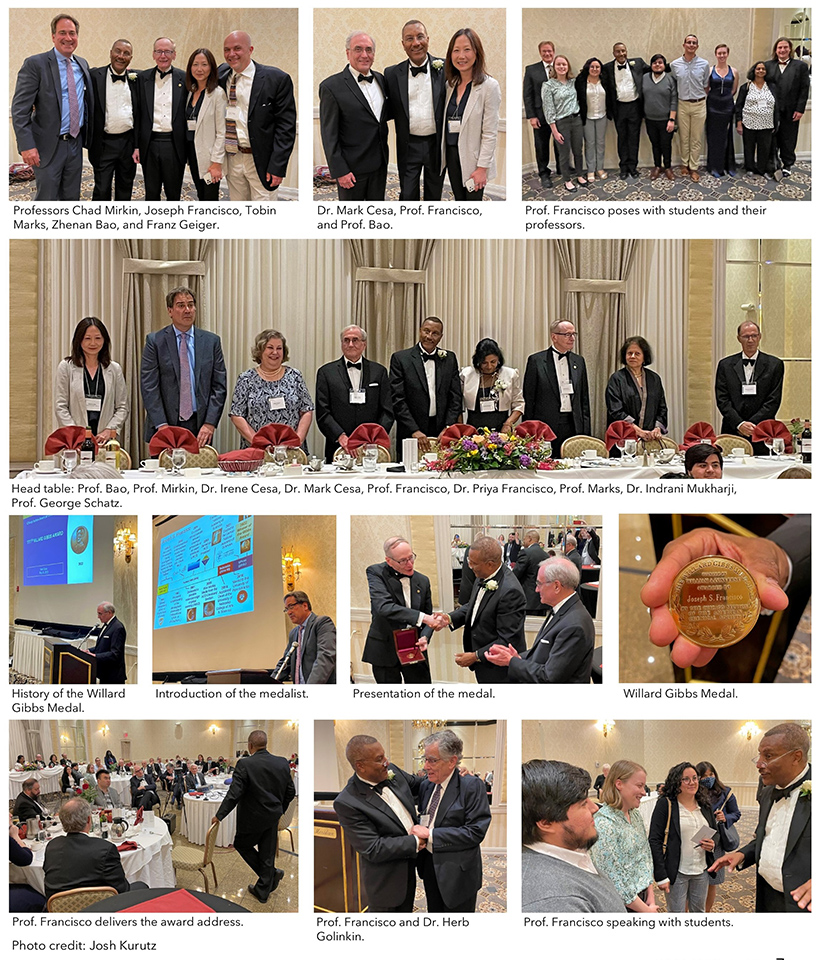
For more photos of the 2022 Gibbs Medal event, please see:
https://chicagoacs.org/gallery.php?id=93
Safety First
Safety is a Team Effort
Laboratory Safety Teams (LSTs), also referred to as Joint Safety Teams, are a relatively new concept or approach to safety culture in academic research laboratories. Their genesis is usually traced to an initiative started in 2012 at the University of Minnesota with mentorship and seed funding supplied by Dow Chemical. LSTs are unique and distinct from institutional environmental health and safety (EHS) programs in their emphasis on leadership by graduate students, postdoctoral fellows, and research assistants to promote a leading rather than lagging culture of safety in research laboratories.
Within 10 years the LST movement has grown nationwide to include more than a dozen major public and private research universities. In the Chicago area, both Northwestern University and the University of Chicago have exemplary programs, as does the University of Illinois at Urbana-Champaign. Their websites provide significant resources for anybody interested in chemical and/or research safety. Important topics include “safety moment” ideas and presentations, how to conduct laboratory inspections, and the benefits of incident reporting.
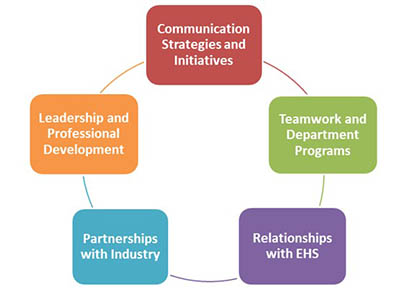
A recent review in ACS Chemical Health and Safety looked at the history of laboratory safety teams, conditions or factors contributing to their success, and common activities associated with LSTs. An interesting feature of the LST movement has been their organic growth facilitated by networking among programs at different institutions. Grassroots efforts by individuals and groups at local institutions are supported and sustained via contact, communication, and mentoring between LSTs. Social media, notably Facebook and Twitter, are important outlets for these networking activities. As LSTs have become more established at participating institutions, most have also developed robust, independent websites providing information and professional development resources such as safety moments, videos, FAQs, webinars, and supplemental safety training, including peer-led laboratory walk-throughs and inspections.
As an example of a successful grassroots LST program, the Joint Research Safety Initiative (JRSI) community at the University of Chicago organized a special “virtual peer lab walkthrough” competition in May 2022. Labs throughout the Department of Chemistry and the Pritzker School of Molecular Engineering were invited to participate in virtual tours of their labs led by their peers to identify outstanding safety issues and spotlight clever approaches to common lab safety concerns. The “safest” laboratories (relative to the science performed in them) were awarded cash prizes. The home page for this group summarizes the overall LST approach to laboratory safety in four words, “By Researchers, for Researchers.”
Special thanks to Josh Kurutz, Secretary of the ACS Chicago Section, for suggesting this topic for the Safety First! initiative. Please contact the Environmental and Lab Safety Committee at [email protected] if you have ideas for future topics in this series. Your feedback, comments, and suggestions are vital to its continued success.
- IRENE CESA
See the May 2, 2022, issue of Chemical and Engineering News (C&EN) for a feature article on the importance of a popular LST initiative, “near-miss” laboratory incident reporting, as a leading indicator for improving laboratory safety and culture. Factors necessary for successful and widespread adoption of an incident reporting system at a participating institution include easy access to an online portal for anonymous reporting, trust in the confidentiality of the process, and effective follow-up to implement any recommended changes.
Sustainability

Elements of Sustainability
Continuing our focus on science driving sustainability for the benefit of mankind, we are encouraged by the remarkable progress in adopting renewable energy resources to reduce global reliance on fossil fuels. As reported in May in The Chemical Bulletin, over the last decade the rate of growth of solar energy, wind energy, and electricity storage technologies has exceeded all expectations. An enduring lesson of environmental progress, however, is the interconnectedness of problems and solutions. It is important, therefore, to consider the lifecycle of renewable energy technologies and, especially, the chemical elements necessary for their function. Let’s look at the availability, production, and ultimate fate of the “elements of sustainability.”
 https://www.pexels.com/photo/landscape-nature- water-storm-4011443/
Silicon (Si)
Solar power is a current “bright spot” in the landscape of renewable energy. Approximately 95% of photovoltaic (PV) cells in commercial solar panels depend on crystalline silicon for the conversion of light to electrical energy. Crystalline Si used in PV cells is 99.9999999% pure. (This “solar grade” Si is referred to as 9N because of the nine nines in its percent purity.) Silicon is an abundant element in nature, making up about 10% of the earth’s crust, and so availability is not an issue. Principal sources include sand (silica, SiO2) and various silicate minerals. Extraction of Si from these sources requires high-temperatures and is energy-intensive. Reduction of quartz sand with carbon (coke) at 2000 °C produces metallurgical-grade silicon, which must be further refined to achieve the 9Ns of solar grade purity.
A residential solar panel consisting of 60 - 72 individual PV cells weighs 40 pounds, but only 5% (2 lbs or 1 kg) of that consists of elemental Si. (More than 90% of the weight comes from its glass panels and aluminum frame.) Given recent exponential growth in solar power and an estimated useful lifetime of 25 - 30 years for solar panels, “the bill will be coming due” soon for disposal or recycling of electronic waste from these technologies.
Until now, research and engineering has focused on optimizing the efficiency and reliability of solar energy. How to recycle not just the elemental Si but also the glass and aluminum frames as well as copper and silver electrical grid connections is being actively investigated. See “Solar panels face recycling challenge” in the May 23, 2022, issue of Chemical and Engineering News for a “breakdown” of possible solutions.
Lithium (Li)
Lithium-ion batteries are the predominant source of energy for electric vehicles (EVs). With an estimated 16 million electric cars sold worldwide in the last decade, and the number of EVs expected to grow to one billion by 2050, lithium sustainability is a crucial concern. Although likely global reserves of Li top 80 million metric tons, these resources are highly concentrated geographically, increasing the risk of disruptions to their availability. Just three countries (Australia, Chile, and China) account for 90% of current lithium mining and extraction, while China controls 60% of refining operations. (https://www.iea.org/reports/the-role-of-critical-minerals-in-clean-energy-transitions)
Lithium production carries high environmental costs. In parts of Chile, extraction of the metal consumes up to 65% of the area’s water resources and leaves the landscape “marred by mountains of discarded salt and canals filled with contaminated water with an unnatural blue hue.” (https://www.instituteforenergyresearch.org/renewable/the-environmental-impact-of-lithium-batteries/)
In Australia and China, where lithium is mined from lithium aluminum silicate deposits, refining is again a high-temperature, energy-intensive process. To reduce the environmental burden, the United States and Europe recently initiated efforts to extract Li from underground geothermal “hot brine” reservoirs. Another environmental concern arises from the currently very low, almost nonexistent, rate of lithium recycling (about 1%).
Neodymium (Nd)
The images that come to mind when we think of wind power are soaring towers connected to sweeping turbine blades that can be 50-meters long. Not visible in these images are the massive permanent magnets in wind turbine generators that are necessary for converting the rotational energy of the blades to electrical energy. The composition of permanent magnets consists of about 28% neodyminum (Nd), along with lesser (4% dysprosium, Dy) or trace (praseodymium, Pr, and terbium, Tb) amounts of its near neighbors among the rare earth elements.
Despite their name, the rare earth elements are not scarce. These metals all have similar chemical properties, however, and occur together in mineral deposits. This fact underscores the central problem related to their lack of sustainability. Typical rare earth mining yields 35% of cerium (Ce), 27% lanthanum (La), 17% Nd, and 6% Pr oxides.
The process of extracting and separating the useful rare earth metals imposes terrible environmental and health consequences due to the accumulation of huge amounts of toxic, unwanted (largely La and Ce), and radioactive (uranium and thorium) waste. One positive aspect of the sustainability of rare earth elements for wind power generation is the extremely long useful life of permanent magnets, estimated to be 300 years.
For a thorough accounting of the elements of sustainability, see the International Energy Agency report on “The Role of Critical Minerals in Clean Energy Transitions” at https://www.iea.org/reports/the-role-of-critical-minerals-in-clean-energy-transitions.
- IRENE CESA
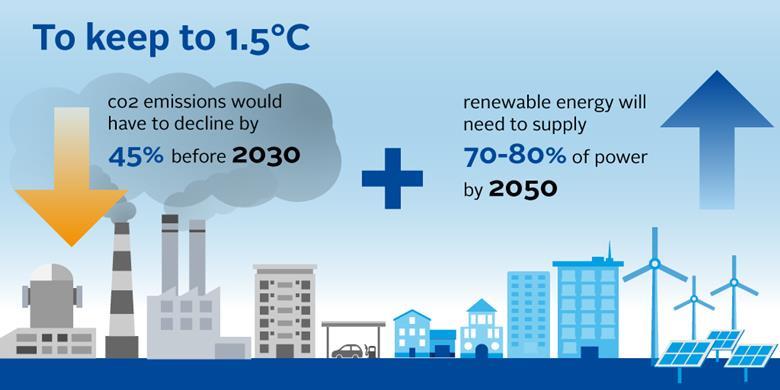
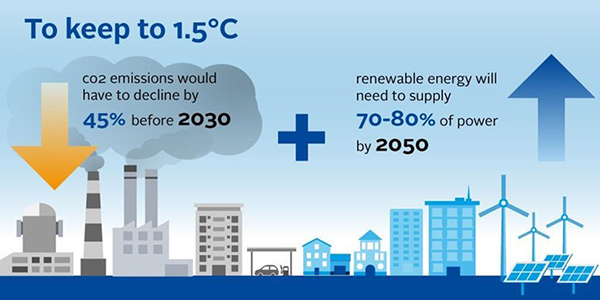 Mitigating global temperature increases due to climate change depends on renewable energy!
https://dwtyzx6upklss.cloudfront.net/Pictures/780xany/6/3/9/5639_ipccreporttokeep1.5ctwitter_953002.jpg
Safety Feature
Recommendations from
CSB Investigation of
Fatal Explosion in Waukegan
On April 28, 2022, the Chemical Safety Board (CSB) released a video summarizing its final findings and recommendations involving the massive explosion and fire at the AB Specialty Silicones plant in Waukegan, Illinois, in May 2019. The explosion claimed the lives of four workers and destroyed the manufacturing facility. The fatal accident occurred due to the mixing of incompatible reactive chemicals in a batch chemical production process, releasing copious amounts of foaming hydrogen gas. In the absence of appropriate ventilation controls and alarms, the cloud of hydrogen gas mixed with air and was soon ignited. The CSB video calls attention to the need for greater process safety management requirements.
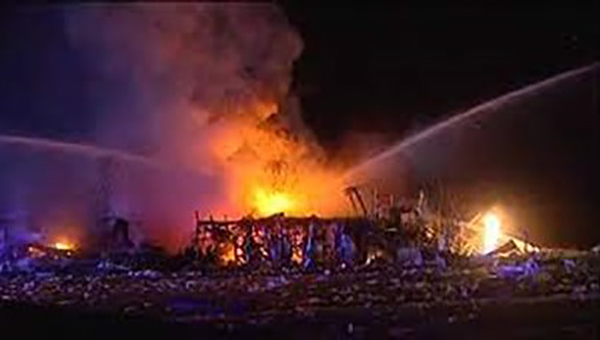
The fatal explosion at the AB Specialty Silicones plant resulted from accidental mixing of 10% potassium hydroxide (KOH) with a siloxane copolymer emulsion containing reactive silicon hydride bonds. The KOH solution was stored in identical 55-gallon drums to the siloxane starting material and had been left in the manufacturing area with the latter. Chemical labels on the drums were small and apparently overlooked.
Accidents involve a confluence of events and contributing factors. The CSB report noted deficiencies in the plant’s hazard analysis program and training, in the company’s operating procedures, and in the design of its equipment and ventilation system.
The plant lacked a flammable gas detection and alarm system even though the “accidental” release of hydrogen gas had occurred in previous manufacturing incidents. A rigorous process safety management (PSM) system could have prevented this accident. Regrettably, AB Specialty Silicones was not regulated under OSHA’s PSM Standard for highly hazardous chemicals because the chemicals used at the facility were not considered highly hazardous. To address this oversight, the CSB recommends that OSHA amend the PSM standard to include “control of reactive hazards that could have catastrophic consequences.”
See the Safety First! report in the March 2020 issue of The Chemical Bulletin for a summary of the initial findings in the CSB investigation and a discussion of the hazards of hydrogen gas.
Teacher Resources
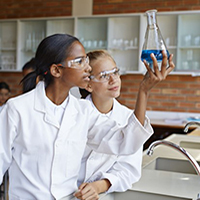
End-of Year Classroom Projects
Sherri Rukes, Past Chair of the Chicago Section and former President (2018) of the American Association of Chemistry Teachers (AACT), has shared the following announcement about AACT classroom resources for chemistry, physical science, and earth science teachers.
Resources can be sorted by topic and grade level and include lab activities, videos, simulations, and end-of-year projects. The latter are a terrific way for students to connect the content they have learned throughout the year with real-life applications.
End-of-year projects combine fun lab experiences with creative outlets for students to celebrate their accomplishments. All activities are fully aligned with the Next Generation Science Standards. Check out these favorites:
- The Evolution of Materials Science in Everyday Products
- The Chemistry of Toys
- What’s It Made Of?
- Coffee Creamer Ice Cream
- Sunshine for Life
Community Activities
Chicago Section Honors CCEW
The Chicago Section kept alive its tradition of honoring Chemists Celebrate Earth Week (CCEW) in a variety of ways in April.
While we were unable to meet in-person for this year’s activities, the Outreach Committee lived up to its name in providing interesting and successful outreach experiences for youth in the Chicago area. The committee delivered more than 3500 fun, hands-on activity packages to local area boys and girls clubs as well as to schools. Centered on the CCEW theme, “The Buzz about Bugs,” the activities included creating chromatography butterflies, learning about the life cycle of butterflies, making “BristleBot” toy robots, using insects to dye fabric, and studying grow creature polymers. Many schools also received copies of the ACS “Celebrating Chemistry” magazine for Earth Week.
One school used the chromatography butterflies activity as a buddy activity, with 4th and 5th grade students pairing up with younger K - 2 students to learn about the life cycle of butterflies. In another school, the CCEW magazines were used as a research activity in technology classes, in which students researched websites featured in the magazine and then completed WebQuests about the chemistry of insects.
The outreach effort was further amplified by sending more than 575 emails to K - 12 teachers in the Chicago area. The emails contained links to over 10 classroom-based activities to celebrate the CCEW theme and provided access to instructional videos with explanations of the chemistry behind the activities. As one measure of the success of this outreach effort, the videos were viewed at least 150 times.
If you know a teacher who might want these resources or to be included in future email blasts, please contact Sherri Rukes at [email protected].
Awards

CCEW Illustrated Poem
Contest Winner
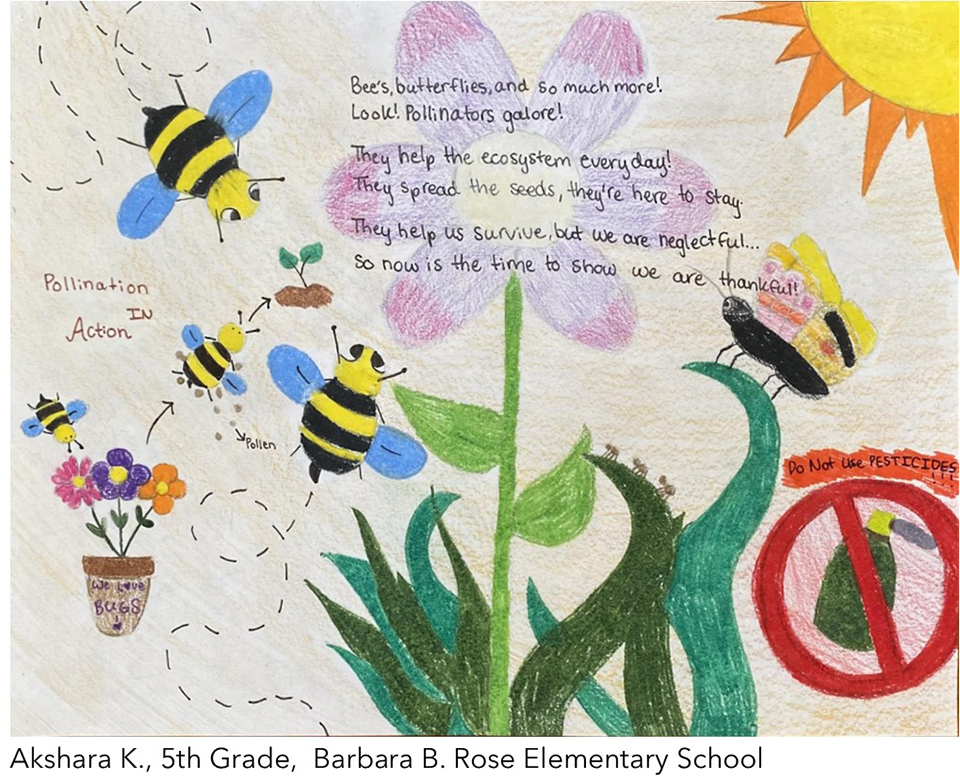
Congratulations to Akshara K., 5th grader at Barbara B. Rose Elementary School in South Barrington, for winning the 2022 CCEW Illustrated Poem Contest sponsored by the ACS Chicago Section. Her drawing and poem inspire all of us to be thankful for the gifts of nature!
Committee Spotlight
Reaching out to K-12 Educators
Do you have a desire to help teachers inspire the next generation of scientists and citizens? The Education and Outreach Committee is actively recruiting ACS Chicago Section members to work with them on several projects that will bring chemistry topics to life for students and their teachers.
How are you helping the planet?
The Chicago ACS Section would like to partner with schools and businesses in the area to create videos showcasing ways in which your institution is “being greener.” If your school or business has adopted processes or programs to address the environment or sustainability, please consider helping out. To obtain more information or to sign up, please contact Sherri Rukes at [email protected].
Chemistry in Industry
Teachers struggle at times to relate the fundamentals of chemistry taught in their classrooms to industry or “the real world.” Where once teachers might have relied on field trips to address this shortcoming, that option is often no longer available. Helping students see, for example, how a local candy company uses chemistry in its product development, or how chemistry is related to the making of airplanes, can be enormously beneficial. The Chicago Section is looking for businesses willing to share how chemistry topics relate to their fields. We will work with you to create short videos outlining basic chemistry or general science principles that apply to your work. Also, if your company has employees willing to arrange virtual field trips for students., please let us know. Reach out to Sherri Rukes at [email protected] for more information.
Judges needed!
The Chicago ACS Section is planning to host middle school and high school-level chemistry competitions in Spring 2023. These contests will have lab components as well as multiple choice and free response sections, and will take place at Libertyville High School. If you are interested in helping out with this event, please contact Sherri Rukes at [email protected].
Information wanted!
Finally, the Chicago ACS Section is looking to talk to schools, colleges or businesses in the area that provide research experiences for high school students. Does your school have a STEM Lab where students can engage in research as a class? Does your college or business host high school students in research or development labs during the school year or in the summer? We would like to talk with you! Our long-term goal in having these conversations is ultimately to create a community where more high school students will be able to enjoy these types of opportunities. Please contact Sherri Rukes at [email protected] for more information and to set up a time to chat!
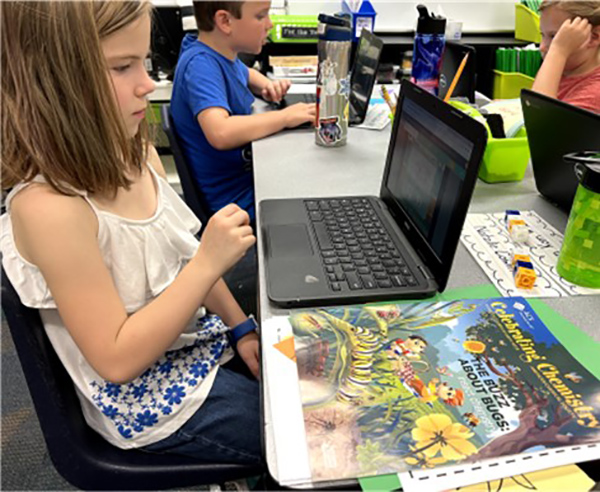
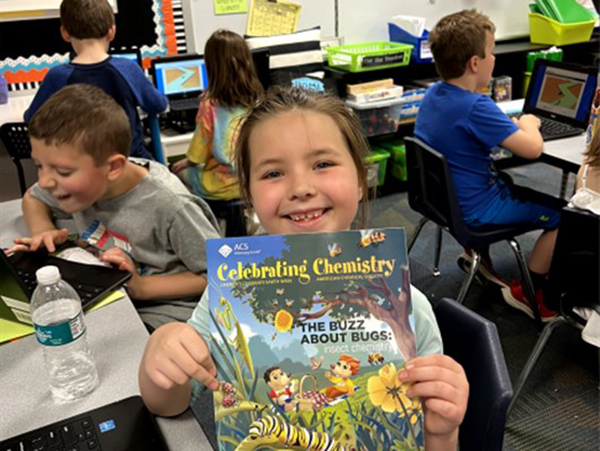
Students enjoying Chicago ACS-sponsored activities during the recent observance of Chemists Celebrate Earth Week.
ChemShorts for Kids

Is Soda Bad for Your Teeth?
Have you been told not to drink pop or soda because it contains too much sugar and is bad for your teeth? Let’s do an experiment to explore this advice!
Materials
- Aluminum foil or plastic wrap
- Cups or glasses, 4
- Eggs, 4
- Measuring spoon
- Paper towel
- Pop or soda
- Sugar
- Toothpaste containing fluoride
- Vinegar, 2 cups
- Optional: Coffee, milk, orange juice, sports drink, tea
Be Safe
Vinegar will irritate eyes and skin. Keep out of your eyes and wear protective glasses and gloves if possible.
Experiment
Prepare a sugar solution by dissolving 2 ¼ tablespoons of sugar in one cup of water. (A 12-oz can of Coke® has about 40 grams of sugar, equivalent to 2 ¼ tablespoons per cup.) Obtain four cups or glasses and pour one cup of vinegar into two of the cups. Pour a cup of soda or pop of your choice into the third cup, and one cup of sugar solution into the fourth cup. Spread a thin layer of fluoridated toothpaste all over ONE of the eggs and place this egg into one of the vinegar solutions. Add one uncoated egg to each of the other three containers. Observe: do you notice any immediate changes in any of the cups?
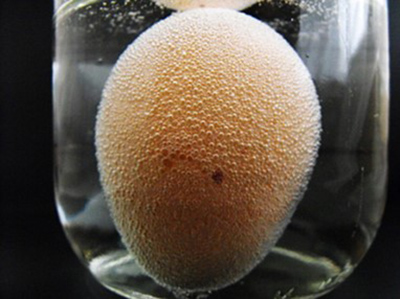
Cover the containers with aluminum foil or plastic wrap and allow the eggs and liquids to sit undisturbed for a few days. After 2 - 3 days, remove the eggs from the containers and discard the liquids. Place the eggs on a labeled paper towel so you know which egg was in each liquid. Compare any differences in the thickness, color, and appearance of the eggs.
What’s happening?
Eggshells, which are made out of calcium carbonate (CaCO3), serve as a model for our teeth in this experiment. Teeth are composed of a mineral called hydroxyapatite, or calcium hydroxyphosphate [Ca5(PO4)3OH]. The eggs are thus similar to, but not exactly the same, as our teeth. When you brush your teeth with fluoridated toothpaste, fluoride ions in the toothpaste displace hydroxy (OH) groups in your tooth enamel, making it harder and less reactive. A similar substitution takes place with calcium carbonate in eggshells. Did toothpaste help protect the eggshell?
Did you observe any other changes to the eggs or in the liquids? Eggs placed in vinegar and pop or soda will usually produce bubbles in the liquid. The bubbles are carbon dioxide (CO2) gas, which forms when acids in vinegar and in pop or soda react with the calcium carbonate in eggshells. This reaction degrades or “eats away” at the eggshell, making eggs placed in those liquids appear noticeably thinner.
What about the egg placed in sugar water? Sugar water is used as a model for pop or soda in this experiment. Compare the appearance of the eggshells for eggs placed in pop versus in sugar water. Sugar does not appear to be the “culprit” in why pop or soda may be bad for your teeth. Sugar alone may not degrade tooth enamel like the acid content in pop or soda does. It is known, however, that sugar helps to “feed” bacteria living in your mouth, and these bacteria in turn produce acids that DO degrade tooth enamel. So pop delivers a “double whammy” due to both the acid AND the sugar that it contains!
Extension
Experiment with other beverages. Coat half of each egg to be tested with toothpaste before placing the eggs in different beverages. Does toothpaste protect eggshells from dissolving or staining?
References
https://sciencing.com/science-fair-project-tooth-decay-6085859.html
https://www.easy-science-experiments.com/rubber-egg.html
To view past “ChemShorts for Kids” activities, go to:
https://chicagoacs.org/ChemShorts
- PAUL BRANDT
Upcoming Events

UPCOMING EVENTS
|
June 9 |
Chicago Board of Directors Meeting |
|
June 6-8 |
26th Green Chemistry & Engineering Conference, Reston, VA |
|
June 7-10 |
ACS Central Regional Meeting (CERM), Ypsilanti, Michigan |
|
June 15 |
June Monthly Dinner Meeting |
|
August 1 |
Deadline for August/September Bulletin issue (special edition for the ACS National Meeting in Chicago) |
|
August 4 |
Chicago Board of Directors Meeting |
|
August 21-25 |
ACS National Meeting, Chicago, IL |
|
September 8 |
Chicago Board of Directors Meeting |
|
September 16 |
Education Night |
Please also refer to the Section’s website chicagoacs.org and social media accounts.
Board & Committee Members

2022 Chicago ACS Section Officers
|
Chair Chair-Elect Past Chair Vice Chair Secretary Treasurer |
Mark Cesa Margaret Schott Sherri Rukes Amber Arzadon Josh Kurutz Michael Morello |
chair-at-chicagoacs.org chair-elect-at-chicagoacs.org past-chair-at-chicagoacs.org vice-chair-at-chicagoacs.org secretary-at-chicagoacs.org treasurer-at-chicagoacs.org |
Masthead
Bulletin Information
June 2022, Vol. 109, No. 6
Published by the Chicago Section of the American Chemical Society
https://chicagoacs.org
Editors: Amber Arzadon and Irene Cesa
editor-at-chicagoacs.org
Digital Editor: Josh Kurutz
Proofreaders: Helen Dickinson and Ken Fivizzani
ACS Chicago Section Office
Address: 1400 Renaissance Drive,
Suite 312
Park Ridge, IL 60068 (847) 391-9091
[email protected]
Social links
Follow ChicagoACS on social media!
Instagram: https://www.instagram.com/ChicagoACS/
Facebook: https://www.facebook.com/ChicagoACS
LinkedIn: https://www.linkedin.com/groups/1854603/