In this issue
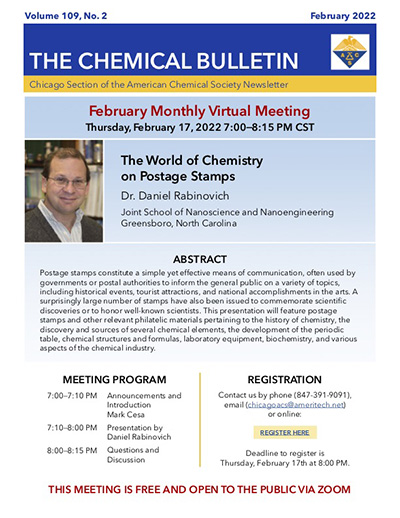
The February 2022 Chemical Bulletin 
PDF of the Latest Bulletin
https://chicagoacs.org/images/downloads/Chemical_Bulletin/2022_02_chembull.pdf
Next Meeting

Chicago ACS February Meeting
7:00 - 8:10 PM, Thursday, February 17
Dr. Dan Rabinovich
Joint School of Nanoscience and Nanoengineering
Greensboro, North Carolina
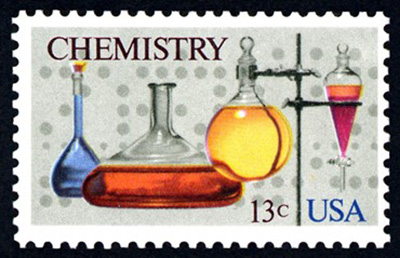
"The World of Chemistry on Postage Stamps"
ABSTRACT:
Postage stamps constitute a simple yet effective means of communication, often used by governments or postal authorities to inform the general public on a variety of topics, including historical events, tourist attractions, and national accomplishments in the arts. A surprisingly large number of stamps have also been issued to commemorate scientific discoveries or to honor well-known scientists. This presentation will feature postage stamps and other relevant philatelic materials pertaining to the history of chemistry, the discovery and sources of several chemical elements, the development of the periodic table, chemical structures and formulas, laboratory equipment, biochemistry, and various aspects of the chemical industry.
PROGRAM
REGISTRATION
THIS MEETING IS FREE AND OPEN TO THE PUBLIC VIA ZOOM
Deadline to register is Thursday, February 17 at 8:00 PM.
Meet The Speaker
Daniel Rabinovich was born and raised in Lima, Peru, where he developed a keen interest in philately and obtained a B.S. degree in chemistry from the Catholic University. After receiving a Ph.D. in inorganic chemistry from Columbia University (1994) and carrying out postdoctoral work at Los Alamos National Laboratory (1994 - 1996), he joined the Department of Chemistry at The University of North Carolina at Charlotte (1996 - 2021). Dr. Rabinovich recently moved to the Joint School of Nanoscience and Nanoengineering in Greensboro, North Carolina, where he continues work on synthetic and structural inorganic, bioinorganic, and organometallic chemistry, including the coordination chemistry of sulfur- and selenium-donor ligands, as documented in some 60 peer-reviewed publications. He is also interested in the history of chemistry and science communication, and is a regular contributor to Chemistry International, the IUPAC quarterly newsmagazine.
From the Editor's Desk
Changing with the Times
Did you know that The Chemical Bulletin has been in print longer than Chemical & Engineering News and Time? The Bulletin debuted in October 1914 with O. Eisenschiml, D. K. French, and W. D. Richardson at the helm as editors. The inaugural issue included content such as upcoming and past meeting information, an editorial, personal news, advertisements, a letter to the editor, and employment opportunities.
Over a century has passed since the Bulletin debuted and so much has changed in our society, the field of chemistry, and the Chicago Section. For instance, the November 1914 issue of the Bulletin reported that the section included 545 members (“names on roll”). In comparison, our section now includes more than 3300 members. As time passes, we are left to wonder how our members and their interests have changed.
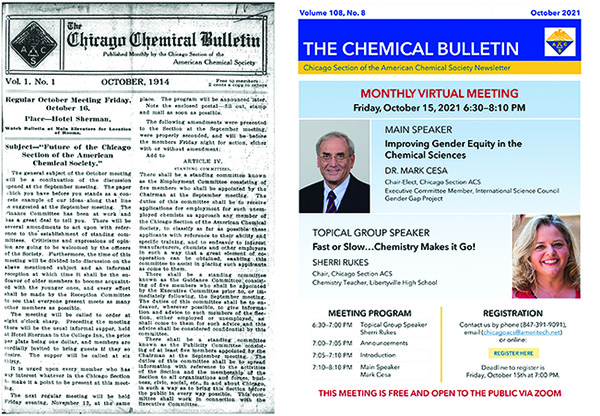 October issues of the 1914 and 2021 Chemical Bulletin.
The Bulletin editors and contributors would like to tailor the newsletter content to your needs and interests. Please consider sending an email to [email protected] with answers to the following questions:
- Who are you and what are your interests?
- What do you want to know about the Chicago Section and its members?
- What do you want to know about the chemical industry in the greater Chicagoland area?
- What resources would you like to see featured in the Bulletin?
As the world continues to change, it is important that our newsletter remain relevant. We welcome your input and look forward to hearing from you.
- AMBER ARZADON and IRENE CESA
To access digitized print issues of The Chemical Bulletin dating from 1914 - 1923, please visit https://chicagoacs.org/Bulletin_Digitized.
Letter from the Chair

Chemistry at the Interfaces
The chemical sciences are of vital importance in meeting the world’s greatest challenges. Professor Maureen Tang, from the Department of Chemical and Biological Engineering at Drexel University, illustrated this theme in her presentation at our joint AIChE/ACS Chicago Sections meeting in January. Her research in electrochemical energy generation and storage showed the interdependence of chemistry and engineering in solving global problems.
“...chemistry is a critically important contributor to the sciences and society.”
Alternative energy systems such as electrochemical energy storage and generation are just one example of how chemistry spans the sciences and engineering. Understanding the properties of chemicals and chemical reactions is the basis for the design and operation of industrial chemistry and engineering. Chemistry is also the basis of chemical hazard and risk assessment; chemists identify hazards and risks through their chemical knowledge, and engineers use this knowledge to mitigate and manage risk through design, optimization, and operation of processes.
There are many other examples of advances occurring at the interfaces between chemistry and other traditional disciplines. Collaborations involving chemists, biologists, and engineers in the medical and pharmaceutical disciplines have led to rapidly increasing capabilities to determine the structures of complex biologically active compounds, ways to make them in the lab, and control their behavior in living organisms.
In the chemical industry, chemists apply their in-depth knowledge in collaboration with experts from a range of scientific, engineering, technological, and business disciplines to develop and market new products and processes. In academia, there is a growing trend toward cross-disciplinary research partnerships that advance the sciences and provide experience for students beyond their traditional fields. More and more academic researchers are working with industrial partners and starting up new companies to bring innovations to the public.
This year the Chicago Section will present talks at our monthly meetings that illustrate ways in which chemistry is a critically important contributor to the sciences and society. In February, Prof. Daniel Rabinovich of the Joint School of Nanoscience and Nanoengineering will speak about how postage stamps are an effective means for informing the public about the importance of scientific advances, particularly in chemistry, in their lives. We look forward to having you join us.
- MARK CESA
State of the COVID-19 Pandemic
The COVID-19 pandemic has impacted all of our lives. For the Chicago Section, as for many other organizations, companies, schools and institutions, the pandemic has meant moving away from in-person gatherings and toward use of virtual meeting technology. Virtual meetings do have advantages, enabling speakers and attendees from far beyond our borders to participate at little or no cost. However, we miss the personal connections we can make when we gather in person. Given the current situation, we plan to continue to meet virtually for the time being, but we are now developing a policy to allow us to meet safely when conditions permit. The Chicago Section Board will continue to monitor COVID-19, and we look forward to meeting all of you in person again soon.
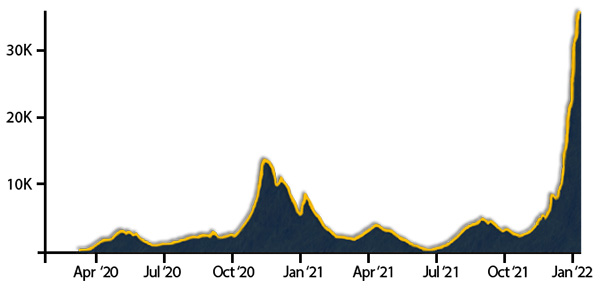
Seven-Day Moving Average of COVID-19 Cases in Illinois as of 1/16/2022 (CDC website). Special thanks to Aistė Baumhardt for creating this graphic.
Recent Meeting

Joint Meeting with AIChE
The annual joint meeting between the Chicago Sections of the ACS and AIChE (American Institute of Chemical Engineers) is a highlight of our meeting calendar, providing a wonderful opportunity to meet new colleagues and exchange ideas. Many of our members work alongside each other in both industry and academia, and the January 2022 meeting offered fertile ground for exploration and collaboration.

Dr. Maureen Tang of the Department of Chemical and Biological Engineering at Drexel University discussed her research in hydrogen electrochemistry. Hydrogen may be the simplest element, but its importance to our energy future cannot be overstated. Understanding the mechanism of electrochemical hydrogen evolution is an important problem, and solving it requires application of a host of chemical and engineering principles
If you have ever wondered whether the principles and concepts you learned throughout your studies will be important in your career, the presentation by Dr. Tang will have dispelled any doubts. Thermodynamics and free energy, kinetics and rate-limiting steps, acid and base chemistry, surface chemistry and catalysis; everything you ever learned about chemistry is being applied to understand the mechanism of electrochemical hydrogen evolution (reduction) and oxidation reactions.
The central paradox driving Dr. Tang’s research is that the rates of these reactions are different in acid and base. Following this “lead,” Dr. Tang has applied a range of techniques to decipher what happens on an atomic or molecular level in the hydrogen evolution reaction on a metal surface when hydroxide ions are present in solution. Is hydroxide merely a spectator ion, or does adsorbed hydroxide serve as a reactive intermediate? Dr. Tang has concluded that the former hypothesis is more accurate, and that the rate difference is due to water solvation effects. Hydroxide behaves as a rapidly equilibrated spectator species that decreases available surface sites and slows hydrogen kinetics. Her results further identify kinetic barriers from interfacial water structure, not adsorption energies, to explain changes in hydrogen kinetics with pH.
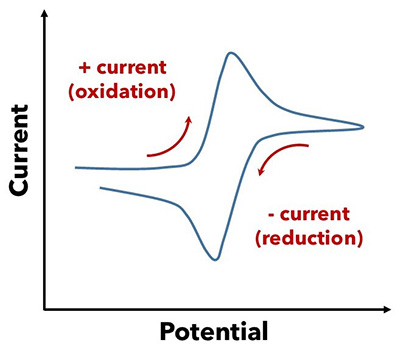
Cyclic voltammetry, with current plotted on the y-axis versus potential on the x-axis, is a mainstay technique in electrochemical research.
Committee Spotlight

Reaching Out to the Community
Communicating the value of chemistry to the general public is a key strategic goal of the American Chemical Society. The Society encourages the active participation of its members in public outreach efforts to increase public understanding and support for science. Leading these efforts within the Chicago Section is the role of the Outreach Committee and its three subcommittees, Community Activities, Illinois State Fair, and Project SEED. Together these groups organize a variety of events to engage children, educators, and the general public in chemistry-related educational activities.
Sherri Rukes, 2021 Chicago Section Chair, is the current chair of the Outreach Committee. Sherri was honored by the ACS as Outreach Volunteer of the Year in 2021 for her work providing demo kits and videos for teachers. She also worked tirelessly throughout her term as section chair to increase the number of volunteers engaged in section activities. Please reach out to Sherri at [email protected] if you would like to participate.
Community Activities
The Community Activities Subcommittee is planning a series of events throughout 2022 to celebrate the value of chemistry in everyday life. The outreach calendar for the section typically begins in February with the Annual DuPage Area STEM Expo, which will be held online this year from February 21 - 26. This event focuses on increasing awareness of educational and professional opportunities in STEM.
Chemists Celebrate Earth Week (CCEW) is a major promotional effort for the American Chemical Society. The theme for 2022, to be held April 17 - 23, is “The Buzz About Bugs: Insect Chemistry.” One of the most fun aspects of CCEW is the illustrated poetry contest for K - 12 students. Inspire creativity and a passion for chemistry by joining in this worthwhile educational activity! Visit the Outreach page on the section website to learn more.
National Chemistry Week (NCW) is the premier ACS outreach event. Despite the pandemic, 2021 was a banner year for this event in the Chicago area, with two activities taking place at Navy Pier and a third at the Museum of Science and Industry.
The Outreach Committee was delighted to sponsor NCW events at these public sites, which allowed the section to reach many more families, youngsters, and out-of-town guests than normal, and both venues are eager to host the section again in 2022. The theme for this year’s NCW celebrations, scheduled for October 16 - 22, is “Fabulous Fibers: The Chemistry of Fabrics.”
Community Activities is currently planning fundraising events to offset the costs of these large events. Please contact [email protected] to volunteer.
Illinois State Fair
Fran Kravitz and Milt Levenberg lead the Chicago Section’s planning efforts and participation in the Science Tent at the Illinois State Fair. This successful outreach event is a collaborative undertaking with four other local ACS sections from a cross-section of Illinois. The Science Tent provides general science information to the public through a variety of engaging demonstrations and hands-on activities. More than 4400 people visited the ACS Science Tent in 2021!
The Illinois State Fair Subcommittee meets virtually throughout the year to coordinate the volunteer commitment needed to sustain this worthwhile and very rewarding activity. Members are just beginning their fundraising and volunteer recruitment efforts for 2022 and are eager to hear from you now. Colleges and universities are especially encouraged to participate in Academic Institute Days in the Science Tent. This is a great opportunity for chemistry students to meet peers from across the state! Please contact [email protected] to join the State Fair Subcommittee and sign up for volunteer notifications.
Project SEED
This subcommittee, chaired by Paul Brandt and Raelynn Miller coordinates summer chemistry research experiences for high school students from economically disadvantaged circumstances and sponsors additional scholarship opportunities. Please write to the chairs at [email protected] to learn more.
Safety First

Top 3 Chemical Safety Stories
Chemical safety featured prominently in the top chemistry news stories of 2021.
Benzene Contamination in Consumer Products
In December 2021, C&EN published a lead story on benzene contamination in consumer and personal care products. “Finding Benzene Everywhere We Look” summarized what seemed to be an every-other-day media headline during 2021. Products recalled due to the presence of benzene included sunscreens, shampoos and conditioners. deodorants, and hand sanitizers. Many of the affected products were aerosols, and it is likely that petroleum-derived propellants such as propane and butane were the source of contamination.
The chronic toxicity of benzene is well documented; it is a known carcinogen. One-time exposure to a product containing a few parts-per-million of benzene is not a health risk. Daily application of a sunscreen or other product containing trace amounts of benzene may increase the long-term risk of leukemia and other blood cancers. The World Health Organization states that “no safe level of exposure can be recommended.” The origin of this problem and how to avoid it in the future are a developing story.
Phasing Out Glyphosate
The global life sciences giant Bayer announced in July 2021 that it would phase out glyphosate-based herbicides for residential use beginning in 2023. Glyphosate, the main active ingredient in Roundup, is the most common weedkiller in the world. Bayer stated that its decision was “exclusively geared at managing litigation risk and not because of any safety concerns.” (In 2020, Bayer entered into a $10 billion agreement with litigants to settle claims that Roundup caused their non-Hodgkin’s lymphoma.)
Glyphosate was introduced in 1974 as a versatile, non-selective herbicide. The potential chronic toxicity of glyphosate, including whether it causes cancer or acts as an endocrine disruptor, is a controversial topic. In 2015, the International Agency for Research on Cancer classified glyphosate as a probable carcinogen based on animal studies. Epidemiological data, however, has not found a connection with cancer in humans.
After thorough scientific review, the EPA concluded in January 2020 that “there are no risks of concern to human health when glyphosate is used in accordance with its current label,” and that glyphosate is unlikely to be a human carcinogen.
Nonpharmaceutical Interventions Against COVID
The COVID-19 pandemic dominated health and safety stories in 2021. In the United States, almost 60 million cases and more than 830,00 deaths have been recorded since the virus was first detected here in January 2020. (Data obtained from the CDC website in January 2022.) The scientific response, especially the development of safe and effective vaccines, has been inspiring, but the virus continues to mutate into more transmissible and/or virulent variants.
Nonpharmaceutical interventions (NPIs) such as ventilation and mask-wearing are important ways to slow down virus transmission. (All chemists will recognize the importance of NPI; ventilation and PPE are standard laboratory practices.) Improving ventilation by increasing air exchange rates and using more efficient filters can prevent transmission of airborne diseases such as COVID-19. (See our September 2020 Safety First! article.) Engineering solutions are available and should be harnessed to solve this problem, especially in schools.
The effectiveness of N95 and surgical-type masks in trapping airborne particles of various sizes has been well studied. Early in the pandemic, when masks were in short supply, people started wearing cloth masks, which are not as effective. Empirical data about masks is often confusing, as evidenced from the following quote in the article linked above: “These numbers are just estimates based on the CDC's 15-minute contact tracing time, which has no scientific basis.” The data is confusing, but the overall advice is not. Wear a mask in public indoor venues!
I look forward to continuing our Safety First! discussions in 2022!
- IRENE CESA
Reflecting on safety issues
is a hallmark of a healthy Safety First! culture.
Sustainability

ACS Initiatives on Sustainability
Throughout 2022, the Chicago Section will be featuring a series of articles on sustainability in The Chemical Bulletin to prepare for the Fall ACS National Meeting in Chicago in August. The theme of the upcoming meeting, “Sustainability in a Changing World,” will promote the work of chemists across all disciplines to tackle the challenges of global sustainability. In this article, I describe ACS resources that provide a foundation for how chemists are addressing sustainability.
The ACS approach to addressing the UN Sustainable Development Goals (SDGs) can be found at https://www.acs.org/content/acs/en/sustainability/chemistry-sustainable-development-goals.html. The Society has indicated the following seven SDGs where chemists can have the greatest impact:
Goal 2: Zero Hunger
Goal 3: Good Health and Well-Being
Goal 6: Clean Water and Sanitation
Goal 7: Affordable & Clean Energy
Goal 9: Industry, Innovation & Infrastructure
Goal 12: Responsible Consumption & Production
Goal 13: Climate Action
Greater detail on these goals can be found on the ACS website. Additionally, the ACS has highlighted five goals or core values that are integral to achieving the SDGs listed above. These are Goal 4: Quality Education; Goal 5: Gender Equality; Goal 8; Decent Work and Economic Growth; Goal 10: Reduced Inequalities; and Goal 17: Partnerships for the Goals.
Sustainability was a major area of focus for 2021 ACS President H. N. Cheng (see his January 2021 interview in Chemical and Engineering News). Dr. Cheng organized and led the Presidential - Agricultural & Food Chemistry Division (AGFD) Symposium “Sustainability: Advances and Applications” at the Spring 2021 ACS National Meeting.
The symposium featured 60 presentations devoted to Biobased Polymers, Biobased Molecules, Byproduct Utilization, Waste Product Utilization, Food-Energy-Water Nexus, Nanotech that Drives Sustainability, Food Safety and Security, and Sustainable Food Systems for Health. Abstracts for these presentations are available in the Spring 2021 Cornucopia (AGFD Newsletter), which can be found at www.agfoodchem.org.
Dr. Cheng also addressed sustainability in the ACS newsletter Industry Matters in November 2021: https://www.acs.org/content/acs/en/industry/industry-matters/sustainability.html.
In addition to partnering with 2021 ACS President Cheng, AGFD hosted many symposia related to sustainability and renewable resources, and in 2022 is implementing a new Sustainability and Green Technology Subdivision. The first symposium organized under the auspices of this subdivision is “Sustainability and Greentech in Agriculture and Food,” which will be held at the Fall 2022 ACS National Meeting in Chicago. Multiple other ACS divisions are also planning symposia on sustainability for the fall meeting. To get an early read on these planned symposia, visit the abstract submission portal ACS Fall 2022 - American Chemical Society, then click on the division link(s) to access the related programming.
Chemists also have a broader responsibility to contribute to the general public’s understanding of this multidimensional issue. To monitor how sustainability is being tracked in the press, check the SmartBrief on Sustainability. This daily news brief provides updates on how sustainability practices are being implemented and how various industries are addressing sustainability.
Thank you for your interest in the ACS focus on sustainability. We welcome your ideas for additional topics in this series.
- MICHAEL MORELLO
Chicago ACS Sustainability Resources
See the January 2022 Bulletin for the lead-off contributions to the Sustainability feature.
- Michael Koehler introduced the 17 UN Sustainable Development Goals and encouraged chemists to become actively engaged in communicating these issues.
- The Safety First! report in January highlighted the role of Green Chemistry in bridging safety and sustainability.
A recording of the March 2021 Chicago Section meeting on “The Role of Higher Education in Environmental Sustainability,” presented by Dr. Nancy Tuchman, may be viewed at https://www.chicagoacs.net/videos/index.html.
Teacher Resources

Happy Valentine’s Day!
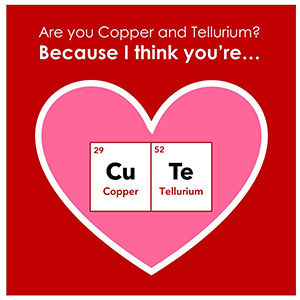
With love in the air, students may not always be focused on chemistry. Take advantage of Valentine’s Day to have some fun reviewing chemistry topics.
Valentine’s Cards
One way students can have fun with chemistry is to create their own chemistry-themed valentines incorporating their favorite puns, such as, “Are you a charged atom, because I got an ion you,” or jokes, such as, “Are you a carbon sample? Because I want to date you.” Once students have created valentines, pass them out to teachers, fellow students, family members, and friends. Ideas for chemistry-style valentines may be found online at these links:
- Create your own valentines:
https://www.flinnsci.com/api/library/Download/13016bd6d0df4e5983c2260c238c6c6e
- Print your own Valentine’s Day cards:
https://www.craftiments.com/2013/02/printable-chemistry-valentines-some.html
NGSS* Inquiry Activity with Toy Valentines
For this activity you will need Wack-a-Pack Valentines (available from most dollar stores, about $1.25 for a pack of four). Give each student a toy valentine and have the students give the toys a whack. The students will soon hear fizzing sounds from inside the toys and the valentines will slowly start to expand. The toys will eventually pop open, releasing an inflated balloon.
The goal of this inquiry activity is for students to figure out how these toy valentines work. The self-inflating balloons contain three components (citric acid, distilled water and sodium bicarbonate), which are initially separated. Whacking the toy causes the reactants to mix, generating carbon dioxide gas and causing the balloon to inflate and pop out of the bag. When the reactions are complete, the balloons will remain inflated for more than a week! This activity is a fun way to get students thinking about chemical reactions, but it’s also a wonderful demonstration to show that chemistry is everywhere, even in valentines!
Additional Valentine's Day chemistry resources can be found on the ACS website at
https://www.acs.org/content/acs/en/education/students/highschool/chemistryclubs/activities/valentines-activities.html.
- SHERRI RUKES

Valentine’s Day Demonstrations
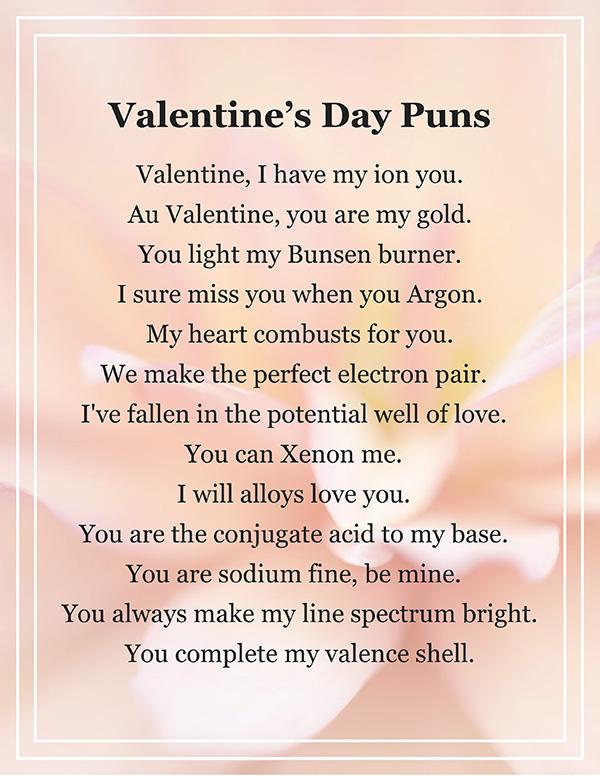
Convert classic demonstrations to Valentine’s Day favorites with new storytelling!
Redox Reactions
Does Valentine’s Day coincide with your lesson plans for oxidation-reduction reactions? Love (or, more accurately, oxygen) is in the air with this classic demonstration using a redox indicator called rezasurin. It’s a simple demonstration requiring only dextrose and sodium hydroxide in addition to the indicator. Just as the structure and color of an acid-base indicator depends on pH, the color of a redox indicator depends on whether it is in an oxidized or reduced state. When the reactants are first combined and the mixture sits undisturbed for a few minutes, the solution is colorless due to a reduced form of rezasurin. Shaking the demonstration flask adds oxygen to the solution, which oxidizes the indicator and causes it to turn pink, the color of valentines! This redox reaction is reversible, and so the demonstration can be repeated several times. You can also use this activity to discuss kinetics and reaction mechanisms in addition to redox and/or reversible reactions. For complete details, see:
https://www.flinnsci.com/api/library/Download/74584737c7ae4ea583f17d20948fa570.
Boyle’s Law
This “broken heart demo” is a good fit for Valentine’s Day if the holiday falls in the middle of your unit on the properties of gases. Place a chocolate covered marshmallow heart in a bell jar connected to a vacuum pump. Normally, air molecules from the atmosphere push on the outside of the marshmallow. Turning on the vacuum pump removes air from inside the bell jar. Air trapped inside the marshmallow then starts to expand against the vacuum, cracking the chocolate coating. It looks like the heart is breaking!
Acid-Base Indicators
For a new spin on a tried-and-true demonstration, change the background narration for the “Water to Pink Lemonade or Wine” demonstration. Simply pour a colorless solution from one glass to another. Each time the solution is poured into a new glass, it changes color, from colorless to bright pink, and back again. The color changes are due to phenolphthalein, which is colorless when the pH is less than 8.2 and bright pink or fuchsia above this pH. Each glass contains a small amount of chemical that causes the indicator to alternate between its colorless and pink forms. For Valentine’s Day, pour the solution while repeating the refrain: “He loves me,” the solution turns pink. “He loves me not,” the solution is colorless!
https://www.sciencecompany.com/Turn-Water-Into-Wine-Kit-P16807.aspx
- SHERRI RUKES
From the Archives

Poetry featured in
“The Spinthariscope”
To celebrate Valentine’s Day, we are reprinting an entertaining poem that appeared in the March 1922 issue of The Chemical Bulletin. The Spinthariscope* was a regular, lighthearted feature column in the Bulletin from that time.
The Cold Shoulder
or
A Polar Romance
If I were a caesium ion,
And you had a negative charge,
Away with you I would be flyin';
You'd never again be at large.
But, since I'm a bit of a bromide
(And you're far from positive, too),
We'll let the thing stop with this poem; I'd
Have too slight attraction for you.
*Spinthariscope is also a real word, corresponding to an instrument used to detect alpha particles.
ACS Resources

National Historic Chemical Landmarks
Scientists, history buffs, students, and teachers alike will enjoy the National Historic Chemical Landmarks (NHCL or Landmarks) program. The ACS established this program in 1992 to “enhance public appreciation for the contributions of the chemical sciences to modern life in the United States and to encourage a sense of pride in their practitioners for chemistry’s rich history.” The Landmarks website provides information about the chemists and chemistry that have transformed everyday life.
Landmark status is granted to chemical advances that have made major contributions to chemistry and society in the U.S.. Learn about the invention of Bakelite (the world’s first synthetic plastic), the discovery of penicillin, St. Elmo Brady (the nation’s first African-American Ph.D. in chemistry), and many other achievements. Explore the Landmark Directory, Timeline, and Map to read stories, view historic photos, and learn about the cultural and scientific context of the landmarks.
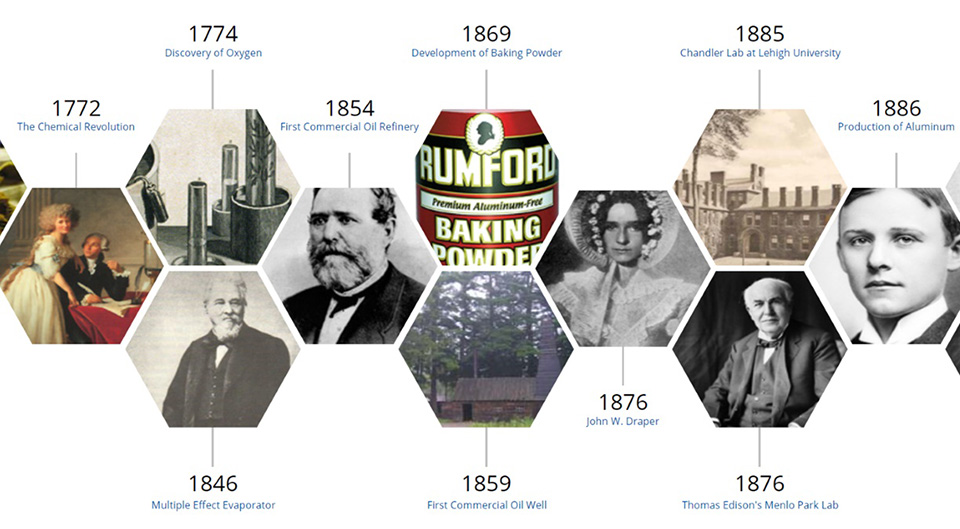 ACS National Historic Chemical Landmarks timeline.
The interactive map allows you to explore geographical regions and discover landmarks in the area. Our section members might be interested in the achievements located in the Chicago Section territory:
- Discovery of Radiocarbon Dating, The University of Chicago, Chicago, Illinois
- Alice Hamilton and the Development of Occupational Medicine, Jane Adams Hull-House Museum, Chicago, Illinois
- Universal Oil Products (UOP), Riverside Laboratory Honeywell UOP, McCook, Illinois
- Sohio Acrylonitrile Process, Ineos, Inc., Naperville, Illinois
- Discovery and Development of Penicillin, Abbott Laboratories, Abbott Park, Illinois
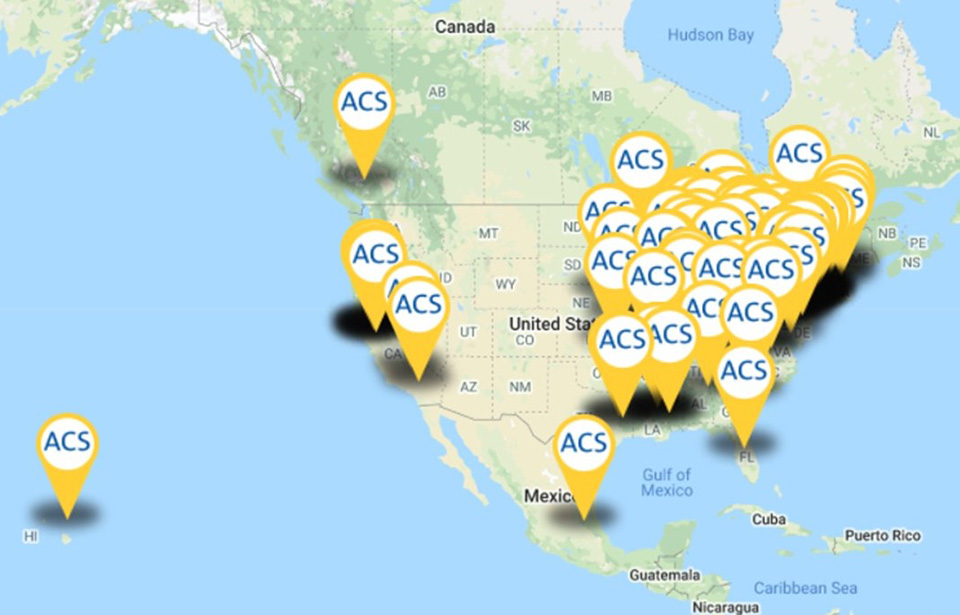 ACS National Historic Chemical Landmarks map.
High school teachers can use the Landmarks lesson plans to teach students about significant chemical achievements that have occurred in the United States. The lesson plans include teacher guides, student handouts, and activities.
The ACS designates an average of three new landmarks every year. The host organization is presented with a historical marker to symbolize the designation and a ceremony is held to celebrate the occasion. To record the achievement, a commemorative booklet and webpage are also published.
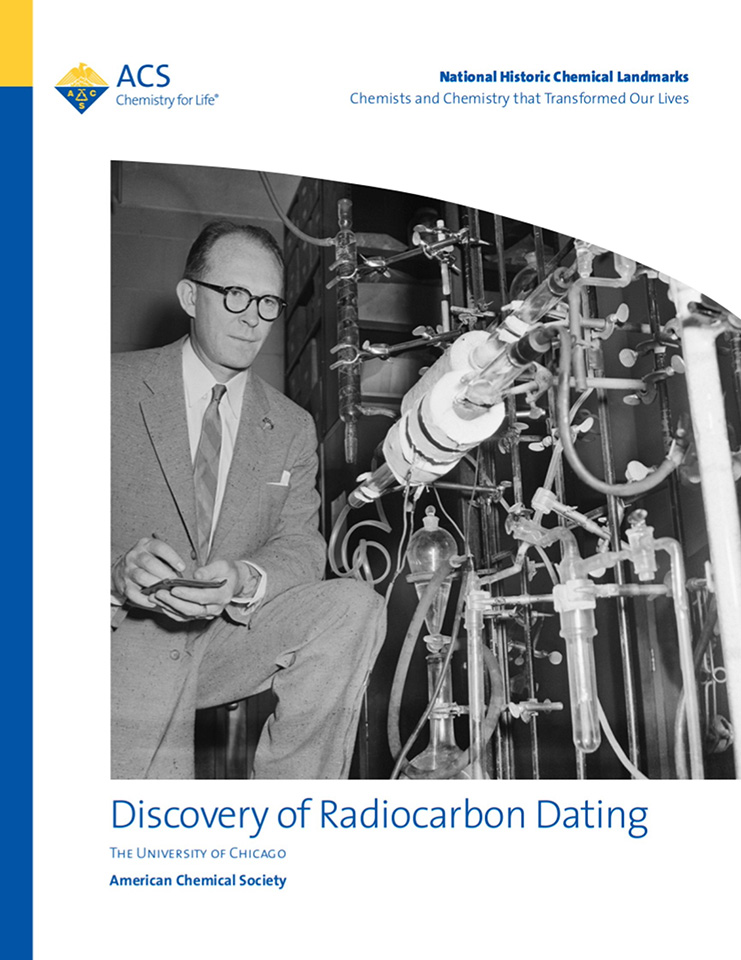
To nominate an achievement, submit an NHCL Nomination Form to the NHCL Program Manager. Prospective ACS Landmarks must be nominated by an ACS local section, division or committee. Landmark criteria and additional nomination information can be found at https://www.acs.org/content/acs/en/education/whatischemistry/landmarks/takeaction.html.
ChemShorts for Kids

Heat and Temperature
Last month we talked about how snow begins to melt from a sidewalk before it melts on grass, and that this is due to the heat capacity of cement versus grass. We found that the lower the heat capacity of a material or substance, the faster heat will “move” into that material and warm the snow. In order to fully explain this observation, however, it is important to understand the difference between heat and temperature.
Materials
Containers for ice water and for heating water
Food coloring
Glass tumblers, 5
Ice water and tap water
Optional: Thermometer
Be Safe!
Adult supervision is necessary when pouring hot liquids. Do NOT heat the water to boiling, and SLOWLY pour the hot water into glass tumblers to prevent cracking. Do not use thick-walled tumblers.
Experiment
Fill a container with ice water and heat water in another container using a microwave or on a stovetop. Pour ice water into the first tumbler and tap water into the second tumbler. Slowly pour hot water into the third tumbler. Allow the tumblers to sit for five minutes to allow eddy currents to settle. After five minutes, add a drop of food coloring to each tumbler and observe.
Fill a fourth tumbler with hot water, and to the fifth tumbler add only enough hot water so that the tumbler is less than one-quarter full. Set the tumblers aside for 10 minutes. After 10 minutes, add a drop of food coloring to each glass and watch what happens.
What’s happening?
You probably noticed that the food coloring mixed much faster in hot water than in cold water. The reason for this is that when energy, or heat, is added to the water, the water molecules move faster and as they bump into the food coloring molecules they cause those molecules to also move faster and disperse more quickly throughout the water. We can measure how fast water molecules are moving with a thermometer, since temperature is a measure of the kinetic energy or speed of molecules. The food coloring is basically acting like a thermometer in that it allows you to see how fast the molecules are moving!
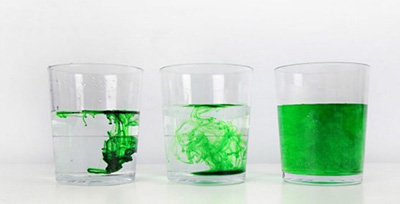
Water in the fourth and fifth tumblers should initially have been at the same temperature. However, the fourth tumbler had more heat in it because it contained more hot water. But, if we assume that the surrounding air removes heat from both vessels at the same rate, then the temperature of the hot water in the fifth tumbler, because it had less heat, should decrease faster. Adding food coloring to the fourth and fifth tumblers, you should observe the food coloring disperse more quickly in the fourth (full) tumbler than in the fifth tumbler that was only a quarter-full.
In a thought experiment, imagine what would happen if you added a little water to a mug and heated it in the microwave for 60 seconds, and did the same thing with a full mug of water. You’re adding the same amount of heat energy to both mugs, but the temperature will be higher in the mug containing less water.
Explore more at
https://www.teachstarter.com/us/blog/science-experiments-for-kids-water-density-temperature-us/
To view more “ChemShorts for Kids” activities, go to: https://chicagoacs.org/ChemShorts
To view past “ChemShorts for Kids” activities, go to:
https://chicagoacs.org/ChemShorts
- PAUL BRANDT
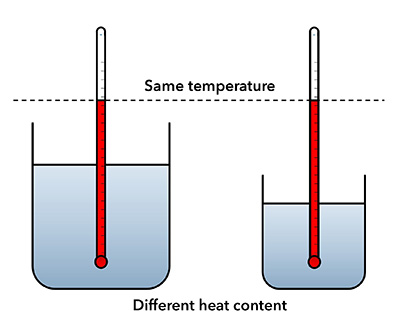 These liquids are at the same temperature, but the liquid on the left contains more heat.
Board & Committee Members

2022 Chicago ACS Board of Directors
2022 CHICAGO ACS ELECTED OFFICIALS
|
Chair Chair-Elect Past Chair Vice Chair Secretary Treasurer |
Elected Directors Omar Farha Elected Directors Amy Balija |
Councilor Ken Fivizzani Councilors Paul Brandt Councilors Mark Cesa |
Alternate Councilors Omar Farha Alternate Councilors Sherri Rukes Alternate Councilors Katie Leach 2022 Milt Levenberg* |
*Appointed by the Board for one-year terms in 2022 to fill vacancies until the next election.
Division and Committee Structure
for the Chicago ACS
Board of Directors

Each committee may also have one or more subcommittees. Voting members of the ACS Board of Directors include all officers, directors, and committee chairs. See page 6 for a list of division coordinators as well as committee and subcommittee chairs.
2022 Chicago ACS
Divisions and Committees
Our Mission and Vision
Mission
The mission of the Chicago Section of the American Chemical Society is to advance the chemical sciences and their practitioners for the benefit of Earth and its people.
Vision
The vision of the Chicago Section of the American Chemical Society is to improve people’s lives through chemistry and its applications.
Administration Division
|
Division Coordinator |
Milt Levenberg |
|
DEVELOPMENT |
Vacant |
|
HOUSE AV Support |
Milt Levenberg Milt Levenberg |
| LONG RANGE PLANNING | Prescribed in Bylaws and Policy Declarations |
| POLICY AND BYLAWS |
Ken Fivizzani (Policy) |
Science Division
|
Division Coordinator |
Mike Koehler |
|
AWARDS DSA 2023 |
Mike Koehler, Fran Kravitz Prescribed in Policy Declarations |
| ENVIRONMENTAL & LAB SAFETY |
Irene Cesa |
|
PROGRAM GLRM Liaison |
Andrea Twiss-Brooks Susan Shih |
Education & Outreach Division
|
Division Coordinator |
Sherri Rukes |
|
EDUCATION AACT Liaison |
Paul Brandt Sherri Rukes |
| PUBLIC AFFAIRS |
Mike Koehler |
|
OUTREACH Community Activities |
Sherri Rukes Susan Shih |
Membership Division
|
Division Coordinator |
Ken Fivizzani |
|
COMMUNITIES Minority Chemists |
Jana Markley Oluseye Onajole |
|
MEMBERSHIP National Affairs |
Ken Fivizzani Paul Brandt |
Communications Division
|
Division Coordinator |
Russ Johnson |
|
CHEMICAL BULLETIN |
Amber Arzadon, Irene Cesa |
| HISTORIAN |
Josh Kurutz |
|
PUBLIC RELATIONS Election Administration |
Russ Johnson TBD |
Finance Division
|
BUDGET DIRECTOR |
Tim Marin |
| COMPTROLLER |
Herb Golinkin |
|
TRUSTEES |
Mark Kaiser (2020-2022) |
Puzzle

Solution to the January
Chicago ACS Word Search
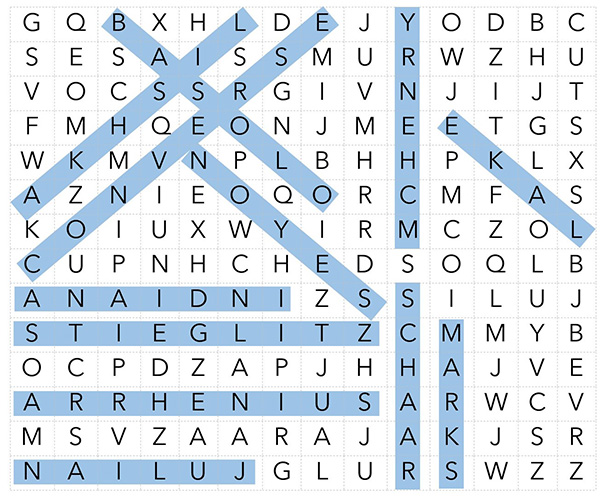
Solution to the “Chicago ACS Word Search” featured in the January 2022 issue of the Bulletin. Puzzle answers (in order of appearance): Indiana, Lake, McHenry, Converse, Arrhenius, Noyes, Schaar, Lishka, Julian Stieglitz, Basolo, Marks
Upcoming Events

UPCOMING EVENTS
|
February 10 |
Articles due for the March Bulletin issue |
|
February 10 |
Chicago Board of Directors Meeting |
|
February 17 |
February Monthly Virtual Meeting |
|
March 1-2 |
14th Midwest Regional AIChE Conference |
|
March 10 |
Articles due for the April Bulletin issue |
|
March 10 |
Chicago Board of Directors Meeting |
|
March 18 |
March Monthly Virtual Meeting |
|
March 20 - 24 |
ACS Spring 2022 National Meeting; San Diego, CA and Online |
|
April 10 |
Articles due for the May Bulletin issue |
|
April 14 |
Chicago Board of Directors Meeting |
|
April 21 |
April Monthly Virtual Meeting |
Please also refer to the Section’s website chicagoacs.org and social media accounts.
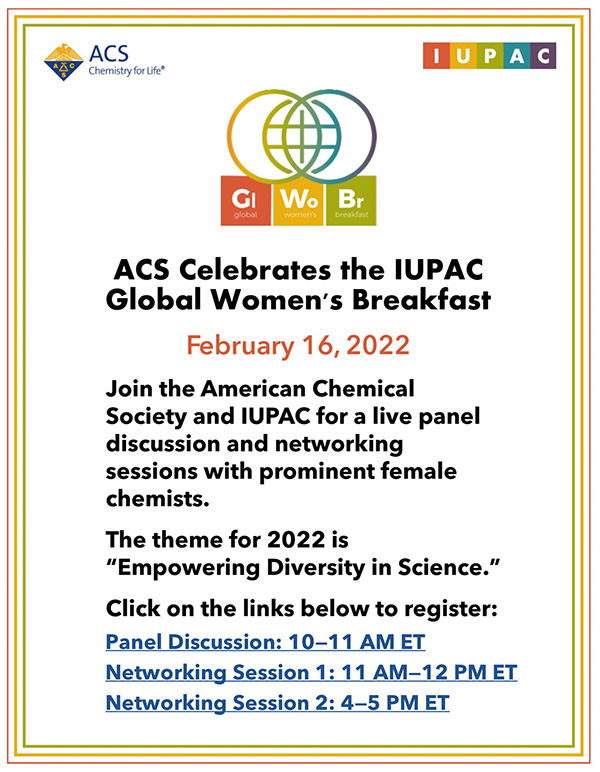
PANEL:
https://american-chemical-society.zoom.us/webinar/register/WN_TXy8GsZiSHirl8mGYG_evw
NETWORKING 1:
https://american-chemical-society.zoom.us/meeting/register/tZAkd--gqjIjGdGn7RSJWH-3oGZV36q6DSMx
NETWORKING 2:
https://american-chemical-society.zoom.us/meeting/register/tZElfumprj8vHdTmBXQb-OeQsKc7zSjXqpJg
Masthead
Bulletin Information
February 2022, Vol. 109, No. 2
Published by the Chicago Section of the American Chemical Society
https://chicagoacs.org
Editors: Amber Arzadon and Irene Cesa
editor-at-chicagoacs.org
Digital Editor: Josh Kurutz
Proofreaders: Helen Dickinson and Ken Fivizzani
ACS Chicago Section Office
Address: 1400 Renaissance Drive,
Suite 312
Park Ridge, IL 60068 (847) 391-9091
[email protected]
Social links
Follow ChicagoACS on social media!
Instagram: https://www.instagram.com/ChicagoACS/
Facebook: https://www.facebook.com/ChicagoACS
LinkedIn: https://www.linkedin.com/groups/1854603/


