
Introduction:
As the weather gets warmer, flowers begin to bloom. How exactly? Well, flowers need water just as much as we do, but how do they “drink” water? This experiment will answer your burning questions. Not only is this experiment simple, but super fun and colorful. With just three materials, we can explore the world of capillary action, like last month, but see it in nature instead!
Materials:
- White carnations (daisies or chrysanthemums will also work)
- Clear cup (glass or plastic)
- Food coloring
- Water
Safety:
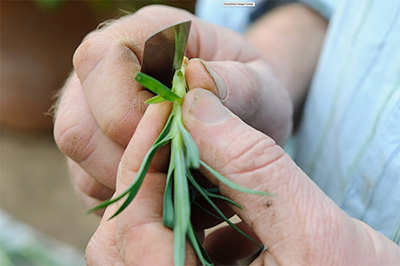
For the best success in this experiment, cut the stem at a 45° angle with a sharp knife/blade. Make sure an adult is present and able to perform this step for you. Using a sharp knife/blade allows for the cleanest possible cut for the xylem, which is crucial in transporting water to the flower, allowing for the best results!
Experiment:
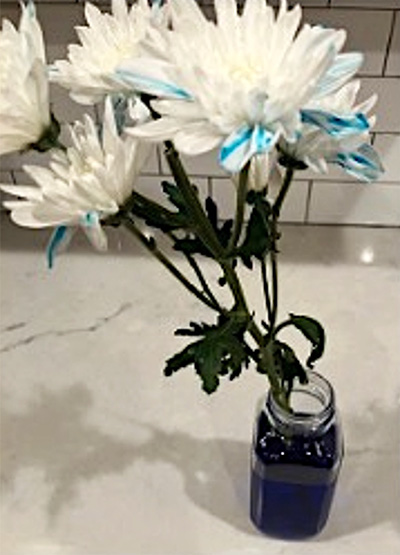
After an adult cuts the stem at a 45° angle, take your clear cup and fill it ¾ of the way with water. Pick a fun color of your choice and add 5-6 drops of food coloring, then mix. Afterwards, simply place your cut carnation in the water and allow it to sit for a minimum of 3-4 hours. You will notice that as more time passes, the more vibrant and colorful your flower becomes!
What’s Happening?:
So, how does the carnation magically appear colorful? Like us, plants sweat and lose water (in a plant, this is called transpiration). Plant stems contain xylem (this is analogous to our arteries and veins), which helps the plant transport water up through the roots to areas where the plant needs water, such as the stem, leaves, and petals. As time passes, the xylem transports the water (and its contents) all the way to the petals, making them appear the same color as the water.
Extension/Final Notes:
Could you use various other white (or colored) flowers, such as roses and peonies? Could you even use celery stalks? If you double the amount of food coloring will the flower be more vibrant? Could you blend primary colors into secondary colors to make a whole rainbow of flowers? Could you, halfway through the experiment, put the flower into a different cup with a different primary color? Could you split the stem in half and put one half in blue and the other half in yellow and get a green flower? Will they mix? If you cut the stem closer to the flower, will it take less time to travel up the xylem? If you cut the stem horizontally, will that affect the uptake of the color?
Resources:
To view past “ChemShorts for Kids” activities, go to:
https://chicagoacs.org/ChemShorts.


