

One of my hobbies is fixing up my house, so I watch “This Old House” on PBS frequently. This week's episode showed how toilets work and that a siphon is necessary for their plumbing. I’ve used a siphon many times before but realized that I hadn’t relayed the excitement of how this works to my kids, so here it is!
Materials:
- Tall container (like a glass)
- Short container (it can be the same size but it helps to visualize the point)
- Flexible straws
- Water
- Scissors
- Food coloring (optional)
Caution: This can be messy, but it is just water!
Experiment:
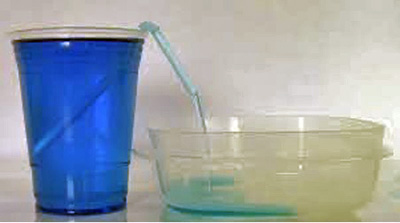
Fill the tall container with water and add food coloring. Shorten the length of the straw by bending it, so that the long end is at the bottom of the container while the bend is at the top of the container. Place the short container next to the tall one with the short end of the straw able to pour into the short container. With the straw out of the water, plug the short end with your finger (so that no air can enter) and put the long end of the straw into the water. Once the straw is in and the bend is resting on the edge of the container, remove your finger. What happens?
What’s happening?
Air pressure is pushing down on the water in the tall container and pushing the water up the straw. Initially, you’ve trapped a bunch of air in the straw. When you release your finger from the straw, the air rushes out and the water gets pushed up into the straw to the bend in the straw. Once the water hits the high point and begins to go over the tip, you’ve created the siphon.
I’ve written many times about how water molecules are attracted to other water molecules, and so here if we think of the water molecules as a long chain of molecules, once the flow of this chain begins, the other molecules in the chain continue to be pulled by gravity similar to this video until air comes into the siphon, breaking that chain of water molecules.
Extension:
See what happens if you lengthen the short end of the straw by attaching another straw to the end of it (using a scissors, cut the short end just a bit so that it can fit inside the other straw as shown to the right)?
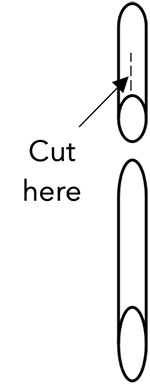
Try adding a third container (tall and filled with water) next to the other tall container and put another straw (filled with water) between the two filled containers. Now repeat the original experiment as seen in this video: https://www.facebook.com/watch/?v=1888924398246267
References:
https://www.sciencebuddies.org/stem-activities/straw-siphon
To view past “ChemShorts for Kids” activities, go to:
https://chicagoacs.org/ChemShorts.


