The April 2022 Chemical Bulletin 
PDF of the Latest Bulletin
https://chicagoacs.org/images/downloads/Chemical_Bulletin/2022_04_chembull.pdf
Next Meeting
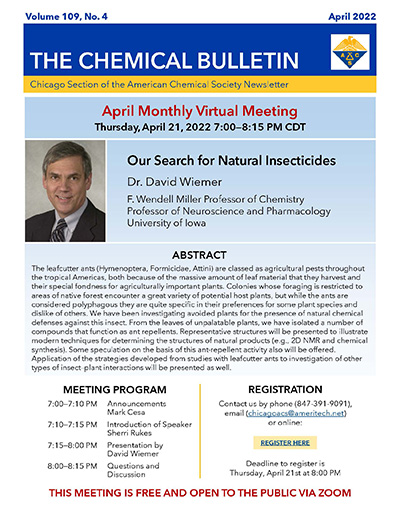
April Monthly Virtual meeting
7:00 - 8:15 PM CDT, Thursday, april 21
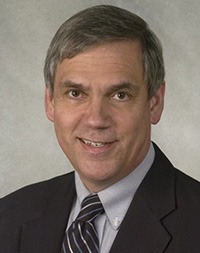
Dr. DaviD Wiemer
Wendell Miller Professor of Chemistry
Professor of Neuroscience and Pharmacology
University of Iowa
"Our Search for Natural Insecticides"
ABSTRACT:
The leafcutter ants (Hymenoptera, Formicidae, Attini) are classed as agricultural pests throughout the tropical Americas, both because of the massive amount of leaf material that they harvest and their special fondness for agriculturally important plants. Colonies whose foraging is restricted to areas of native forest encounter a great variety of potential host plants, but while the ants are considered polyphagous they are quite specific in their preferences for some plant species and dislike of others. We have been investigating avoided plants for the presence of natural chemical defenses against this insect. From the leaves of unpalatable plants, we have isolated a number of compounds that function as ant repellents. Representative structures will be presented to illustrate modern techniques for determining the structures of natural products (e.g., 2D NMR and chemical synthesis). Some speculation on the basis of this ant-repellent activity also will be offered. Application of the strategies developed from studies with leafcutter ants to investigation of other types of insect-plant interactions will be presented as well.
PROGRAM
REGISTRATION
THIS MEETING IS FREE AND OPEN TO THE PUBLIC VIA ZOOM
Deadline to register is Thursday, April 21 at 8:00 PM.
or email ([email protected]).
Meet The Speaker
David Wiemer joined the faculty at the University of Iowa in 1978, where he now serves as F. Wendell Miller Professor of Chemistry and Professor of Neuroscience and Pharmacology. Prof. Wiemer is a Midwestern native who received a B.S. degree from Marquette University and his Ph.D. degree from the University of Illinois. He has pursued studies on the chemistry of host-plant selection by leafcutter ants as well as plant defenses against other insects. His repeated encounters with terpenoids that function in these roles encouraged an interest in the chemical synthesis of compounds that mimic, or inhibit, the biological activity of natural isoprenoids in human metabolism. Prof. Wiemer has authored more than 200 peer-reviewed publications and mentored more than 60 graduate students. He has received a University of Iowa Collegiate Teaching Excellence Award and the Iowa Regents Award for Faculty Excellence, and has been recognized as an Alfred P. Sloan Foundation Fellow and a fellow of both the American Association for the Advancement of Science and the American Chemical Society. In 2020 David Wiemer received the Midwest Award presented by the St. Louis Section of the ACS.
From the Editor's Desk

NEW BEGINNINGS
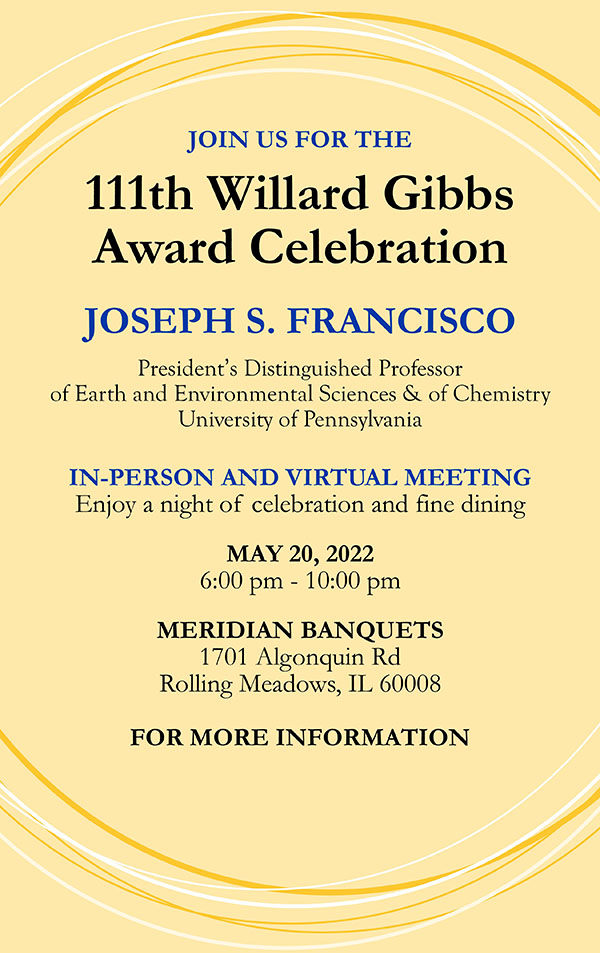
Excitement is in the air as we look forward to new beginnings. The Chicago Section is welcoming back in-person meetings with the 111th Willard Gibbs Award Celebration. The meeting will be held both in person and virtually in order to accommodate all of our members. Dust off your festive apparel and join us in honoring former ACS president Joseph S. Francisco.
Plans are also underway for the ACS Fall 2022 National meeting, which is returning to Chicago after fifteen long years. Lake Michigan and the beautiful Chicago architecture will provide a stunning backdrop for fascinating talks, poster sessions, meetings, and receptions. The national meeting will also be hybrid, so we look forward to seeing our members both in person and virtually. A special issue of the Bulletin will be prepared for the conference and we welcome your help in putting it together. Please contact us at [email protected] to contribute content or place an advertisement in the special issue.
- AMBER ARZADON and IRENE CESA

Letter from the Chair

Chicago ACS Demographics
In her talk at the March 15, 2022 program meeting, Bonnie Charpentier encouraged all of us Chicago Section members to become advocates for chemistry. To represent chemistry effectively, we need to interact with legislators and officials particularly at the local level. The ACS makes tools and resources available to assist local section volunteers in their advocacy efforts.
For us in the Chicago Section, effective advocacy takes into account the demographics of our membership. The ACS makes demographic data on our members available to the section’s officers and staff. It’s interesting to take a look at these demographics to see how we can not only serve our current members but also recruit new members who can add to our section’s diversity and breadth of experience and interests.
Based on responses from our members, the ACS provides information on a variety of factors that describe members’ backgrounds and expertise. Data is provided on types of members (regular members, students, affiliates, and retired members), age distribution, gender, years of service to the ACS, ethnicity, educational degree received, the discipline in which the degrees were received, areas of research, sectors in which our members are employed, job titles and departments, and even citizenship. Members provide information about themselves on a voluntary basis, so not all categories of data are well-populated. However, there are several aspects of the demographics of our membership that are particularly noteworthy and where the results represent the section accurately.
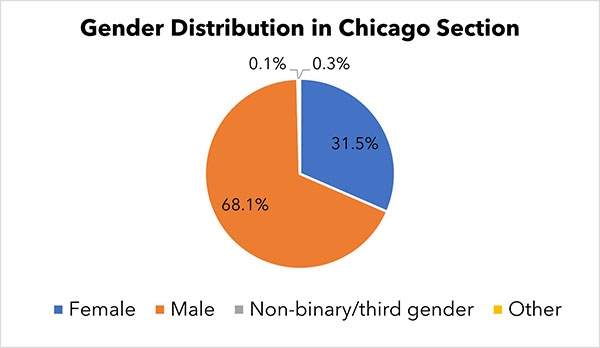
The most recent data was provided by ACS at the end of February 2022. Among those who gave information about themselves, most of our current members are greater than 50 years of age, although there is a substantial cohort of members under the age of 40. We should continue to encourage younger and mid-career chemists to join the ACS and become active in the section. The majority of members are male.
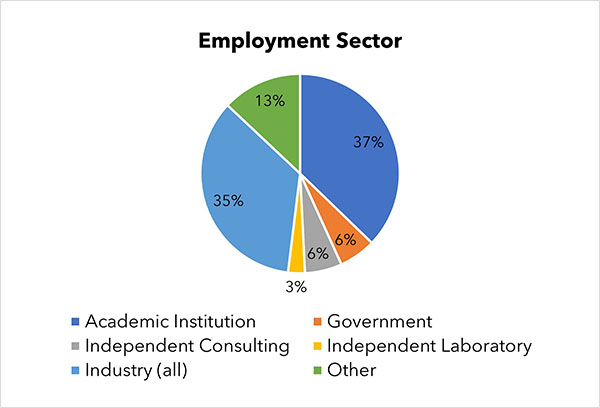
About 37% or our members are employed or are students in more than 170 colleges, universities, and primary and secondary schools. Another 35% work in the chemical industries, 6% are employed by government laboratories and government agencies, and the remainder work in hospitals, independent laboratories, consulting, public utilities, and retail or wholesale trade. Interestingly, 78 of our members are citizens of 31 different countries around the world.
The membership of the Chicago Section, then, is quite diverse, but we can always benefit from greater inclusion of chemists and related practitioners from underrepresented groups. A goal of our section continues to be to invite more chemists in the Chicago area to become ACS members and contribute to the projects and programs of the Chicago Section. I encourage our readers to reach out to their colleagues and encourage them to join the ACS.
- MARK CESA
Outreach
CCEW Poetry Contest
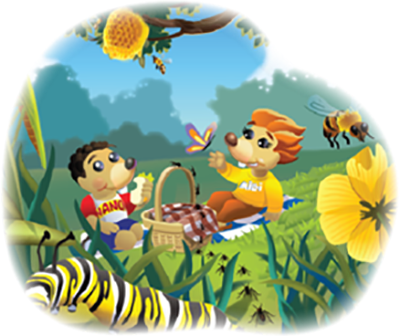
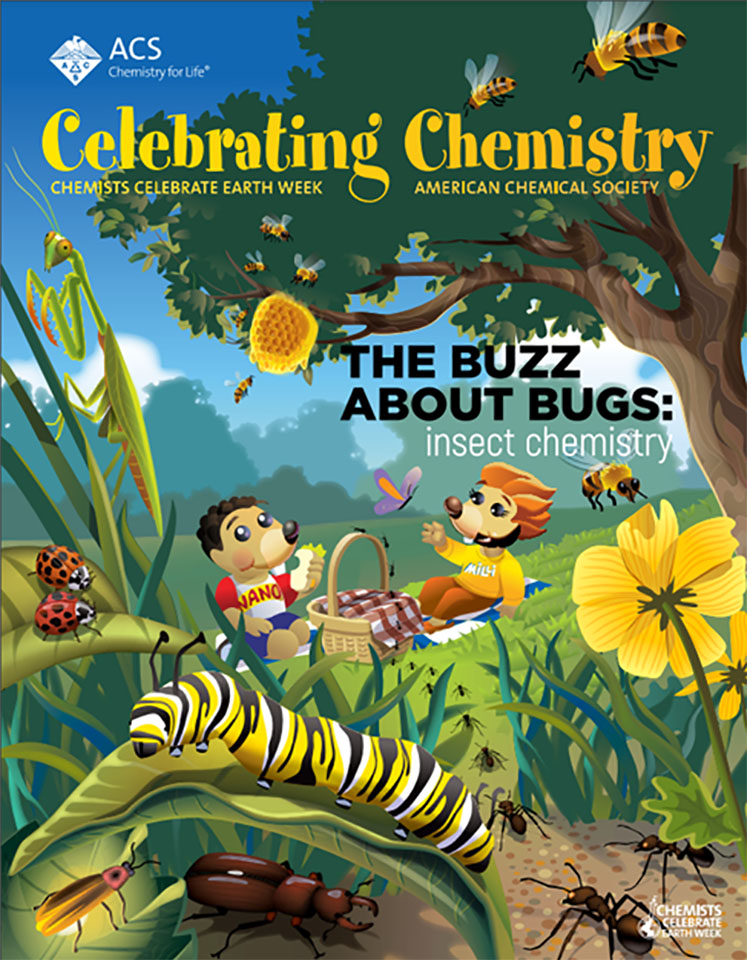
Join the fun of Chemists Celebrate Earth Week (CCEW) with the Chicago Section by participating in the illustrated poem contest with your students or community groups. The theme for this year’s CCEW observance and poetry contest is “The Buzz About Bugs: Insect Chemistry,” and the contest is open to all K-12 students.
Students are invited to write and illustrate a poem based on the theme, including topics such as biodiversity, pollinators and pollination, natural and artificial insect repellents, insect life, and insect chemistry.
The contest is also wide-open with respect to the type of poem, including:
- Haiku
- Limericks
- Odes
- ABC poems
- End rhymes
- Free or blank verse
Contest rules and submission forms can be found at https://chicagoacs.org/CommunityActivities. Entries must be sponsored by either a local school or community group for verification. To learn more and submit entries, please write directly to Sherri Rukes, Chair of the Outreach Committee for the Chicago Section, at [email protected]. The contest deadline is Sunday, April 24 at 11:59 PM ET.
- SHERRI RUKES
Fun Family Activities for CCEW
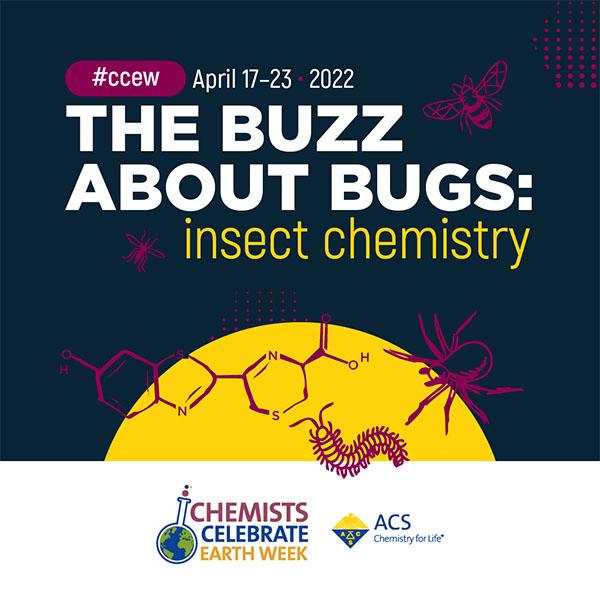
The ACS Chicago Section is planning at-home activities—including prizes!—to help families join in the fun of Chemists Celebrate Earth Week (CCEW). The theme for this year’s events is “The Buzz About Bugs: Insect Chemistry,” which will shine a spotlight on topics such as biodiversity, pollination, honey and silk production, the lifecycle of insects, and their role in spreading disease.
Here is a snapshot of activities that you can do with your family during CCEW:
- Community clean-up efforts
- “Reduce your Carbon Footprint” pledge
- “Chromatography Butterflies” science craft (see also page 11)
- Exploring surface tension
- What is pH?
Families that complete activities and submit a Google form will receive a prize from the Chicago Section recognizing their efforts to protect the Earth during our annual CCEW observance. Visit the section website at chicagoacs.org to learn more about the various activities and prizes as well as how to participate! We will also have information on the website for section members to take part in community clean-up efforts in the area.
Opportunity

SAFETY Focus Group
Volunteer Opportunity
Dr. Michael Blayney, Executive Director for Research Safety at Northwestern University, is working with the National ACS to develop a safety course for research scientists using the case-study approach. He has asked for the help of the Chicago Section to identify 6 - 8 individuals to participate in a short (1 - 2-hour) focus group session with course developers. Participants will screen one of the case study modules, provide feedback via a series of directed questions, and offer suggestions to help guide and inform future course development. The ACS is particularly interested in recruiting graduate students and postdocs, as well as faculty, staff, and research scientists to provide input for the safety training program. Participants are eligible to receive a gift card from the ACS as a token of appreciation. To volunteer or learn more about this opportunity, please contact Irene Cesa, Chair of the Environmental and Lab Safety Committee, at [email protected]. Enrollment is limited, so please call now!
Member Spotlight
Outreach Volunteer of the Year
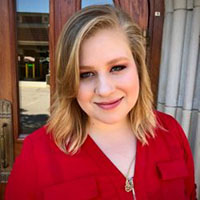
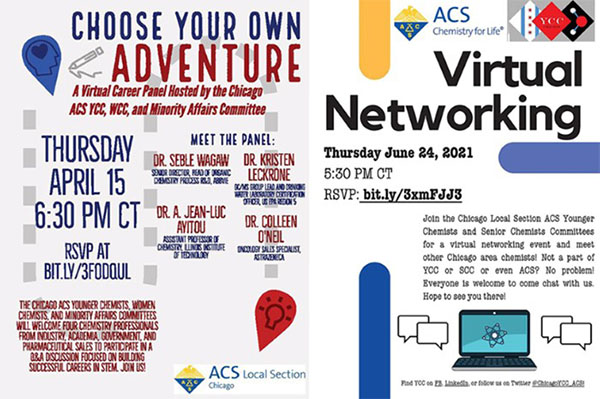
We are pleased to announce that Jana Markley, Chair of the Younger Chemists Committee (YCC), has been recognized by the ACS as Outreach Volunteer of the Year for the Chicago Section. In addition to her work with YCC, Jana also serves the section as an elected Board member (Director) and as Alternate Councilor. She is being honored especially for her outreach efforts organizing virtual networking events and activities during the pandemic. Thanks to Jana’s leadership, YCC held a series of seminars, workshops, and panel discussions throughout 2021 to provide younger members with strategies and tools to help them advance in their careers.
Examples of successful outreach events included a “Choose Your Own Adventure” panel discussion and a joint networking event with members of the Senior Chemists Committee. YCC activities have been instrumental in building community while also giving members new technical and leadership skills.
These are two things members say they value the most about membership in the Chicago Section. (See the December 2021 issue of The Chemical Bulletin for a more complete description of YCC events that were held last year.)
Please join us in congratulating Jana Markley for her exemplary leadership and her successful efforts to forge collaboration among the diverse membership of the Chicago Section.
Recent Meeting
Advocating for Change
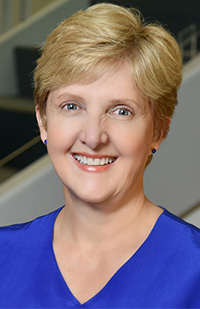
Our March program meeting featured Bonnie Charpentier of Cytokinetics, Inc.. Dr. Charpentier, who served as ACS President in 2019, spoke about advocacy for chemistry and science education and, specifically, about how local sections and individual ACS members can become more effective advocates.
Bonnie started her talk with a few statistics about science education and the scientific enterprise in Illinois. According to recent data, Illinois ranked in the top quartile in financial support for education, but overall its students in 8th grade performed in the lowest quartile in terms of science achievement. With 4.2% of the Illinois workforce engaged in STEM-related fields, the achievement gap is especially concerning. Science education and science policy are crucial to our ability to compete, and effective advocacy can help.
What does effective advocacy look like? Bonnie encouraged members to become familiar with ACS Policy Statements, which were summarized in the February 14, 2022 issue of C&EN. The statements provide recommendations for improving science education, research competitiveness, environmental health and safety, and public policy.
The ACS has developed an Advocacy Toolkit with resources to assist members in speaking with legislators and influencing change. The tools are available online and include a searchable database, talking points, and sample communication. (Hint: Use email, not letters!) As an example of the success of local sections in bringing about positive change, Bonnie cited the creation of the Congressional Chemistry Caucus in 2016. The caucus includes six members from Illinois.
Committee Spotlight
Celebrating Women in Science
As we mark the end of Women’s History Month, it is fitting to consider the work of the Women Chemists Committee in the Chicago Section and nationwide. Within the Chicago Section the Women Chemists Committee (WCC) is part of the Membership Division, which also includes the Younger Chemists, Senior Chemists, and Minority Affairs Committees. Their common purpose is to identify and serve the needs of our diverse membership. The mission of WCC is to attract, retain, develop, promote, and advocate for women in the chemical professions. These objectives align with the core values of the American Chemical Society to increase diversity, equity, and inclusion among its members.
Katie Gesmundo is the current WCC chair for the Chicago Section, and she is joined in her efforts by Amy Balija, who serves as the national chair for the Women Chemists Committee. The WCC has four main goals to help it accomplish its mission:
• Increase engagement and retention of women.
• Advocate for issues of importance to women.
• Enhance leadership and career development opportunities.
• Highlight contributions of women.

In 2022, the national Women Chemists Committee is celebrating its 95th anniversary. WCC will be sponsoring and hosting a series of events throughout the year to mark this special occasion. Events include several symposia to be held during the upcoming ACS Fall National Meeting in Chicago in August. The keynote symposium, “Celebrating 95 Years of the WCC,” will reflect on the impact and success of the committee in achieving its key goal of advancing the contributions of women in chemistry. To learn more about WCC’s plans for the Chicago meeting, please visit the ACS website at https://callforabstracts.acs.org/acsfall2022/WCC.
Networking events play a special role in the activities of the Women Chemists Committee. Locally, WCC paired with the Younger Chemists Committee and Minority Affairs in April 2021 to host a virtual career panel on navigating the often-winding career paths of chemists. As restrictions of the pandemic era wind down in 2022, the local WCC looks forward to in-person events and additional collaborations. To contact the WCC chair and get involved in planning activities, please write to [email protected].
A noteworthy project of the local WCC over the past three decades has been to commemorate and preserve the legacy of women chemists in the Chicago area by writing biographical essays about them. These essays appeared in The Chemical Bulletin and have also been compiled on the section website.
Who started a well-baby clinic for poor children at the Jane Addams Hull-House in Chicago and went on to become the first female faculty member at Harvard University and a pioneer in industrial toxicology? Can you name the first woman Chair of the Chicago Section and the year she served? Whose passion for public outreach led her to begin the “ChemShorts for Kids” feature in The Chemical Bulletin and write more than 100 columns for it? Discover the answers to these questions and many more interesting facts by visiting the WCC Biographies page on the Chicago Section website at https://chicagoacs.org/articles/273.
Awards provide an important pathway for WCC to highlight the contributions of women in chemistry, promote their achievements, and advance their careers. The WCC sponsors the following four national awards:
WCC/Merck Research Award for 3rd and 4th year graduate students
Rising Star Award for mid-career individuals
Overcoming Challenges Award for undergraduates
Priscilla Carney Jones Award for undergraduates
Safety First
Reproductive Health Safety
As part of activities and events marking Women’s History Month in March, the nation and the world celebrated the accomplishments and contributions of women in STEM (science, technology, engineering, and math). The Science History Institute (formerly the Chemical Heritage Foundation), for example, compiled a variety of resources on its website to provide inspiration for observances in honor of women scientists. While these celebrations move us closer to the ideal of gender equity in the chemical sciences, one issue continues to provide some drag on achieving this worthwhile goal. In this Safety First! report we consider twin scientific and cultural challenges in chemical safety and reproductive health.
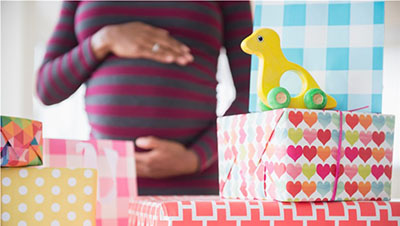
A primary challenge hindering women and men from making informed decisions is the absence of toxicological data for the vast majority of chemicals. It’s hard to obtain a reliable estimate of the number of chemicals that have been tested for reproductive toxicity as a fraction of the total number of chemicals in commerce, let alone among chemicals that have been synthesized for research. It is important to remember in this context that reproductive health hazards may affect both male and female fertility as well as growth and development of the unborn child.
The second main challenge is cultural. Across scientific disciplines in both academic and nonacademic settings, the responsibility or burden to implement reproductive health and safety practices is often placed on individuals rather than institutions. Two recent reports in major journals describe how far behind our safety knowledge and safety culture are in addressing this fact of life for scientists and their families.
In a Journal of the American Chemical Society report published last year, authors from the Massachusetts Institute of Technology summarized their analysis of Chemical Hygiene Plans from 100 academic institutions. The authors found major inconsistencies in the classification of potential reproductive toxins among different otherwise authoritative and reliable reference sources and organizations. The report also called for institutions to normalize the discussion of reproductive health among researchers.
The importance of cultural change was highlighted in a Nature Reviews Chemistry article called “Pregnancy in the Lab,” which was published in February 2022. This commentary, based on surveys of women in the United Kingdom, pointed out the importance of institutional culture, line management, and funding policies in providing support for pregnant researchers. “It is key that the whole research ecosystem work collectively for positive change.”
References
- California Proposition 65 provides a list of naturally occurring and synthetic chemicals that are known to cause cancer, birth defects or other reproductive harm. The list is independently reviewed and updated annually.
- The Agency for Toxic Substances and Disease Registry (ATSDR, a branch of the Centers for Disease Control) publishes fact sheets for hazardous chemicals or classes of chemicals [e.g., lead or chromium (VI) compounds]. The database is searchable and includes reproductive hazards.
- PubChem, which is maintained by the National Library of Medicine, is the world’s largest collection of freely accessible chemical information, including toxicology data.
- IRENE CESA
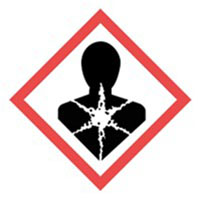
The Globally Harmonized System (GHS) of Classification and Labelling of Chemicals has three hazard statements (HS) relating to reproductive health and safety:
• HS360, May damage fertility or the unborn child
• HS361, Suspected of damaging fertility or the unborn child
• H362, May cause harm to breastfed children
Do you have an idea for a Safety First topic or presentation? We welcome your ideas and contributions! Please write to [email protected] to share your stories.
Sustainability
Native Plants and Biodiversity
Throughout this year we are publishing articles on sustainability to celebrate and promote the theme of the upcoming ACS Fall National Meeting to be held in Chicago in August 2022. The theme, “Sustainability in a Changing World,” highlights the role of chemists across all disciplines in achieving the United Nations Sustainable Development Goals. Previous reports in this series include “Bridging Safety and Sustainability with Green Chemistry” and “The Chemist’s Role in Achieving a Sustainable Future,” which appeared in the January 2022 of The Chemical Bulletin, as well as “ACS Initiatives on Sustainability” and “Carbon Capture - Is It Sustainable?” in February and March 2022, respectively.
This month’s contribution to the Sustainability feature coincides with the annual ACS observance of Chemists Celebrate Earth Week (CCEW), which will take place from April 17th to the 23rd. The theme for this year’s CCEW celebration is “The Buzz About Bugs: Insect Chemistry.” Central to this theme is the role of pollinators and pollination in maintaining biodiversity among both plant and animal species. The importance of biodiversity is also emphasized in Goal 15 of the UN Sustainable Development Goals, to protect, restore and promote sustainable use of terrestrial ecosystems and to halt biodiversity loss. This is a global challenge requiring global cooperation and solutions. But as with all large-scale problems and projects, there are also local opportunities to provide witness and address the issue. In the case of biodiversity, local activities can begin in your own backyard.
In a recent New York Times bestselling book, Nature’s Best Hope: A New Approach to Conservation that Starts in Your Yard, the author Douglas W. Tallamy describes the “roots” of local solutions for improving biodiversity. The foundation of this approach is the importance of native plant species in local ecosystems for producing the food that fuels insects. Tallamy refers specifically to “keystone genera,” without which landscapes cannot maintain healthy food webs, even if the overall number and variety of plants is large. Key native plants will, of course, vary across the country depending on the local climate and plant hardiness zone. The National Wildlife Foundation maintains a searchable website listing of native plants for individual locations across the country. Plants are ranked based on the number of butterfly and moth species that use the plants as hosts for their caterpillars.
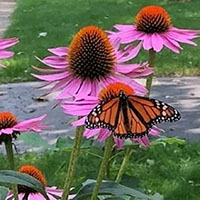
In Illinois (USDA Hardiness Zone 6a/5b), the top five woody species for preserving biodiversity include native oaks (Quercus), willow (Salix) and birches (Betula), as well as members of the genus Prunus such as plum, cherry, and chokecherry. Of these, the mighty oak is indeed mighty, with 456 species of butterflies and moths using it as a caterpillar host plant. Native flowering plants that support the most butterflies and moths and also attract birds include goldenrod (Solidago), perennial sunflowers (Helianthus), and asters (Symphyotrichum). Other native wildflowers that garner a lot of attention for attracting butterflies and hummingbirds (one of the special rewards of maintaining native prairie plants!) are milkweed (Asclepias), rose mallow, cardinal flowers, black-eyed Susan (Rudbeckia), and coneflowers (Echinacea).
According to Tallamy, by investing in native plants and especially the so-called keystone genera, you will be “contributing to Homegrown National Park,” our best defense against the loss of biodiversity.
- IRENE CESA
Teacher Resources

Implementing the Science Practices -
Let’s debate!
The Science Practices are a core component of the multidimensional Next Generation Science Standards. This set of seven practices is designed to help students develop scientific “habits of mind” and cultivate the ability to engage in scientific inquiry and reasoning. In this article I describe a multi-day project or activity that is focused on giving high school students relevant experience in the following science practices:
- Engaging in argument from evidence
- Obtaining, evaluating, and communicating information.
The project was inspired by teachers from Barrington High School and the book, Seven Elements That Have Changed the World: Iron, Carbon, Gold, Silver, Uranium, Titanium, Silicon, by John Browne, which provides a framework to directly engage students in classroom research, discussion, and debate. In the book, the author talks about the importance of the Earth’s resources and the extraordinary uses of those seven elements. For example, carbon is the building block, providing us with heat, light, and so much more. Silver helps us preserve memories, while silicon helps us communicate in a unique and different way. The book combines science, history, and personal experiences to show how these elements have shaped our world.
Another book that may be used in this project is The Bastard Brigade: The True Story of the Renegade Scientists and Spies Who Sabotaged the Nazi Atomic Bomb, by Sam Kean. This book is one that I personally loved reading. It contains many little-known stories about scientific discoveries and secrets that emerged from the building of the atomic bomb during World War II. The author provides insight into a great spy thriller, the story of a major league catcher (Moe Berg) who became an international spy. Throughout the book the author shares stories about famous people who volunteered for dangerous missions as well as many heartfelt family stories that reveal both the human side and the political side of the race for the atomic bomb.
The following outline provides a sample day-to-day breakdown of how this project can unfold in the classroom. [The outline uses the book about the seven elements (plus nitrogen!) as a guide.]
Day 1: Student groups brainstorm evidence and possible answers to the following questions based on their own past experiences.
- What do you think would be some characteristics in helping decide if something “changed the world?”
- What are some other products or inventions that have changed the world? How did they change it?
- Which do you think is more powerful: changing the world for good or changing it for bad? What are some examples and evidence for each?
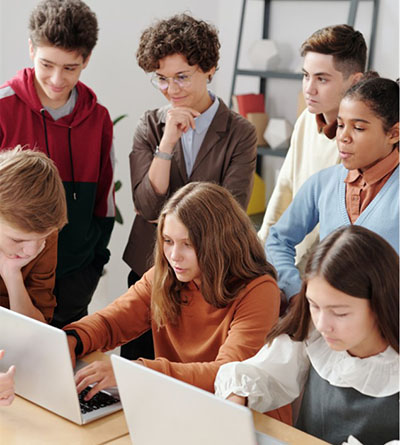
Day 2 (may extend to Day 3): Class discussions center on questions to help students discover (or uncover) the qualities of a “good” debate. (Showing examples of famous politicians' debates may help the class refine their thinking about how to debate.)
- What do you think are some qualities of a “good” debate and/or debater?
- What would make a “good” debate for this particular project?
- What total amount of formative points do you think this debate should be?
- What are some of the categories of points you feel should be included in the total debate grade?
- What percentage do you think each should have?
- How do you imagine working on this project with your group?
- Have you ever debated in a class before? How would you rank your overall ability as a debater?
At the end of this discussion the groups will draw or select the elements that they will be researching, defending, and debating. An eighth element, nitrogen, may be added to the mix to get an even number of groups and sets of debates.
Days 3 - 5: Each group researches their element, prepares a seven-minute argument about how it changed the world, and creates slides to help them with their debate. (Each group should also prepare additional evidence beyond their main argument. The 7-minute presentation will be followed by a one-minute closing rebuttal for each group.)
Day 6 and 7: Debate! The debate brackets are introduced showing which groups will be debating each other. Groups debate one bracket at a time, with two rounds of debates each day. Students who are not debating should record the vital points so they can help decide the winning group for each round. At the end of each debate, there is a short discussion as the students decide which group has the most persuasive arguments and who will win the debate. Two brackets are debated each day and two winners determined per day.
Day 8: For the assessment phase of this activity, each student will reflect on their own about the four debate winners and rank them one through four, with one being the highest. Each student must provide supporting evidence for their ranking. The rankings are then tallied and the winning group is crowned!
- SHERRI RUKES
K–8 Chromatography Butterflies
Combine science and art by making “Chromatography Butterflies” to celebrate Earth Day this spring. Gather your supplies: washable markers, paper coffee filters, plastic cups, water, paper towels, and pipe cleaners.
- Lay the coffee filter flat and, starting at least 2 cm away from the center, draw a circle or circles around the filter using colored marker(s). Hint: Black or brown markers give surprising results.
- Fold the coffee filter in half and then in half again to obtain a cone shape.
- Add water to a depth of about 1/4-inch in a plastic cup. Place the coffee filter cone in the cup so that the colored circle(s) are NOT in the water. (This is important!) The cone should sit straight up as its sides rest against the inside of the cup, and only the tip of the cone should be in the water.
- Observe! Water will rise up the filter paper by capillary action and as it does so will carry inks with it. Remove the filter from the cup when the water is about 2 cm from the top. Gently unfold the cone and place it on a paper towel to dry.
- To make a butterfly: Scrunch the coffee filter in the middle and tie it off using a pipe cleaner. Decorate the butterfly by adding eyes and antennae.
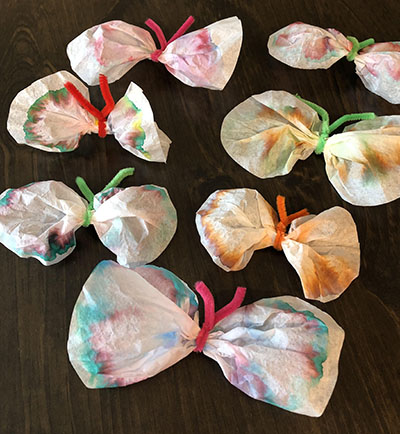
Why do you see different color patterns using black or brown markers? The inks in these markers are actually made up of several different color pigments or dyes.
Some of the dyes are more attracted to the paper than the water and rise up the paper at a slower rate than the water. Other dyes are more attracted to the water than the paper and travel farther up the paper as they move along with the water front.
It’s science (not magic!) that “gives rise” to the pretty color patterns. The explanation has to do with intermolecular forces, that is, forces between molecules that make up the inks, paper, and water. How far up the paper different inks will travel depends on how similar the molecules are.
This technique of separating substances based on intermolecular forces is called chromatography, which literally means “color writing” (from the Greek, chroma = color, graphein = write). Chromatography has thousands of applications in biology, chemistry, medicine, and forensics.
Video reference
https://www.youtube.com/watch?v=PvHvx7k7UPU
- SHERRI RUKES
ACS Resources
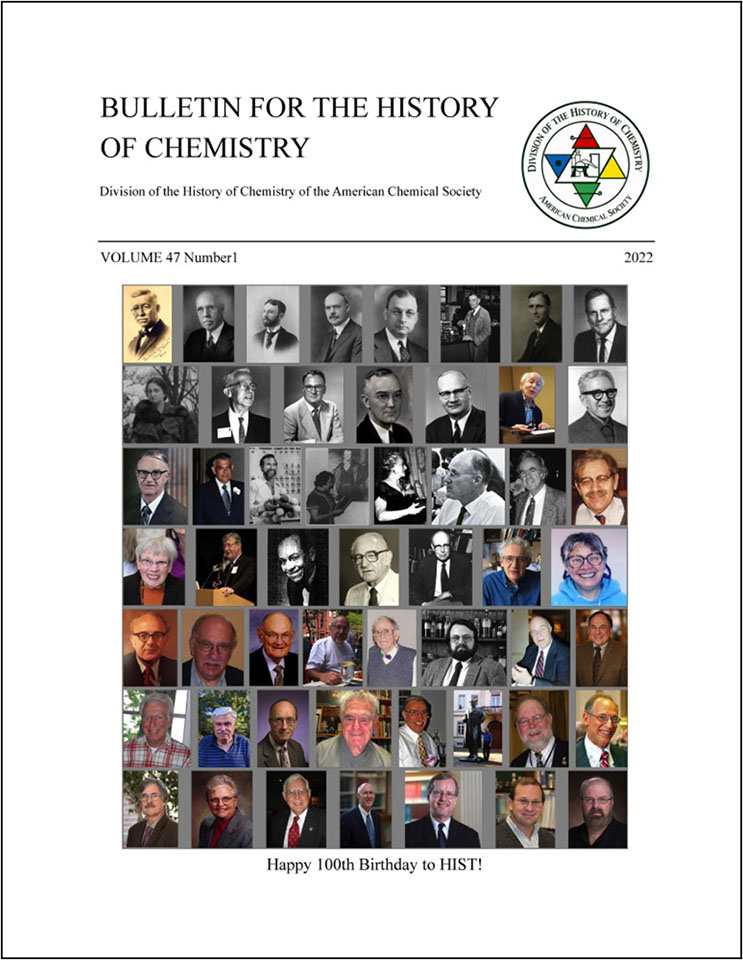
Bulletin for the History of Chemistry
This year the Division of the History of Chemistry of the American Chemical Society (HIST) celebrates its 100th anniversary. HIST is the home within ACS for scientists interested in the history of chemistry. Their activities include the publication of a peer-reviewed journal, the Bulletin for the History of Chemistry. To celebrate the 100th anniversary, they prepared a commemorative issue. The free issue can be accessed electronically at http://acshist.scs.illinois.edu/bulletin_open_access/bull22-vol47-1.php.
For the special issue, prominent chemists and historians of chemistry were invited to contribute essays on the theme “Novel Insights in the History of Chemistry: Looking Back Yet Mostly Looking Forward.” The responses were collected into six main areas:
• Expansive Approaches to the History of Chemistry
• Foci on Specific Topics
• Multidisciplinary Approaches and Tools
• Thriving, Inclusivity, Diversity, and Equity and the History of Chemistry
• Relationships of Historians and Chemist-Historians
• The Past, Present and Future of History of Chemistry
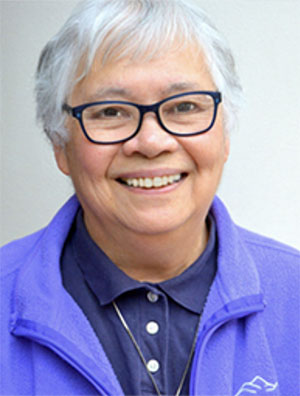 Dr. Mary Virginia Orna
Contributing authors include Dr. Mary Virginia Orna, a recent Chicago ACS monthly dinner meeting speaker. Dr. Orna was also the recipient of the 2021 HIST Award. Her Bulletin essay is titled “Archaeological Chemistry: Past, Present, Future.”
To mark the conclusion of Women’s History Month, consider reading the essay “Out of Obscurity: Contextualizing Forgotten Women Chemists” by Marelene F. Rayner-Canham and Geoffrey W. Rayner-Canham. The authors discuss ways in which biographical accounts of women chemists differ from those of male chemists.
You can access past issues of the Bulletin for the History of Chemistry at http://acshist.scs.illinois.edu/bulletin_open_access/bull-index.php. Enjoy 30 years of open-access issues, which are free to all after a three-year window of exclusive access for HIST members and subscribers. Members receive access to the most recent issues of the journal.
Besides publishing the Bulletin for the History of Chemisstry, HIST holds symposia on historical topics at national and regional meetings of the ACS. The division organizes discussions, technical sessions, as well as award luncheons and dinners. HIST recognizes individuals and achievements of historical significance through awards, citations, and certificates. Recognitions include:
HIST Award for Outstanding Achievement in the History of Chemistry
Paul R. Jones Outstanding Paper Award
Citation for Chemical Breakthrough Award Program
If you’d like to become involved in the division, consider becoming a member or affiliate. Membership allows you to associate with other chemists and historians around the world who are interested in the history of chemistry. A membership form can be found at http://acshist.scs.illinois.edu/HIST%20Brochure(ACS)rv2020.pdf.
For more information about HIST, please visit: http://acshist.scs.illinois.edu/index.php.
ChemShorts for Kids
Static Electricity Fun
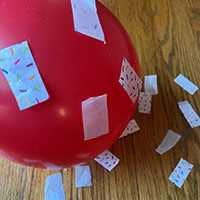
Have you ever stuck a balloon to a wall without the use of tape? Today we will investigate the powers of static electricity.
Materials
• Balloon
• Ground pepper
• Salt
Optional: Paper tissue bits, wool cloth, Saran wrap, cellophane tape, PVC pipe, aluminum foil bits
Experiment
Blow up a balloon and tie it off. Mix together some salt and pepper on a plate. Rub the balloon against your hair for about 10 seconds. On a dry day, you will probably notice that your hair starts to become attracted to the balloon. Now bring the balloon close to a wall. What do you notice? Rub the balloon against your hair again and then hover the balloon above the salt and pepper mixture. Does anything happen?
What’s happening?
All matter, which is everything around us, consists of atoms that are in turn made up of protons, neutrons, and electrons. When chemistry happens in the interactions of different kinds of matter, it is typically due to the negatively charged electrons that get moved around. That’s what is happening here. As you rub the balloon on your hair, the balloon pulls electrons away from your hair and gets a negative charge, leaving your hair with a net positive charge. (It now has more positively charged protons than electrons.) When the balloon is moved next to the wall, it sticks to the wall because the balloon’s negative charge repels electrons in the wall, causing them to move toward the inside and leaving behind a small, positively charged surface area. The negatively charged balloon is attracted to the positive area on the wall and sticks to it. A similar thing happens with the salt and pepper mixture, but only the pepper moves toward the balloon because it is much lighter than the salt.
This buildup of excess electrons on the surface of the balloon and the resulting attraction for a positively charged material is called static electricity. (It is static because the electrons are at rest on the surface of an object and do not flow through a conductor to form a complete circuit.)
What makes some materials become negatively charged and others positively charged when they are rubbed together? It depends on which material is more likely to give up electrons. The tendency of a material to give up electrons in contact (friction) with another material is described by the triboelectric series. Materials that are far apart in this series are likely to produce static electricity through contact. You can discover where materials are ranked in the triboelectric series by rubbing the balloon (made of synthetic rubber) with the optional items listed in the Materials section.
Place the balloon next to a small stream of running water from the faucet. Where does water belong in the triboelectric series? Another test for the triboelectric series is to stick cellophane tape to something, quickly tear it off., and then bring the tape close to other items, such as your skin, aluminum foil, tissue paper, etc.
References
To view more “ChemShorts for Kids” activities, go to:
https://chicagoacs.org/ChemShorts
- PAUL BRANDT
Puzzle

CRYPTOGRAM SOLUTION
Answer to the cryptogram printed in the March 2022 issue of The Chemical Bulletin.
Science has its cathedrals, built by the efforts of a few architects and of many workers.
-Lewis and Randall
The original cryptogram was printed in the January 1958 issue of The Chemical Bulletin.
Upcoming Events

UPCOMING EVENTS
|
April 1 |
ACS Fellows nominations deadline |
|
April 1 |
ACS-Hach Grants and Scholarships |
|
April 10 |
Articles due for the May Bulletin issue |
|
April 10 |
ACS Global Innovation Grants deadline |
|
April 14 |
Chicago Board of Directors Meeting |
|
April 21 |
April Monthly Virtual Meeting |
|
May 10 |
Articles due for the June Bulletin issue |
|
May 12 |
Chicago Board of Directors Meeting |
|
May 20 |
111th Willard Gibbs Award Meeting |
|
June 9 |
Chicago Board of Directors Meeting |
|
June 17 |
June Monthly Dinner Meeting |
Please also refer to the Section’s website chicagoacs.org and social media accounts.
Board & Committee Members

2022 Chicago ACS Section Officers
|
Chair Chair-Elect Past Chair Vice Chair Secretary Treasurer |
Mark Cesa Margaret Schott Sherri Rukes Amber Arzadon Josh Kurutz Michael Morello |
chair-at-chicagoacs.org chair-elect-at-chicagoacs.org past-chair-at-chicagoacs.org vice-chair-at-chicagoacs.org secretary-at-chicagoacs.org treasurer-at-chicagoacs.org |
Masthead
Bulletin Information
March 2022, Vol. 109, No. 34
Published by the Chicago Section of the American Chemical Society
https://chicagoacs.org
Editors: Amber Arzadon and Irene Cesa
editor-at-chicagoacs.org
Digital Editor: Josh Kurutz
Proofreaders: Helen Dickinson and Ken Fivizzani
ACS Chicago Section Office
Address: 1400 Renaissance Drive,
Suite 312
Park Ridge, IL 60068 (847) 391-9091
[email protected]
Social links
Follow ChicagoACS on social media!
Instagram: https://www.instagram.com/ChicagoACS/
Facebook: https://www.facebook.com/ChicagoACS
LinkedIn: https://www.linkedin.com/groups/1854603/
